
The rainforest waterfalls around Cairns have a reputation that doesn’t quite match the reality on the ground. People arrive expecting pristine jungle pools and solitude, then find themselves navigating crowds, dealing with water levels that vary wildly by season, and discovering that several famous spots are either harder to reach or less impressive than photographs suggest. After spending considerable time in this region, I’ve learned that success here depends far more on timing, logistics, and honest expectations than on which waterfall you choose.
The Cairns area sits in Far North Queensland, roughly 1,600 kilometres north of Brisbane. The rainforest here is genuine tropical jungle – dense, wet, and subject to monsoon patterns that make the region feel like two completely different places depending on the month. Most visitors arrive during the dry season, May through October, which is when the region is most accessible and comfortable. During the wet season, November through April, water levels surge, access becomes unpredictable, and the heat combined with humidity makes walking difficult. This seasonal split is fundamental to understanding what you’ll actually encounter.
The Access Problem
Many of the best waterfalls require more effort to reach than casual tourism marketing suggests. Barron Falls, one of the most photographed, sits directly beneath the Kuranda Scenic Railway and is technically accessible by walking track. However, the track itself is steep, often slippery, and the falls are best viewed from the railway platform – which means paying for a train ticket if you want the proper vantage point. The walk down takes about 20 minutes but involves steps carved into a damp slope where a slip is entirely possible.
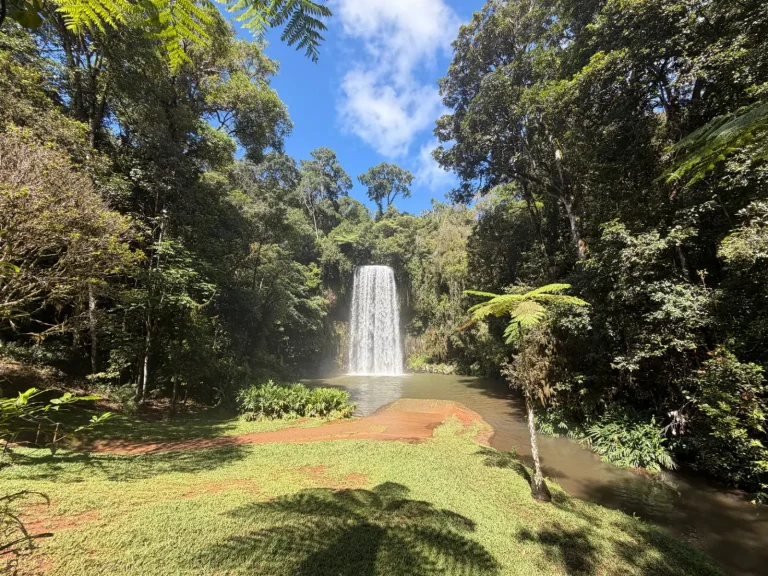
Millaa Millaa Falls, further south in the Atherton Tablelands, requires a 45-minute drive from Cairns and sits at the end of a short but muddy walking loop. The falls themselves are genuinely striking – a perfect curtain of water dropping into a clear pool – but you’ll rarely be alone. On a typical afternoon, there are often 30 to 50 people in and around the pool. The carpark fills by mid-morning during school holidays and weekends. If you’re hoping for a quiet swim, you need to arrive before 9 AM or accept that you’re going to be part of a crowd.
Josephine Falls, also on the Tablelands, is less visited but requires a rougher track with more scrambling over rocks. The payoff is fewer people and a genuinely dramatic setting where the water crashes into a narrow gorge. The walk takes about 20 minutes each way, but it’s steeper and more technical than Millaa Millaa. This is where fitness and footwear matter. I’ve seen people turn back halfway because they underestimated the terrain or wore inappropriate shoes.
Water Levels and Seasonal Variation
This is the factor that most visitors overlook entirely. A waterfall that thunders during the wet season can become a trickle by September. Conversely, during heavy rain events in the wet season, some tracks become impassable due to flooding and landslip risk. The Queensland Parks and Wildlife Service does close tracks periodically, but not always with much notice, and not always with clear communication to accommodation providers or tour operators.
Barron Falls is fed by the Barron River, which responds quickly to rainfall. After a heavy night of rain, the falls can be spectacular. Two weeks of dry weather, and they diminish noticeably. Millaa Millaa Falls maintains better flow because it’s fed by groundwater seepage as well as surface runoff, so it’s more consistent year-round. Josephine Falls, being in a gorge, tends to maintain decent water volume even during drier periods, though the experience is still different depending on recent rainfall.
If you’re visiting during July or August – the absolute peak of the dry season – the falls will be less impressive than photographs taken during the wet season suggest. This isn’t a failure of the location; it’s simply the reality of tropical hydrology. The same applies to water temperature. During the wet season, water is cold and sometimes dangerous due to flash flood risk. During the dry season, the pools warm up and are genuinely pleasant to swim in, though less visually dramatic.
Getting There and Back
Most people base themselves in Cairns city and drive to the waterfalls. The Tablelands falls (Millaa Millaa, Josephine, and several others) are about 45 minutes to an hour south. Barron Falls is closer, roughly 20 minutes via the scenic railway or 30 minutes by car to the walking track entrance. Driving times are straightforward, but parking can be tight at popular spots during peak hours. The roads are well-maintained, and navigation is simple.
What catches people out is the cumulative time. If you’re driving from Cairns, spending 90 minutes round-trip on transport, then 45 minutes to an hour at the falls themselves, you’re looking at a half-day commitment. Many visitors underestimate this and end up rushing or cutting their visit short. The drive itself is pleasant – the road winds through rainforest and farmland – but it’s not something you can casually fit into a morning if you’re also visiting other parts of Cairns.
There are organized tours available, but they tend to bundle multiple falls into a single day, which means less time at each location and more time sitting on a coach. For a genuine experience at a single waterfall, self-driving is usually more satisfying, provided you have a valid license and are comfortable driving on the left side of the road if you’re from elsewhere.
Swimming and Safety Considerations
The pools at these waterfalls are genuinely swimmable, but there are real hazards. The water is cold year-round, even during the dry season. Sudden immersion can trigger cold-water shock, particularly if you jump in without acclimating. The rocks are often slippery with algae, and the current beneath the falls is stronger than it appears. I’ve seen people slip while entering the water and sustain minor injuries.
Crocodiles are occasionally present in Far North Queensland waterways, though attacks are rare. Saltwater crocodiles prefer brackish and salt water, so they’re not a significant risk at inland rainforest falls. Freshwater crocodiles are smaller and less aggressive, but they do exist. The real concern is more mundane: people misjudging water depth, underestimating current, or simply losing their footing on slippery rocks.
Leeches are present in the rainforest during the wet season and can be uncomfortable, though they’re not dangerous. They attach to skin and cause minor bleeding and itching. Salt or insect repellent removes them. Most people encounter them only if they’re hiking off-track or during particularly wet periods.
What Makes the Trip Worthwhile
Despite the logistical realities, these waterfalls are worth visiting if you approach them with clear expectations. Millaa Millaa Falls, even with crowds, is genuinely beautiful and the swim is refreshing. Josephine Falls offers a more solitary experience if you’re willing to put in slightly more effort. Barron Falls provides a unique perspective from the scenic railway, though the walk-in option is less dramatic.
The rainforest itself is the real draw. Being under the canopy, hearing the water, and feeling the humidity and temperature shift as you move through the landscape – this is what lingers after you leave. The waterfalls are the focal point, but the forest context is what makes them special. A quiet morning walk through the Tablelands rainforest, even without crowds, is worth the drive.
Visiting during the shoulder seasons – April or May, or September and October – tends to offer the best balance. Water levels are still reasonable, crowds are lighter than during school holidays, and the weather is comfortable for walking. The dry season offers the best swimming conditions but also the most visitors and the least impressive water flow. The wet season is dramatic but risky and uncomfortable for most casual visitors.