
The Atherton Tablelands hold a collection of waterfalls that draw visitors from across Australia and beyond. What strikes you most when you spend time in this region isn’t the sheer number of falls, but rather how their character shifts depending on when you arrive and how much rain has fallen in the preceding weeks. I’ve visited these falls across different seasons and water levels, and the experience is rarely the same twice.
The tablelands sit at elevation on the Cassowary Coast of Far North Queensland, roughly an hour inland from Cairns. The landscape is green and humid, with pockets of rainforest and cleared agricultural land interspersed throughout. The waterfalls exist because water drains off this elevated plateau toward the coast, and the harder the terrain, the more dramatic the drops become. Most of the falls cluster within a roughly 30-kilometer radius, making it feasible to visit several in a single day if you plan efficiently.
What often surprises first-time visitors is how quickly conditions change. A waterfall that thunders with power after heavy rain can reduce to a modest trickle within days if the weather turns dry. This isn’t a flaw in the region – it’s simply how tropical and subtropical hydrology works. The falls are fed by rainfall rather than snowmelt, so they respond immediately to atmospheric patterns. If you’re visiting during the dry season, expect reduced flow and clearer water. If you arrive during or just after the wet season, the falls will be at their most powerful, though access roads may be rougher and some swimming holes will be unsafe.
The Major Falls and Their Characteristics
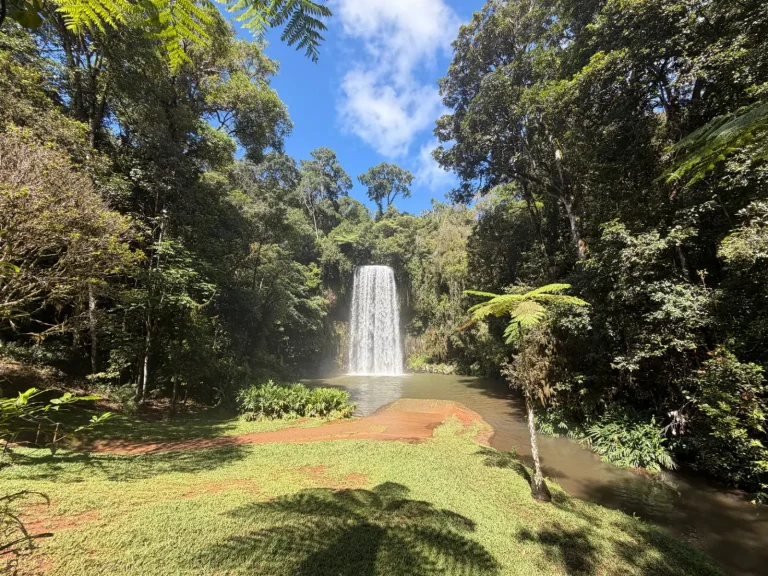
Millaa Millaa Falls is perhaps the most recognizable. It’s a single, clean drop into a pool that’s deep enough for swimming most of the year. The walk is short and well-maintained, which means it draws crowds, particularly in the morning and late afternoon. The water is cold year-round – the elevation and the shade from surrounding forest keep the pool temperature low even in summer. I’ve seen visitors arrive unprepared for how cold it actually is. The surrounding rainforest is dense and humid, and the mosquito activity can be intense depending on the season.
Zillie Falls, nearby, offers a different experience. The walk is slightly longer and less trafficked, which appeals to people seeking a quieter visit. The falls themselves are more modest in height but spread across a wider area, creating multiple tiers. The pool is shallower than Millaa Millaa, and the surrounding vegetation is slightly more open. Access here is straightforward, though the path can be muddy after rain.
Curtain Fig Tree Falls is technically a smaller waterfall, but it’s often visited as part of a broader exploration of the area because of the remarkable fig tree nearby. The tree itself is the main attraction – a sprawling strangler fig that’s genuinely impressive. The waterfall is secondary, but it’s there, and it fits logically into an itinerary if you’re already in the area.
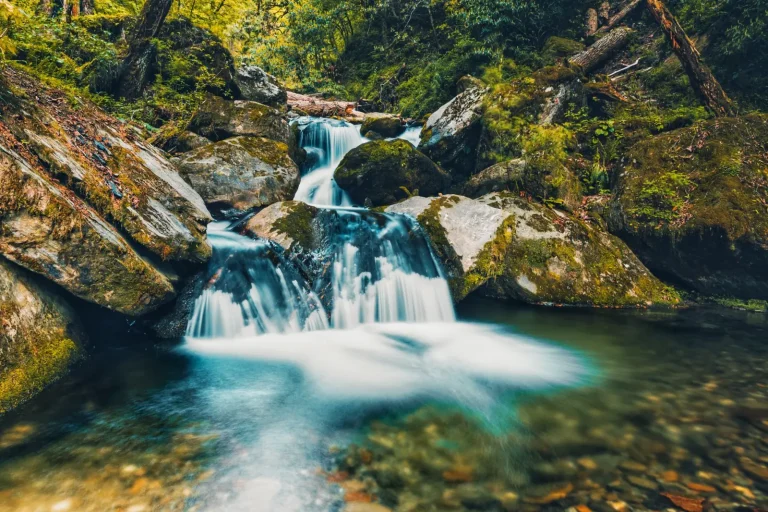
Ellinja Falls comprises multiple drops and pools across a short walking circuit. The walk is longer than Millaa Millaa but still manageable for most fitness levels. What makes this location distinct is the variety – you’re not just looking at a single dramatic drop, but rather a series of cascades and pools that create different moods depending on water level. During high flow, the sound is considerable. During low flow, the circuit feels more like a gentle forest walk with water features rather than a waterfall experience.
Seasonal Realities and Planning
The wet season runs roughly November through March. During this period, the falls are at their most voluminous. Water flows are strong, pools are full, and the landscape is verdant. However, this is also when access becomes unpredictable. Some secondary roads to less-visited falls can become impassable after heavy rainfall. Humidity is high, insects are more active, and the water itself is often murky from sediment. Swimming is possible but less pleasant when the water is brown and the current is strong.
The dry season, May through September, offers clearer water, better visibility, and more comfortable conditions for walking. The falls are less dramatic, but they’re still present and still worth visiting. Roads are reliable, and you won’t encounter the same insect pressure. This is when most casual visitors arrive, and the popular falls will be busier as a result.
April and October are transition months. Weather is variable, and water levels can swing significantly. I’ve experienced both excellent conditions and frustrating access issues during these months. If you’re flexible with timing, it’s worth checking recent rainfall patterns before committing to a visit.
Access and Logistics
Most of the major falls are accessible via sealed roads from the towns of Atherton or Malanda. Parking areas exist at the main sites, though they can fill up during peak hours. The walks themselves are generally short – most range from 10 to 30 minutes of walking to reach the falls. This brevity is deceptive, though. The terrain is often uneven, with tree roots and rocks underfoot, and the humidity means even short walks can feel more strenuous than their distance suggests.
Facilities vary. The most popular falls have toilet blocks and picnic areas. Others have minimal infrastructure. It’s worth carrying water, as the humid environment and physical exertion can dehydrate you faster than you’d expect. Insect repellent is essential during warmer months, particularly near the water.
Swimming is possible at most of the main pools, but conditions vary. Water temperature is consistently cold due to elevation and shade. Currents can be strong during high flow periods. I’ve observed people underestimating both the cold and the current, leading to unpleasant experiences. If you’re planning to swim, arrive prepared for genuinely cold water and be honest about your comfort level in natural water bodies.
What Gets Overlooked
Most visitors focus on the falls themselves and miss the broader landscape context. The tablelands are agricultural country – you’ll drive through farmland and past small rural communities to reach the falls. This isn’t a wilderness region; it’s a working landscape where waterfalls happen to exist. Understanding this shapes your experience. You’re not traveling to a remote destination; you’re visiting a feature within a settled region.
The rainforest pockets around the falls are also worth observing. They’re not pristine – they’re managed, sometimes quite heavily – but they’re still ecologically interesting. The bird life can be excellent, particularly in early morning. The insect diversity is remarkable if you take time to notice it. These details enrich a visit beyond just photographing the water.
Road conditions matter more than most guides acknowledge. While the main routes are sealed, some secondary roads are gravel or have rough sections. After rain, these deteriorate quickly. If you’re driving a low-clearance vehicle, some of the less-visited falls become inaccessible. This isn’t a barrier to visiting the region, but it’s worth factoring into your planning.
The Atherton Tablelands waterfalls are genuine attractions with real appeal, but they’re best approached with realistic expectations about seasonality, access, and the physical demands of visiting them. They’re not a single dramatic experience but rather a collection of sites that reveal themselves differently depending on when and how you visit.