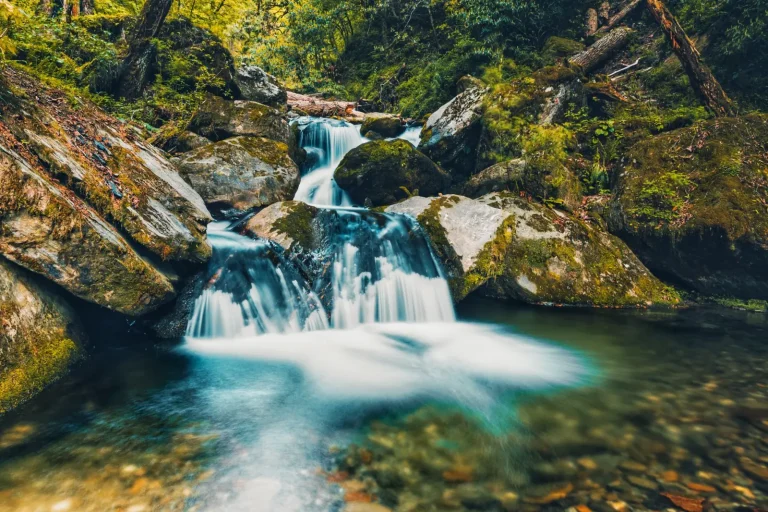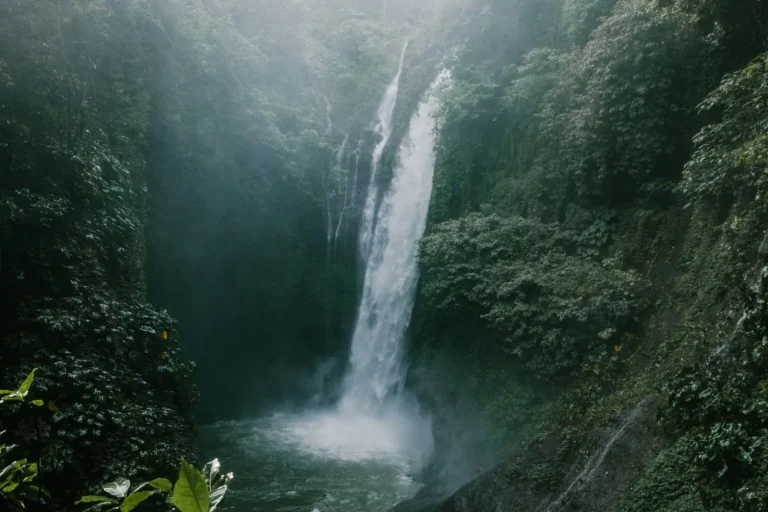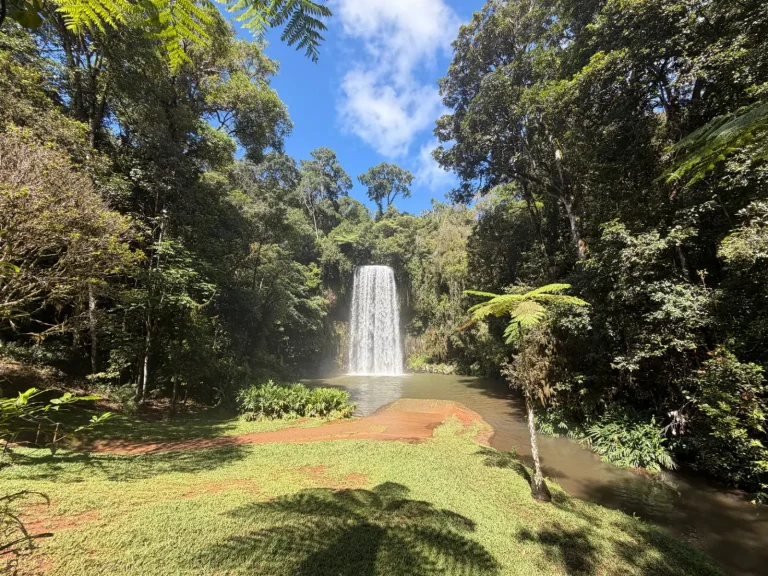

Josephine Falls sits about 40 kilometres south of Cairns, tucked into rainforest that feels removed from the coast despite being relatively close. The waterfall itself is modest by tropical standards – a single drop into a natural pool – but the walk to reach it carries more complexity than the distance suggests. I’ve watched plenty of visitors arrive expecting a casual stroll and leave with a different understanding of what “short walk to a waterfall” actually means in this climate.
The drive from Cairns takes roughly 45 minutes to an hour depending on traffic through the southern suburbs. The access point is well signposted along the main highway, and parking is straightforward. What catches many people off guard is the walk itself. The track is roughly 1.5 kilometres return, which sounds manageable, but the terrain is steep, uneven, and often wet regardless of recent rainfall. The rainforest here retains moisture constantly. Tree roots cross the path at ankle height, rocks are slick, and footing requires attention throughout.
The Physical Reality of the Walk
I’ve noticed that visitors tend to judge difficulty by distance alone, and that’s where the miscalculation happens. A 1.5-kilometre walk on flat pavement is entirely different from 1.5 kilometres of steep, rooted forest track. The elevation gain is real – you’re climbing roughly 80 to 100 metres, which doesn’t sound significant until you’re doing it on a slope that doesn’t offer much rest. The ascent is fairly relentless. There are no flat sections to recover on, and the descent on the return trip places strain on knees and ankles in ways the uphill walk doesn’t.
The ground surface changes constantly. In some sections you’re walking on exposed rock, in others on compacted earth, and frequently on roots that have become the de facto path. After rain, sections become genuinely slippery. I’ve seen people in casual sneakers struggle noticeably, and I’ve watched a few turn back partway through. Proper footwear – something with genuine grip and ankle support – makes a measurable difference. The track is also narrow in places, which means if you encounter other walkers coming down as you’re going up, there’s a brief awkward shuffle to pass.
Seasonal and Weather Considerations
The wet season, roughly November through March, transforms the walk. The track becomes genuinely treacherous. Water runs down the slope, rocks become polished and slippery, and the rainforest canopy, while providing some shelter, also means the ground dries more slowly. I’ve visited after heavy rain when the track was essentially a small stream. The waterfall itself becomes impressive during the wet season, but the walk becomes a serious undertaking rather than a pleasant forest stroll.
Outside the wet season, conditions are more forgiving, though “dry” is relative in a tropical rainforest. The track is still damp, still slippery in sections, and the humidity remains high. Even in the cooler months, the combination of steep terrain and tropical heat means most people are breathing hard by the time they reach the pool. Fitness level matters more than age – I’ve seen fit people in their sixties handle it easily and younger, less active visitors struggle.
The Pool and What Draws People
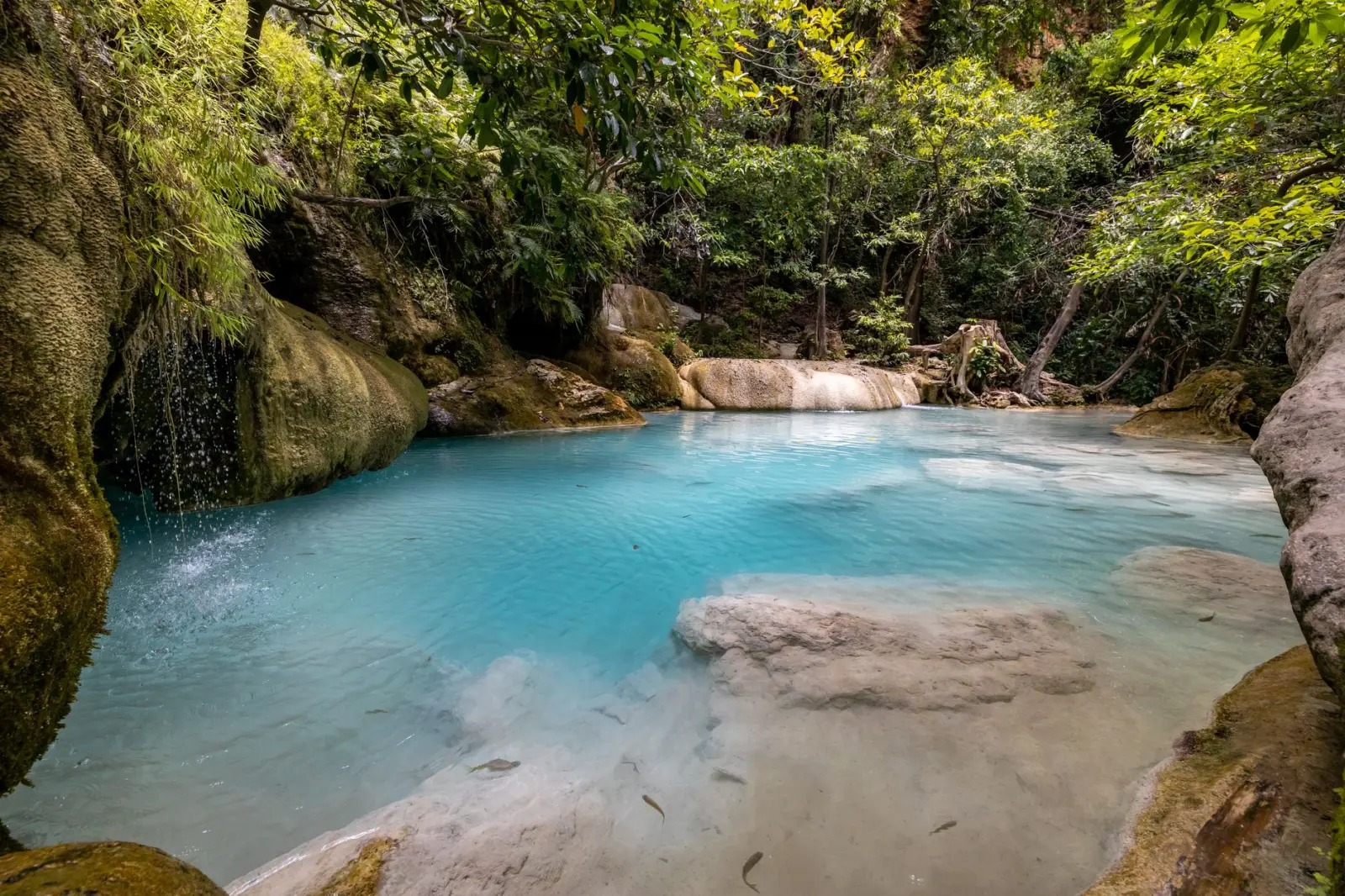
The waterfall pool itself is the reason people make the walk. It’s a deep, clear pool of water that invites swimming, and on a hot day the appeal is obvious. The water is cool but not shockingly cold. The pool is large enough that it doesn’t feel crowded even when there are a dozen people there. The rock formations around it are photogenic, and the rainforest setting is genuinely atmospheric.
What’s worth knowing is that the pool floor is rocky and uneven. It’s not a smooth sandy bottom. Swimmers need to be deliberate about entry and exit. The rocks can be sharp in places, and the depth varies. I’ve seen people slip on entry rocks more than once. If you’re planning to swim, water shoes or old sneakers are practical. The pool is also a natural bathing spot for locals, so it’s not uncommon to encounter other swimmers, particularly on weekends.
Practical Logistics and Timing
Most people spend 45 minutes to an hour on the walk itself, depending on fitness and how often they stop. Add time for swimming and sitting by the pool, and a realistic visit is two to three hours total. If you’re coming from Cairns, factor in the drive time both ways. A morning departure makes sense – you’ll avoid the heat of midday during the walk, and you’ll have the pool relatively quieter than afternoon visitors.
There are no facilities at the waterfall. No toilets, no water, no shelter beyond the rainforest canopy. Bring water with you, particularly if you’re walking in warm weather. The walk is exposed to the sun only briefly, but the humidity means you’ll sweat regardless. A small daypack is sufficient for water, a towel, and a change of clothes if you’re swimming.
The parking area has space for roughly 20 cars, and it does fill on weekends and public holidays. Arriving early, particularly during school holidays, makes a difference. I’ve seen visitors arrive mid-afternoon to find no parking and have to leave without attempting the walk. Early morning is generally quieter and cooler for the walk itself.
What Often Gets Overlooked
Insect life is present but not overwhelming. Mosquitoes are a consideration during dawn and dusk, particularly in the wet season. Leeches are possible after heavy rain, though they’re not common on this particular walk. The rainforest is home to various spiders and insects, but most are not aggressive. Wearing long sleeves and long trousers offers protection if you’re concerned, though many people walk in shorts and t-shirts without incident.
The track itself is maintained reasonably well, but it’s not a manicured walking path. Branches overhang in places, and the path narrows in sections. If you’re tall or broad-shouldered, you’ll brush vegetation. It’s not dangerous, just something to be aware of. The track is also not well-lit, so if you’re planning a late afternoon visit, understand that the walk back down in fading light is considerably more challenging.
Josephine Falls is worth the effort if you understand what you’re committing to. The walk is not difficult in a technical sense, but it’s steeper and more demanding than casual visitors typically anticipate. The pool is genuinely pleasant, and the rainforest setting is authentic and atmospheric. Go with realistic expectations about the terrain, bring appropriate footwear and water, and plan to spend a few hours rather than a quick stop. That approach tends to result in a satisfying visit rather than a frustrating one.