
Millaa Millaa Falls sits in the wet tropics of Far North Queensland, roughly an hour inland from Cairns on the Atherton Tablelands. It’s one of those waterfalls that appears straightforward on a map and in photos, but the reality of visiting changes significantly depending on when you arrive and how much rain has fallen upstream. I’ve been there during dry periods when the flow is modest, and during the tail end of the wet season when the volume becomes genuinely forceful. Both experiences are worthwhile, but they demand different expectations.
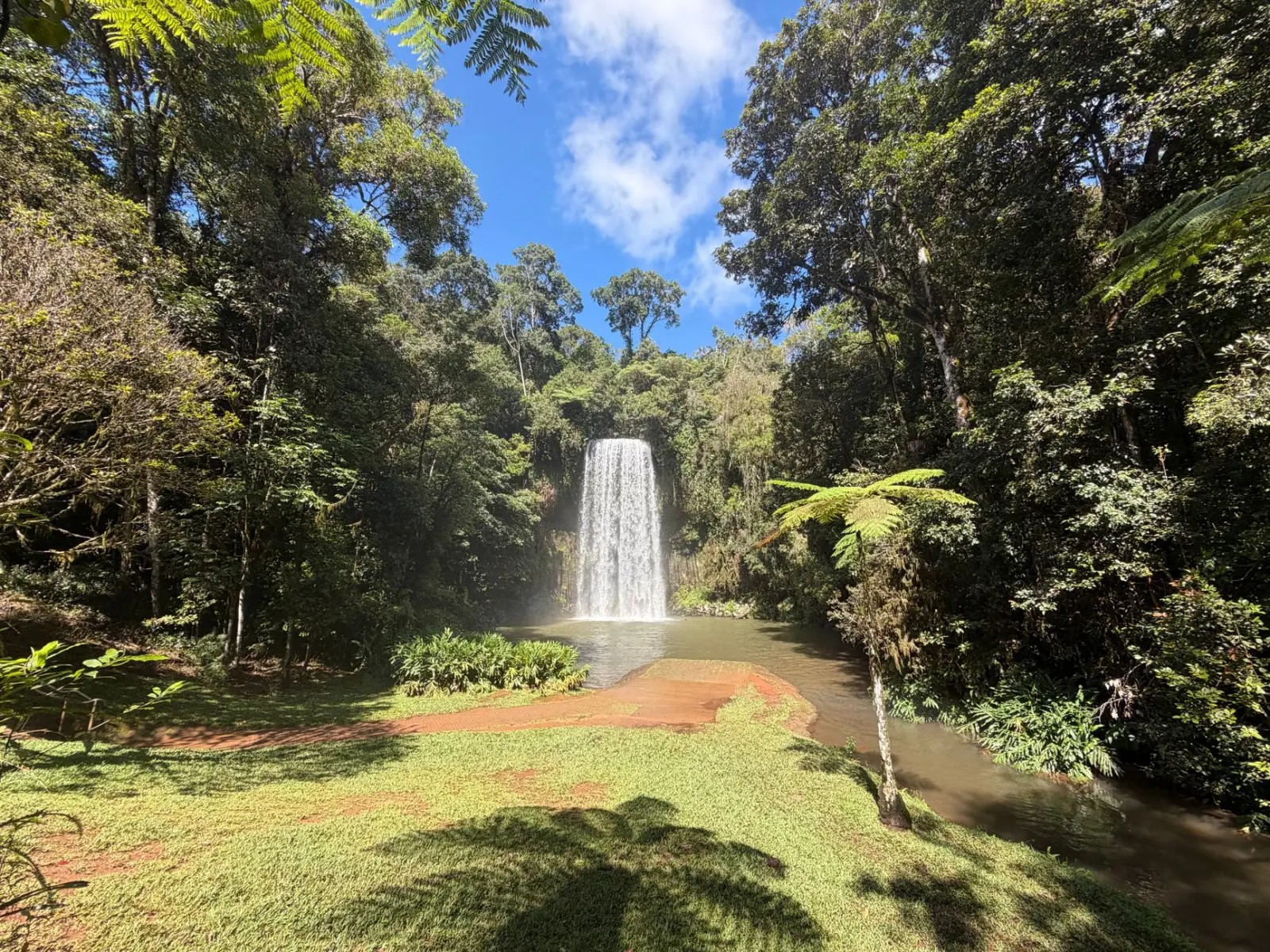
The waterfall itself drops about 18 metres into a circular pool that’s deep enough for swimming, though the water temperature rarely feels warm. The surrounding rainforest is dense and green year-round, but the canopy coverage means the falls themselves don’t get direct sunlight for much of the day. This affects how the light hits the water and how quickly you’ll dry off after swimming. The walk to the falls is short – roughly 1.5 kilometres from the car park – and the track is well-maintained, but it’s steep enough that you notice it on the way back up, especially if you’ve spent time in the water and your clothes are damp.
Water Conditions and Seasonal Reality
The volume of water at Millaa Millaa varies dramatically between seasons. During the dry season (roughly May to September), the falls are more of a steady cascade than a thundering torrent. The pool is still swimmable and the setting is peaceful, but the visual impact is diminished. The rocks around the pool are more exposed, and you can see the geological structure of the falls more clearly. This is actually the better time to visit if you want to photograph the waterfall or spend time in the pool without feeling rushed or unsafe.
From November through March, the wet season transforms the falls entirely. Heavy rainfall upstream swells the creek, and the flow becomes substantial. The water turns slightly milky or brown depending on recent rainfall intensity, and the sound becomes louder. Swimming becomes riskier because the current is stronger and the water is colder. I’ve watched visitors attempt to swim during peak wet season and struggle against the flow. The pool can also become crowded during school holidays, which adds another layer of complexity to safety and enjoyment.
What often catches people off-guard is that the falls don’t always correlate directly with the day’s weather. A heavy downpour in Cairns might not affect Millaa Millaa, but rain on the tablelands upstream can swell the creek hours later. This means you can arrive on a clear day and find the falls running much harder than expected. Conversely, several days of dry weather can reduce the flow noticeably, even if the morning looked promising.
The Track and Physical Demands
The walk down to the falls is steep and involves wooden steps for much of the descent. The rainforest floor is often slippery, even when it hasn’t rained recently, because the canopy keeps the ground perpetually damp. Proper footwear matters more than most people anticipate. I’ve seen visitors in thongs or casual sneakers struggle on the way back up, and one slip on the descent can result in a twisted ankle or worse. The track is only about 1.5 kilometres, but the gradient and slippery conditions make it feel longer on the return journey.
The ascent back to the car park is where fatigue becomes real. If you’ve spent time swimming and your muscles are cold and tired, the steep climb is noticeably harder. Most people underestimate this. Bring water and take breaks if you need them. The car park has basic facilities – toilets and a small shelter – but no food or drink vendors, so plan accordingly. In the wet season, the track can become muddy enough that walking boots are genuinely necessary rather than optional.
Timing and Crowds
Early morning visits tend to be quieter, and the light is better for photography before the sun gets too high. If you arrive by 8 or 9 a.m., you’ll likely have the falls largely to yourself, especially outside school holidays. By late morning, tour groups begin arriving, and the car park fills up. During peak tourist season (June to August), the falls can feel busy even early in the day.
The wet season brings school holiday crowds, but also the most dramatic water flow. If you’re visiting specifically to see the falls at their most powerful, you’ll need to accept that you’ll share the space with other visitors. If solitude and a calm experience matter more, aim for the dry season on a weekday morning.
Practical Considerations
The water in the pool is cold year-round. It rarely exceeds 15 – 18 degrees Celsius, even in summer. This isn’t a refreshing dip – it’s a shock to the system. Bring a towel and dry clothes, and plan to spend less time in the water than you might initially intend. Hypothermia isn’t a realistic concern for short swims, but discomfort sets in quickly once you’re out of the water and the rainforest breeze hits you.
Mobile phone reception is patchy or absent near the falls, so don’t rely on it for navigation or emergencies. The car park is the last place where you’ll have reliable signal. If you’re visiting alone, let someone know where you’re going and when you expect to return. The track itself is well-marked and it’s difficult to get lost, but the isolation is genuine.
Crocodiles are not a concern at Millaa Millaa – the tablelands are too high and the water is too cold for saltwater crocs, and freshwater crocs don’t inhabit this area. However, the creek is home to small fish and freshwater shrimp, which is why the water sometimes looks slightly murky even when it’s not raining.
The falls are free to visit, and there’s no booking system or entry fee. The car park can fill up during peak times, particularly on weekends and school holidays, so arriving early is practical rather than optional if you want a guaranteed spot.
Millaa Millaa Falls works best as part of a broader tablelands itinerary. The nearby Crater Lakes and other waterfalls in the area can be visited in the same trip, which makes better use of the drive from Cairns. If you’re planning a single waterfall visit, this one is worth the effort, but it’s not dramatically different from several other falls in the region – the value is in seeing the rainforest environment and understanding how seasonal water flow shapes these landscapes.