
After spending years moving through Queensland’s rainforest regions, I’ve learned that the swimming holes people actually enjoy rarely match the ones featured in travel guides. The difference usually comes down to timing, water conditions, and understanding what happens when weather shifts. The pools themselves don’t change much, but your experience of them does, sometimes dramatically.
Most people chase the well-known spots – Josephine Falls near Innisfail, Millaa Millaa Falls, the pools around Mossman Gorge. These places are worth visiting, but not always when you expect. The real insight isn’t about discovering hidden alternatives so much as understanding how to use the popular ones without fighting crowds or dealing with poor water quality.
The rainforests around Cairns and the Atherton Tablelands have consistent water year-round because of rainfall patterns and elevation, but this doesn’t mean the pools are always swimmable. During wet season, which runs November through March, water levels rise and visibility drops. Pools that are clear and inviting in June become brown and fast-moving by December. The current can be surprisingly strong, and debris accumulates. Swimming becomes less about enjoyment and more about managing risk.
Seasonal Timing and Water Clarity
Dry season, roughly May through September, is when these pools are genuinely pleasant. Water clears, temperatures stabilize around 18 to 22 degrees Celsius, and you can actually see what’s beneath the surface. This is also when everyone else shows up. Weekends at Josephine Falls can feel like a public pool in suburban Brisbane, except with rocks and no lifeguards.
The practical advantage of going mid-week, particularly Tuesday through Thursday, is significant. Parking becomes available, you’re not queuing to enter the water, and the pools feel like they did before they became Instagram destinations. Early morning – before 9 AM – adds another layer of relief. The light is better anyway, the water is colder but clearer, and the rocks aren’t slippery from foot traffic yet.
Water temperature matters more than most people anticipate. In winter months, these pools sit around 16 to 18 degrees. This is cold enough that you’ll feel it immediately, and it’s cold enough that staying in for extended periods requires acclimatization. People often underestimate this and end up getting out after ten minutes, disappointed. Wetsuits aren’t necessary, but they change the experience substantially if you’re sensitive to cold.
The Reality of Popular Pools
Josephine Falls, near Innisfail, has the advantage of being accessible and genuinely scenic. The main pool is deep enough for jumping, and the waterfall creates a natural focal point. What you need to know is that the car park fills by mid-morning on weekends, the rocks are genuinely slippery, and the walk down involves uneven terrain that catches people off guard. The pool itself is worth the visit, but manage your expectations about solitude.
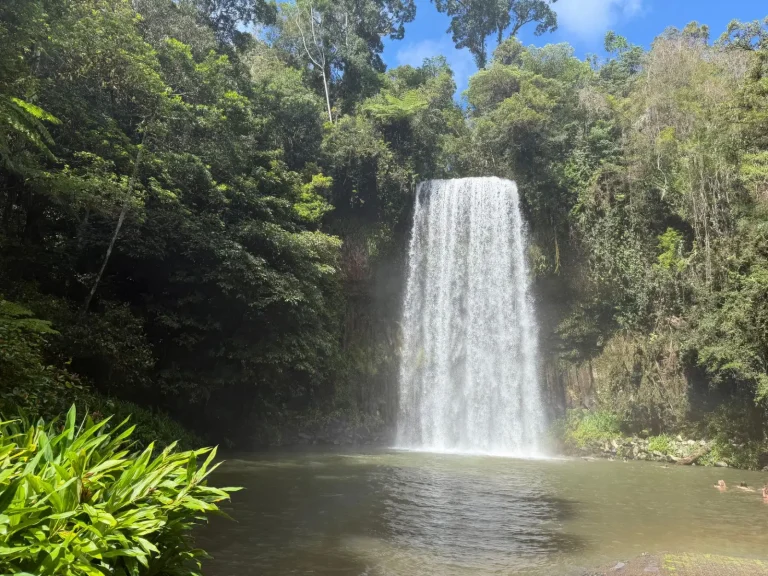
Millaa Millaa Falls operates differently. It’s part of a circuit – three falls within walking distance – which spreads people out. The main falls pool is smaller than Josephine and shallower, but the water quality is typically excellent. The walk between falls is straightforward, and the landscape is genuinely beautiful. This is one location where the tourist infrastructure actually works reasonably well. The carpark is adequate, and the walking tracks are maintained.
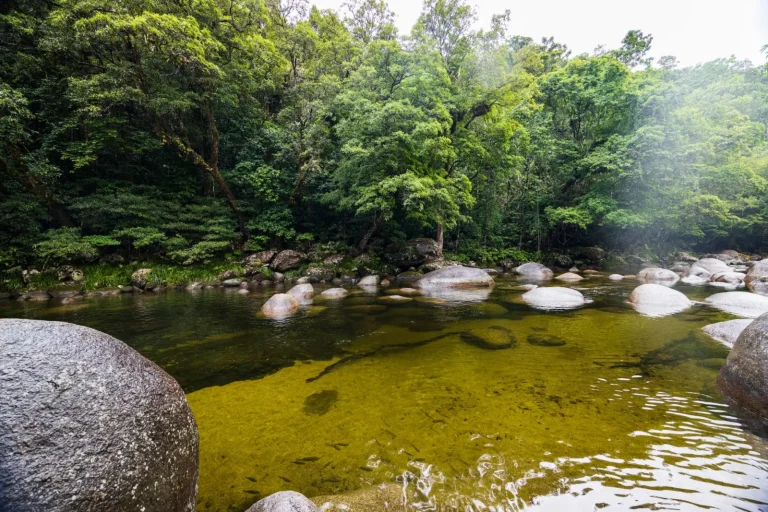
Mossman Gorge, closer to Cairns, sits within a national park with entry fees and managed access. This creates a natural crowd control mechanism. The gorge itself is spectacular, with multiple pools and a proper walking circuit. Water quality is usually good, and the setting feels more remote than it actually is. The fee structure keeps casual visitors away, which means you’re more likely to encounter people who are genuinely interested in being there rather than just passing through.
Less Obvious Options Worth Considering
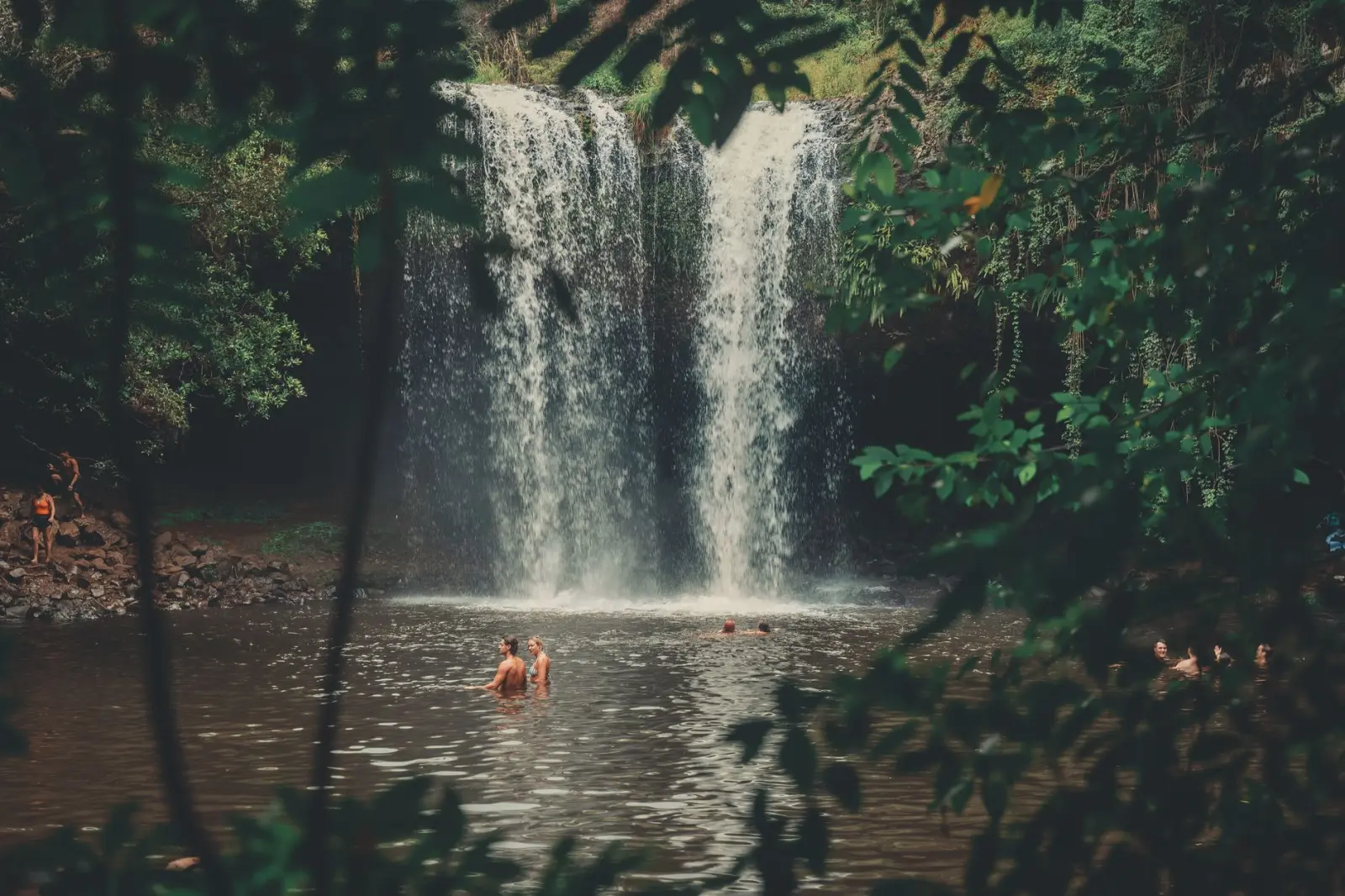
Ellinjaa Falls, also on the Tablelands, tends to be quieter than the major attractions. The pool is excellent for swimming, the setting is peaceful, and the walk is manageable. The main drawback is that it’s less dramatic than Josephine or Millaa Millaa, so it doesn’t photograph as well. This actually works in its favor if you’re seeking a functional swimming experience rather than a destination for social media.
Tchupala Falls, near Millaa Millaa, is another option that sees fewer people. The walk is longer than some alternatives, which naturally filters out casual visitors. The pool is deep and suitable for swimming, and the surrounding rainforest is genuinely undisturbed. If you’re prepared to walk thirty minutes or more, this becomes a viable option for avoiding crowds while still accessing quality water.
Around the Daintree region, north of Cairns, there are smaller pools and swimming spots that require local knowledge or willingness to explore. These tend to be colder because of elevation and shading, but they’re also less visited. The trade-off is usually worth it if you’re comfortable with uncertainty about conditions and access.
Practical Considerations That Matter
Footwear is more important than most people realize. The rocks around these pools are slippery when wet, and sharp in places. Proper water shoes or even old sneakers make a genuine difference in safety and comfort. Bare feet work, but you’re managing risk unnecessarily.
Sunscreen and sun exposure are underestimated hazards. The rainforest canopy provides shade, but reflective surfaces around the water intensify UV exposure. Reapply sunscreen after swimming, and consider bringing a lightweight long-sleeve shirt if you’re sensitive. Dehydration is also common because people focus on the water and forget to drink.
Vehicle access and parking vary significantly between locations. Josephine Falls has adequate parking but it fills. Millaa Millaa has good facilities. Mossman Gorge requires planning around entry times and has limited carpark capacity. Smaller pools often have minimal parking, which can make them inaccessible during peak times. Check current conditions before driving out, particularly after heavy rain when access roads can be compromised.
Mobile phone coverage is unreliable in most rainforest areas. Tell someone where you’re going and when you expect to return. Swimming alone at remote pools is genuinely risky – not because of wildlife, which is rarely an issue, but because of the terrain and the reality that if something goes wrong, help isn’t immediately available.
The best rainforest swimming holes in Queensland aren’t necessarily the most famous ones. They’re the ones where conditions align with your expectations and your tolerance for crowds. Visiting during dry season, mid-week, and early morning stacks the odds in your favor at any location. Understanding water temperature, seasonal changes, and the specific characteristics of each pool lets you make decisions based on what you actually want from the experience rather than what you’ve been told to expect.