
Mossman Gorge sits in far north Queensland, roughly an hour’s drive from Cairns, and it presents itself as one of those places that looks deceptively straightforward on a map. The river runs through a narrow gorge, boulders are scattered across the riverbed, and the rainforest walls rise steeply on both sides. People visit it regularly – thousands of them annually – and most have an unremarkable time. But the gorge operates under conditions that shift, and understanding those conditions before you arrive makes the difference between a manageable half-day outing and an experience that tests your patience and physical capability.
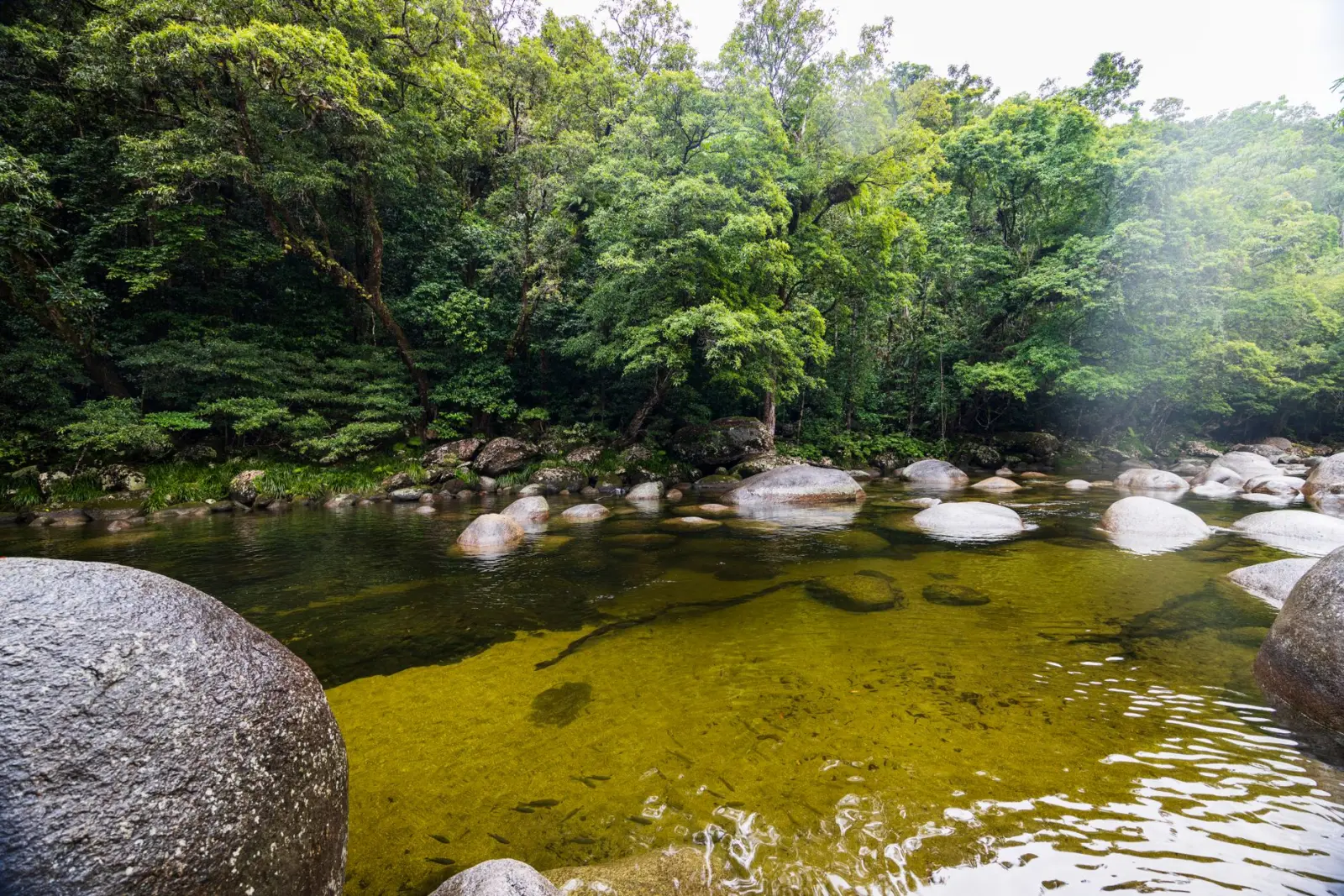
The boulders themselves are the defining feature. They’re not uniform in size or arrangement. Some are small enough to step across; others are the size of cars, creating natural dams and pools. The river has been moving them for millennia, and the arrangement you encounter on any given day reflects recent rainfall, seasonal water levels, and the sheer weight of water that occasionally pushes through the gorge. This is not a manicured trail with fixed stepping stones. You’re moving across a dynamic riverbed, and the rocks are wet, often covered in algae or moss, and angled in ways that don’t always align with your stride.
The Reality of Movement Through the Gorge
Walking the gorge requires a particular kind of attention. You can’t move quickly, and you shouldn’t try. The boulders demand that you place each foot deliberately, test your weight, and adjust your balance constantly. Footwear matters more than most people realize. Runners or sneakers offer almost no grip on wet rock; people in those shoes tend to slip, catch themselves awkwardly, and leave the gorge with sore ankles or knees. Proper hiking boots with aggressive tread and ankle support aren’t overkill – they’re practical. Water shoes designed for river crossings work well if you’re comfortable with minimal protection underfoot. What doesn’t work is anything with a smooth sole or anything that doesn’t secure your foot.
The distance from the main parking area to the upper pools is roughly 2.4 kilometers, but time is not linear here. On a good day with low water and good footing, fit people move through in 45 minutes to an hour. On a day when water levels are higher, or when you’re being cautious, or when you’re moving with children or older adults, it can easily stretch to two hours. The return journey is usually faster because you know the terrain, but it’s not dramatically faster. Plan for at least three hours if you’re doing the full walk at a reasonable pace.
Seasonal Water and What It Changes
The wet season in far north Queensland runs from November through March, and during those months, Mossman Gorge transforms. Water levels rise significantly, sometimes dramatically. Pools that are waist-deep in the dry season become chest-deep or deeper. The current strengthens. Boulders that were easy to navigate become slippery obstacles with water flowing around them at speed. Some sections that are straightforward in the dry season become genuinely risky when water is high.
This isn’t theoretical. The gorge has claimed lives. In the wet season, people have been swept away or drowned. The Queensland Parks and Wildlife Service closes sections of the gorge when conditions become dangerous, but these closures are reactive. If you’re visiting during the wet season, water levels are the first thing to check. Local guides and the visitor center have current information, and that information should drive your decision about whether to enter the gorge at all, not just which route to take.
The dry season, roughly May through September, presents a different set of conditions. Water levels drop. Some pools become shallower. The boulders are more exposed, which makes navigation easier but also means less water to cool off in. The rainforest canopy is dense enough that the gorge stays relatively cool even in the dry season, but on hot days, the lack of deep water for swimming can be a disappointment for people expecting to spend significant time in the river.
The Rainforest and What It Demands
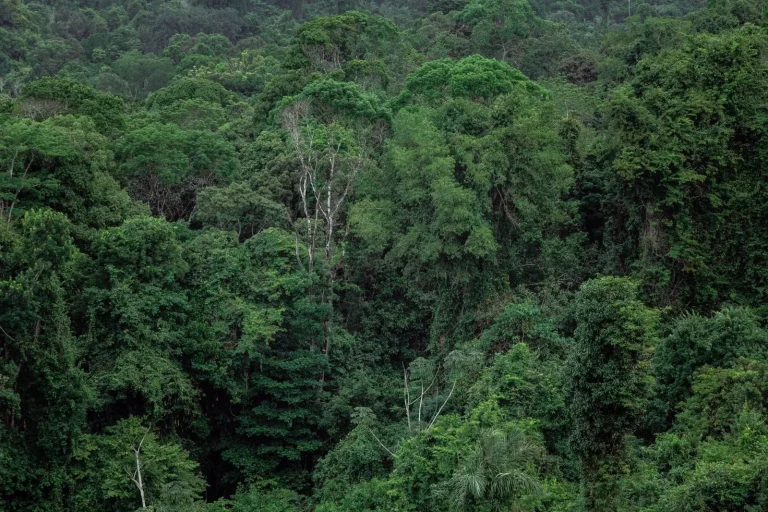
The rainforest here is lowland tropical, which means it’s wet, dense, and unforgiving to people who aren’t prepared for it. The canopy is thick enough that direct sunlight rarely reaches the gorge floor. This keeps things cool but also means the rocks stay wet longer. Humidity is constant. Insects are present year-round, though they’re less aggressive in the cooler months. Leeches are a factor during the wet season and for a few weeks after heavy rain, particularly on the vegetation bordering the river.
The rainforest also means limited cell reception. Most of the gorge has no signal. If you’re injured or in distress, you won’t be able to call for help from within the gorge itself. The walk-out is manageable for someone with a minor injury, but a serious incident requires either self-rescue or waiting for help to arrive, which takes time. This is worth considering if you have mobility concerns or if you’re traveling with young children who might not be able to move quickly if something goes wrong.
Visibility in the rainforest is limited. The trail is marked, but it’s not a wide, obvious path. It’s a track worn by thousands of feet, and in some sections, it’s easy to lose if you’re not paying attention. During wet weather, the path becomes muddy and less distinct. This rarely causes people to get lost completely, but it does slow progress and increase the likelihood of a misstep.
Practical Considerations That Matter
Start early. The gorge is busiest in mid-morning and early afternoon. If you arrive by 8 a.m., you’ll have a quieter experience and better light for the walk. The parking area fills up, sometimes completely, by mid-morning during peak season. If you’re arriving in the afternoon expecting to do the full walk, you may find yourself rushed or unable to park.
Bring water. The river is there, and it’s tempting to drink from it, but waterborne parasites are a real risk. Carry at least two liters of water per person, more if it’s hot or if you’re moving slowly. The walk is not strenuous in the cardiovascular sense, but it’s sustained and requires attention, and dehydration makes both of those things harder.
Sunscreen and insect repellent are worth carrying, even though you’ll be mostly shaded. The reflective quality of wet rocks and water can cause unexpected sunburn, particularly on your lower legs and feet. Insect repellent with DEET is effective against mosquitoes and other biting insects, though it won’t stop leeches.
The upper pools are the destination for most people. They’re genuinely beautiful – deep, clear, surrounded by rainforest, and cool enough to swim in comfortably. The walk to reach them is the barrier, not the pools themselves. If you’re fit and moving at a reasonable pace, you’ll have time to spend an hour or more in the water before heading back. If you’re moving slowly or if you’ve underestimated the time required, you might reach the pools and immediately need to turn around.
Mossman Gorge is not dangerous if you’re prepared and moving with appropriate caution. It’s also not a casual stroll. The boulders demand respect, the rainforest requires attention, and the water – particularly during the wet season – is genuinely hazardous. People who treat it as a serious walk, who check conditions before arriving, and who move deliberately tend to have good experiences. People who treat it as a quick tourist stop often find themselves uncomfortable, rushed, or slipping on wet rock.