
The Daintree rainforest stretches across a significant portion of Far North Queensland, but the experience shifts noticeably as you move from Mossman in the south toward Cape Tribulation in the north. These aren’t arbitrary tourist zones – they represent genuinely different ecological conditions, and understanding that difference matters if you’re planning to spend real time moving through the area rather than stopping at a single lookout.
I’ve spent enough time in this rainforest to recognize that most visitors treat it as a single entity, a green backdrop with a few marked trails. The reality is more textured. The rainforest here isn’t uniform. Elevation, moisture, soil composition, and proximity to the coast create distinct pockets of habitat that support different plant and animal communities. The Mossman area sits lower and drier than what you encounter further north. By the time you reach Cape Tribulation, you’re dealing with wetter, more exposed conditions shaped by the coast and higher rainfall.
The Mossman Zone: Lower Elevation, Drier Conditions
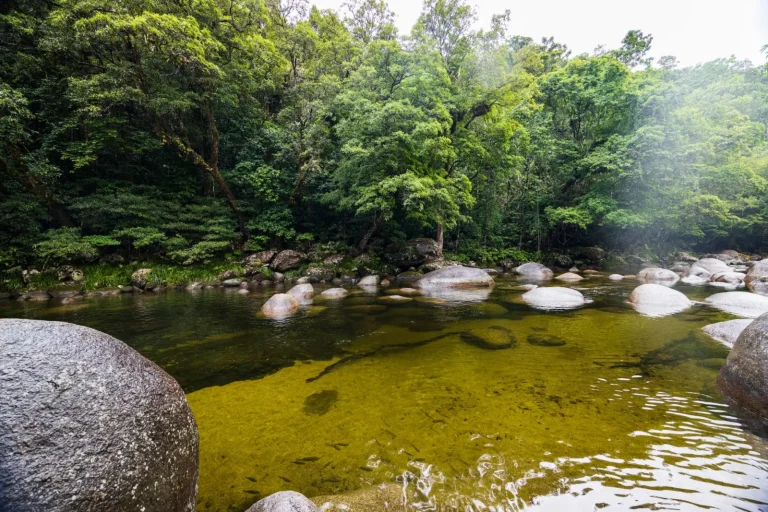
Mossman Gorge is where many people enter the Daintree. It’s accessible, well-maintained, and the rainforest here feels lush but manageable. The gorge itself acts as a focal point – the river has carved through the landscape, and the walking tracks follow established routes that thousands of visitors use each year. The canopy is dense, but the understory is relatively open in many sections, which means you can actually see what’s around you without constantly pushing through vegetation.
The elevation here is lower, typically between 50 and 200 meters, and the rainfall, while substantial, is less intense than further north. This creates conditions where certain plant species dominate. You’ll notice more figs, more palms, and a particular character to the buttressed trees that stabilize themselves in the shallow, laterite-rich soils. The animal activity is present but not overwhelming – you hear more than you see, which is typical for rainforest anywhere.
One thing that catches people off guard is the actual temperature and humidity combination. Mossman feels warm and humid, certainly, but it’s not the suffocating heat of the coastal zones further north. You can walk for an hour without feeling completely drained. The air moves slightly through the gorge, and the river provides a cooling influence. If you’re planning to do any serious walking, Mossman is where you can actually sustain effort without becoming exhausted by conditions alone.
The Middle Ground: Transition Toward Higher Rainfall
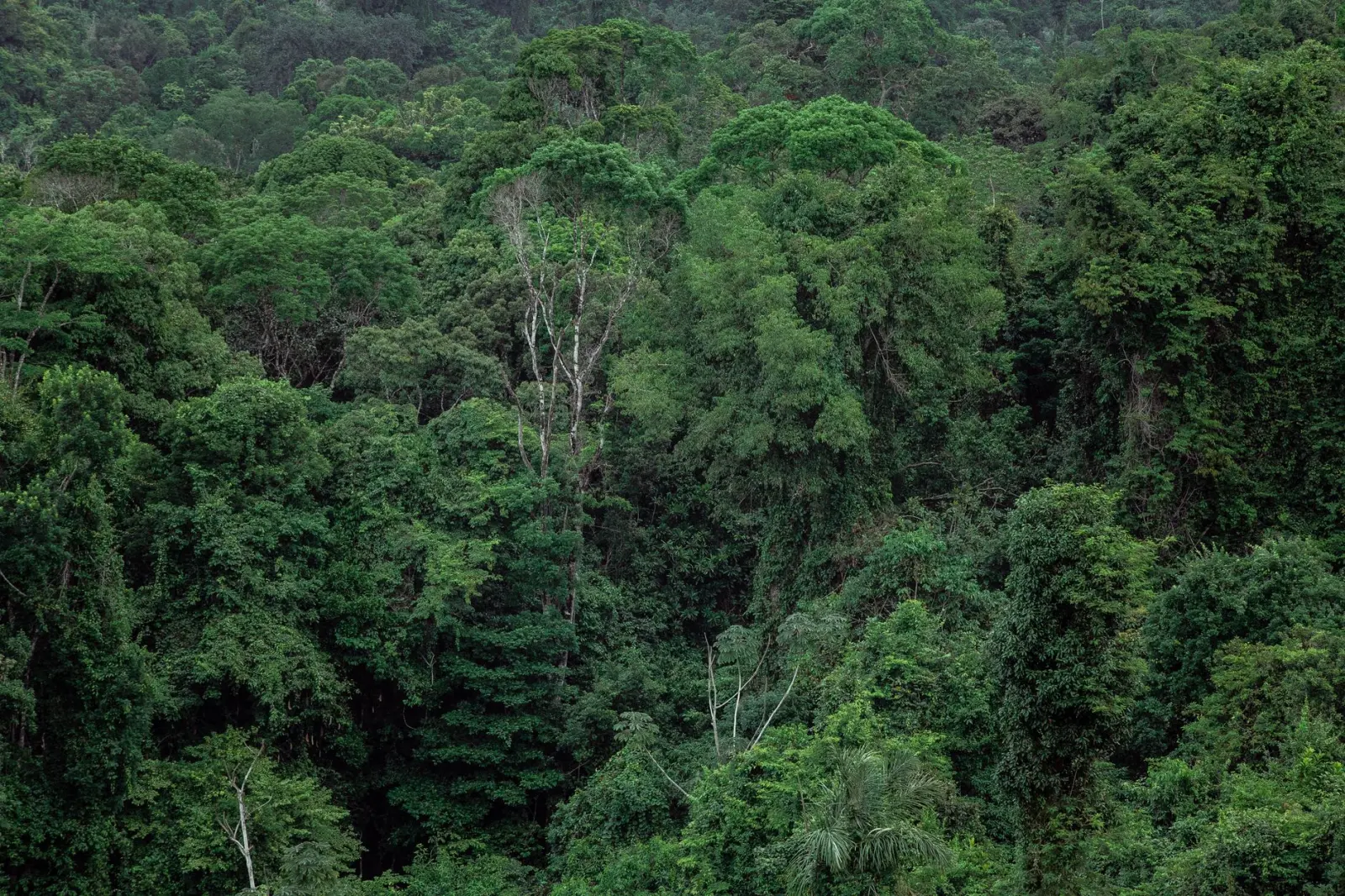
As you move north from Mossman toward the Daintree River crossing, the landscape begins to change. The rainforest becomes denser in a way that’s hard to describe until you experience it. The canopy closes more tightly overhead. The understory thickens. You start noticing more vines, more epiphytes clinging to trees, more visible moisture dripping from leaves even when it hasn’t recently rained.
This transition zone is where the rainforest’s complexity becomes apparent. The soil here retains more moisture year-round. The humidity sits higher. Plant growth is more aggressive – you can almost sense the competition for light and nutrients. Walking off-trail becomes genuinely difficult, not because of maintained paths disappearing, but because the vegetation is simply denser and more interconnected.
The Daintree River itself marks a practical boundary. The crossing is short, but it’s a genuine shift. North of the river, the rainforest has a different character. The road narrows, the sense of isolation increases, and the environment feels less managed. This isn’t a dramatic transformation, but it’s noticeable to anyone paying attention.
Cape Tribulation: Coastal Exposure and Maximum Moisture
Cape Tribulation sits at the northern edge of the Daintree, where the rainforest meets the coast and the landscape becomes genuinely challenging. The elevation rises here – you’re dealing with steeper terrain, more exposed ridges, and the constant influence of coastal weather patterns. The rainfall is higher, the wind exposure is greater, and the vegetation reflects those conditions.
The trees here are often shorter and more gnarled than their counterparts further south. They’re shaped by wind, by salt spray, and by the intensity of the tropical climate at this latitude. The understory is thicker, the ground is wetter, and the sense of being in a truly wild environment is stronger. This isn’t a place where you can wander casually. The tracks are steeper, the surfaces are more treacherous when wet, and the environment demands more attention.
The animal life here is more active and more visible than in the Mossman area, partly because the vegetation structure is different and partly because the habitat supports higher densities of certain species. You’re more likely to encounter cassowaries, more likely to see various bird species, and more likely to notice the sounds of the rainforest at night. The insect life is also more intense – the humidity and moisture support larger populations of mosquitoes, midges, and other biting insects.
Practical Differences That Matter
The shift from Mossman to Cape Tribulation isn’t just ecological – it affects how you actually move through and experience the rainforest. Mossman is a place where you can walk comfortably in regular clothes, manage a few hours of exploration, and return feeling energized. Cape Tribulation demands more preparation. The tracks are steeper, the conditions are wetter, the vegetation is more aggressive, and the weather can change rapidly.
The time required to cover the same distance increases significantly as you move north. What might be a pleasant 45-minute walk in Mossman could take twice that time at Cape Tribulation, not because the distance is greater, but because the terrain is more demanding and the conditions are more challenging. The ground is often muddy or slippery. The air is thicker. The physical effort required is noticeably higher.
Visibility also changes. In Mossman, you can often see 20 or 30 meters ahead on the track. At Cape Tribulation, the vegetation closes in more tightly. You’re moving through the rainforest rather than walking beside it. This creates a different psychological experience – some people find it more immersive and rewarding, others find it claustrophobic.
The seasonal variations matter differently across the Daintree as well. Mossman handles the wet season reasonably well – the gorge drains effectively, and the tracks remain walkable even after heavy rain. Cape Tribulation becomes genuinely difficult during the wet season. The tracks turn into streams, the vegetation becomes impassable in places, and the conditions can shift from manageable to dangerous within hours.
If you’re planning extended time in the Daintree, it’s worth recognizing that Mossman and Cape Tribulation are different environments that require different approaches. Mossman is where you can explore the rainforest with minimal fuss and maximum comfort. Cape Tribulation is where you encounter the rainforest in a more raw, demanding form. Neither is better or worse – they’re simply different expressions of what a tropical rainforest can be at different elevations and distances from the coast.