Cape Tribulation sits at a genuine ecological threshold. The rainforest doesn’t gradually fade into coastal scrub here – it drops down to the beach with almost aggressive confidence. After spending considerable time moving through this region, you notice quickly that this isn’t a gentle transition. The vegetation changes abruptly. The soil composition shifts. The air itself feels different depending on whether you’re fifty meters inland or standing on the sand.
The name itself carries weight. Captain Cook named it after the difficulties his ship faced in these waters, and the geography explains why. The continental shelf narrows dramatically here. Coral reefs sit closer to shore than they do further south. The coastal currents are unpredictable. When you’re looking at the water from the beach, you’re seeing a convergence of conditions that have shaped this place for millennia – and continue to shape it in ways that affect anyone trying to move through or around it.
What strikes you most when you arrive is the sheer density of vegetation. The Daintree Rainforest, which dominates the inland area, is among the oldest tropical rainforests on Earth. Trees here aren’t arranged in neat layers like textbook diagrams suggest. Instead, they form a chaotic, overlapping canopy where light barely penetrates to the forest floor. The humidity is constant. Even during the dry season, the air holds moisture. The ground stays damp. Fungi and decomposition happen at accelerated rates because the conditions never really interrupt that process.
The Wet Season Reality
Between November and April, this region transforms. The wet season doesn’t mean occasional rain. It means sustained, heavy rainfall that can dump hundreds of millimeters in a single day. The rainforest thrives in this, but movement becomes genuinely difficult. Roads that are passable in the dry season become treacherous. The creek systems that are minor waterways in winter swell into serious obstacles. Flash flooding happens regularly, and it happens fast.
The Bloomfield River, which cuts through the area, can rise several meters in a matter of hours during heavy downpours. Vehicles get stranded. Access to certain areas becomes impossible. The famous four-wheel-drive track that runs north from Cape Tribulation becomes impassable for extended periods. This isn’t a minor inconvenience – it’s a genuine constraint on movement and logistics. If you’re planning to be in this area during the wet season, you need to understand that some routes simply close, and they stay closed until conditions improve.
The coastal environment during the wet season brings its own complications. Crocodile activity increases. Saltwater crocodiles are present year-round in the rivers and estuaries, but during the wet season they range more widely and are more active. The ocean becomes less inviting too. Stinger season overlaps with the wet season, bringing box jellyfish and other marine hazards that make swimming unsafe without protection.
Dry Season Conditions and Access
The dry season, roughly May through October, presents a different set of realities. The rainforest doesn’t dry out completely – it’s still a rainforest, after all – but movement becomes easier. The tracks are more passable. The creeks are crossable. The humidity drops enough that spending extended time in the forest becomes less physically demanding.
This is when most visitors arrive, which means the area experiences genuine crowding during these months. The small number of accommodation options fills up. The beaches become noticeably busier. If you’re seeking solitude or a sense of remoteness, the dry season is not when you’ll find it here. The infrastructure is minimal by design, but it still reaches capacity.
The dry season also brings clearer water and better visibility for anyone interested in the reef systems. The Coral Sea sits just offshore, and the Great Barrier Reef extends into these waters. Boat access to the reef is more reliable during these months. Diving and snorkeling conditions improve significantly. The trade winds are predictable, which matters for anyone operating boats in these waters.
The Vegetation and What It Means
The rainforest here contains species found nowhere else on Earth. The biodiversity is genuine. But this also means the environment is fragile in specific ways. The soil is thin in many places. The root systems of the trees are often shallow, spreading laterally through the forest floor rather than driving deep into the earth. This is an adaptation to the wet conditions and the nutrient cycle that operates in tropical rainforests, but it also means the forest is vulnerable to disturbance.
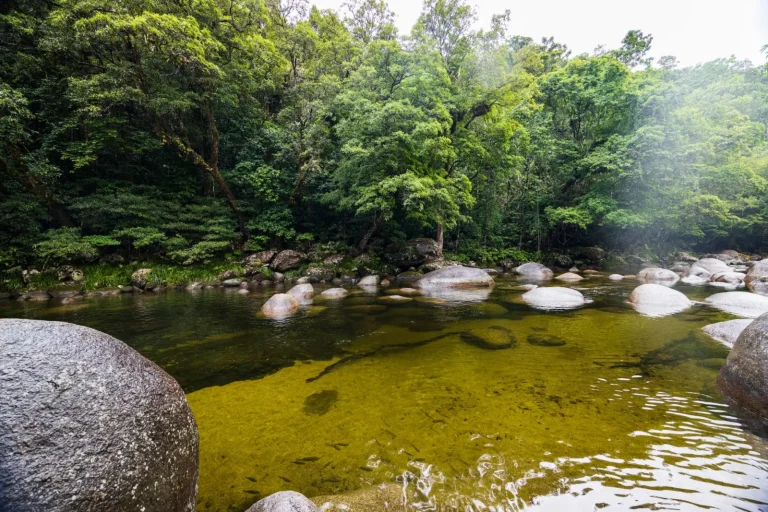
Trails through the forest require constant maintenance. Fallen trees, erosion, and the relentless growth of vegetation mean that paths degrade quickly if they’re not actively managed. The famous Mossman Gorge walk, which is one of the more accessible rainforest experiences in the area, is maintained regularly specifically because the forest would reclaim it otherwise.
The coastal vegetation is equally specialized. The mangrove systems that fringe the estuaries are nurseries for fish and crustaceans. They’re also barriers to easy movement. Wading through mangroves is slow and uncomfortable. The mud is deep and soft. The root systems are complex and trip hazards. If you’re exploring the coast, you quickly learn to respect the mangrove zones and work around them rather than through them.
Wildlife Presence and Behavior
The fauna here is abundant but not always visible. Cassowaries, large flightless birds that are endemic to this region, inhabit the rainforest. They’re shy and generally avoid humans, but they’re present. Sightings happen, particularly near fruit trees, but you’re more likely to see their tracks than the birds themselves. Respect for their space is necessary – they’re large, powerful animals, and encounters that go wrong can be serious.
Snakes are present throughout the rainforest. Most are not aggressive and will move away from human activity if given the chance. But the risk exists, particularly in the wet season when snakes are more active. Awareness of where you’re placing your hands and feet matters. Wearing appropriate footwear matters. These aren’t abstract safety concerns – they’re practical considerations that affect how you move through the environment.
The marine environment brings its own fauna. Sea turtles nest on some of the beaches. Dugongs inhabit the seagrass beds offshore. Sharks are present in the waters, though attacks are rare. The stingers that appear during certain seasons are a more immediate concern for swimmers. The environment here supports life at every scale, and coexisting with that life requires awareness and respect.
Practical Movement Through the Region
Getting around Cape Tribulation requires understanding the constraints. The main road from Cairns to Cape Tribulation is sealed, but it’s narrow and winding through much of the rainforest section. Driving time is longer than distances suggest. The road itself is well-maintained, but it’s not a highway. Heavy vehicles move slowly. During the wet season, sections can be closed or dangerous.
Beyond the main road, movement options are limited. The Bloomfield Track, which continues north from Cape Tribulation, is four-wheel-drive only and impassable during and immediately after heavy rain. There’s no public transport beyond the main towns. If you’re exploring the region, you need either a vehicle or you need to arrange tours through local operators who understand the conditions and have the equipment to navigate them safely.
Walking trails exist, but they’re not casual strolls. The Daintree Discovery Centre and various rainforest walks offer structured experiences on maintained paths. But venturing off-trail in a rainforest this dense is genuinely difficult and potentially dangerous. The vegetation is thick. Orientation is easy to lose. The terrain is uneven. These walks are designed to be accessible, but they still require reasonable fitness and appropriate footwear.
Cape Tribulation remains one of Australia’s most distinctive coastal environments precisely because it hasn’t been heavily developed. The rainforest and the reef ecosystem exist here in a form that’s closer to their natural state than in many other places. But that preservation comes with trade-offs. Access is limited. Facilities are basic. The environment imposes real constraints on movement and activity. Understanding those constraints before you arrive is the difference between a rewarding experience and a frustrating one.