Tasmania’s rainforests occupy a strange ecological middle ground. They’re not tropical – the canopy rarely reaches the height or density you’d find in Queensland or Southeast Asia. They’re not temperate in the way European woodlands are either. What you encounter instead is a forest type that exists almost nowhere else on Earth, shaped by millions of years of isolation and a climate that sits at the intersection of cool, wet, and relentlessly changeable.
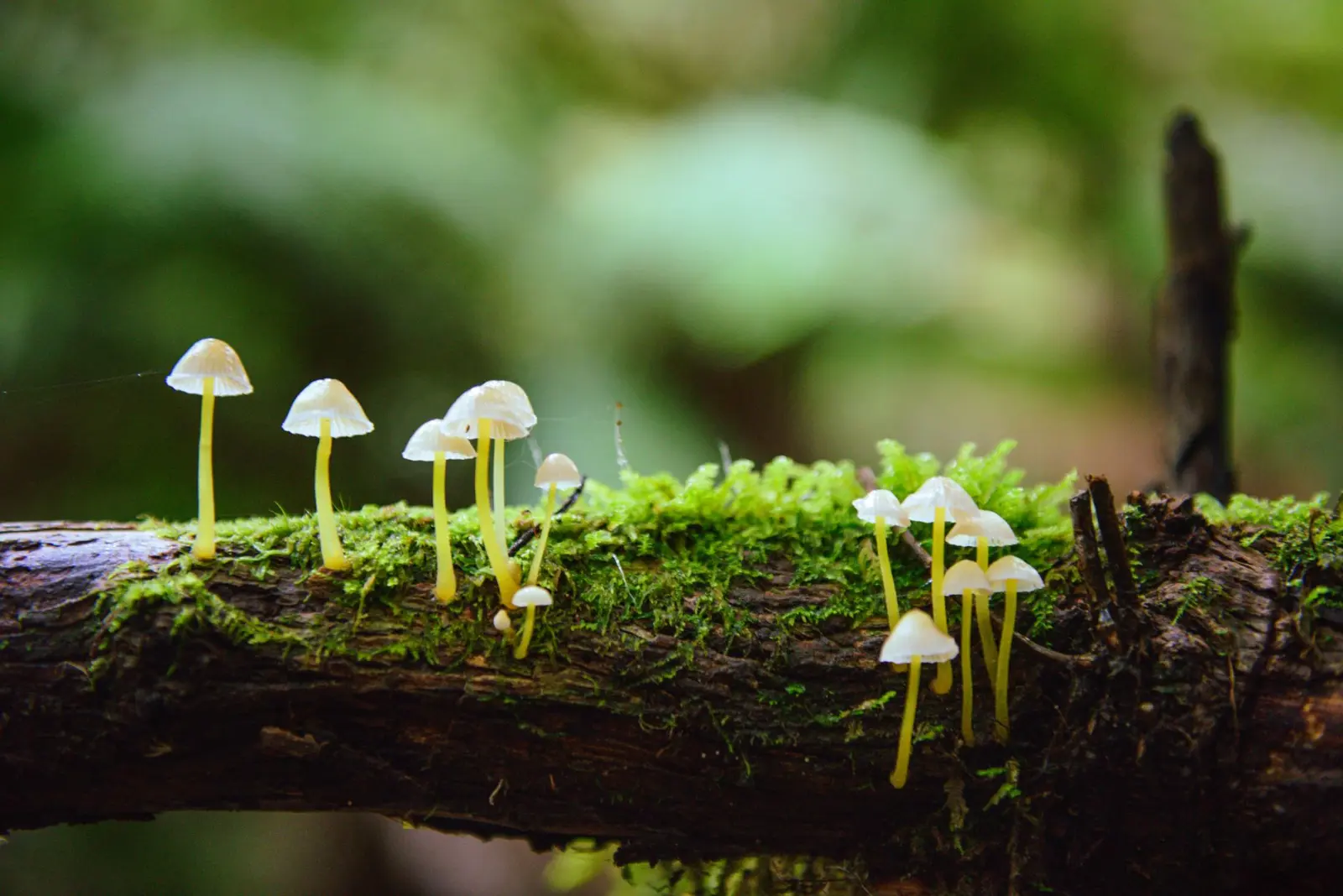
The first thing that strikes you when walking into one of these forests is the weight of moisture. The air itself feels substantial. This isn’t the oppressive humidity of the tropics; it’s a cool, penetrating damp that comes from persistent cloud cover, high rainfall, and the forest’s own water-cycling machinery. The ground stays perpetually moist, even in what locals call the “dry” season. Moss covers not just the forest floor but tree trunks, fallen logs, and rocks – sometimes so thickly that you can’t see the substrate underneath. This moss layer is functional, not decorative. It traps moisture, regulates temperature, and creates a spongy microhabitat that supports countless organisms most visitors never notice.
The plant composition tells a story of deep time. Tasmania’s rainforests contain species that have survived here since the Gondwanan era, when the southern continents were still connected. Trees like the Huon pine, Tasmanian beech, and King Billy pine are living fossils. They grow slowly – sometimes taking decades to reach what would be considered modest height elsewhere. The Huon pine is particularly striking: it can live for over 3,000 years, yet individual trees might be no thicker than a human arm even after centuries of growth. This slowness isn’t a limitation; it’s an adaptation to the cool climate and nutrient-poor soils. Fast growth requires abundant warmth and nutrients. These forests have neither, so they’ve evolved a different strategy: persistence over productivity.
The Canopy Structure and Light
The canopy in Tasmania’s rainforests is typically layered and uneven. There’s no single dominant height like you’d find in a tropical rainforest. Instead, you get a mix of tall emergent trees, mid-story layers, and dense understorey vegetation. This creates a forest that’s darker than you might expect even on a clear day. The light that reaches the forest floor is often diffuse and greenish, filtered through multiple layers of foliage and frequently obscured by cloud or mist.
This low light environment means the understory plants have adapted accordingly. Many have large, dark green leaves – a strategy to capture as much available light as possible. Ferns are abundant, particularly tree ferns, which can form their own secondary canopy in some areas. Sassafras, myrtle beech, and various smaller shrubs create a dense tangle that can make off-trail walking genuinely difficult. The forest floor itself is a complex ecosystem of mosses, liverworts, fungi, and decomposing wood in various stages of decay. A fallen log might take 50 years or more to fully decompose, and during that time it serves as a nursery for seedlings, a habitat for invertebrates, and a structural element that influences water flow and soil development.
Water and Weathering
Rainfall in Tasmania’s rainforest regions averages 1,500 to 2,500 millimeters annually, with some areas receiving considerably more. This isn’t evenly distributed. Winter and spring tend to be wetter, but the forest rarely experiences a truly dry period. The combination of high rainfall, cool temperatures, and acidic soils creates an environment where chemical weathering of rock happens relatively slowly, but physical weathering – driven by water movement and frost action – is significant. This shapes the terrain noticeably. Many rainforest areas are characterized by deep gullies, boulder-strewn valleys, and areas of exposed bedrock.
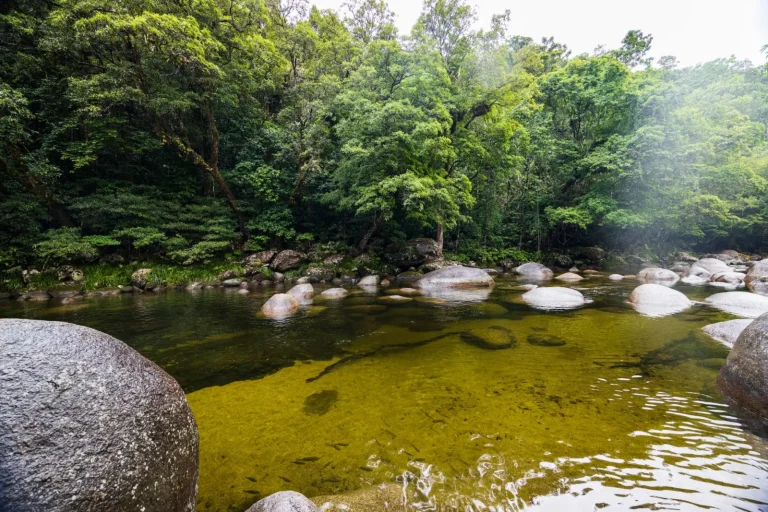
The water itself is notably pure and acidic. The forest canopy and moss layers filter precipitation, and the acidic soils (influenced by the decomposition of organic matter and the absence of limestone) mean the water that emerges from rainforest streams is often tea-colored from tannins but low in minerals. This has implications for aquatic life – the streams support specialized fish and invertebrate communities adapted to cool, clear, acidic water. It also means that any human infrastructure in rainforest areas – water pipes, for instance – needs to account for the corrosive nature of the water.
Wildlife and Ecological Relationships
The animals you encounter in these forests are often small and cryptic. There are no large predators or megafauna. Instead, you find Tasmanian devils, wallabies, possums, and a remarkable diversity of birds and invertebrates. Many species are endemic to Tasmania or to specific rainforest regions. The Tasmanian wedge-tailed eagle hunts over the forest edge. Various parrot species – including the swift parrot – move through the canopy. On the ground, the forest is alive with invertebrates: insects, spiders, and crustaceans that form the foundation of the food web.
One ecological relationship that’s particularly important is between the forest and its pollinators and seed dispersers. Many of the flowering plants in these rainforests are pollinated by birds or insects rather than wind. The fruits and seeds are often dispersed by animals – birds eating berries and passing seeds in their droppings, or small mammals caching seeds. This means the forest’s reproduction depends on maintaining populations of these animal species. It’s a tightly coupled system where the loss of a pollinator or disperser can have cascading effects.
Disturbance and Resilience
These forests are not static. They experience disturbance – wind damage, landslides, occasional fires (though less common than in drier Australian ecosystems), and human impacts. The way they respond to disturbance reveals something fundamental about their ecology. Recovery tends to be slow. A gap created by a fallen tree might take decades to fill in. After more severe disturbance, the forest often goes through a predictable succession, with pioneer species (like some of the faster-growing shrubs) colonizing first, gradually being replaced by slower-growing, shade-tolerant species.
Fire in these rainforests is unusual but not impossible. When it does occur – typically during rare dry periods or after human ignition – it can cause significant damage. The high moisture content of living vegetation means the fire typically burns the understory and leaf litter rather than the canopy, but it can still kill trees and set back forest succession substantially. This is one reason why rainforest areas in Tasmania are often protected from logging and development; they’re considered particularly vulnerable and slow to recover from disturbance.
The practical reality of spending time in Tasmania’s rainforests is that they demand respect for their scale and pace. They’re not hostile environments, but they’re not welcoming in any obvious way either. They’re cool, wet, and quiet in a way that can feel isolating if you’re not accustomed to it. The biodiversity is real but often invisible – most of the life you’re surrounded by is small, cryptic, or active at times when visitors aren’t present. Understanding this helps explain why these forests have survived so long and why they remain, despite their modest appearance compared to tropical rainforests, among the most ecologically significant forests on the planet.