
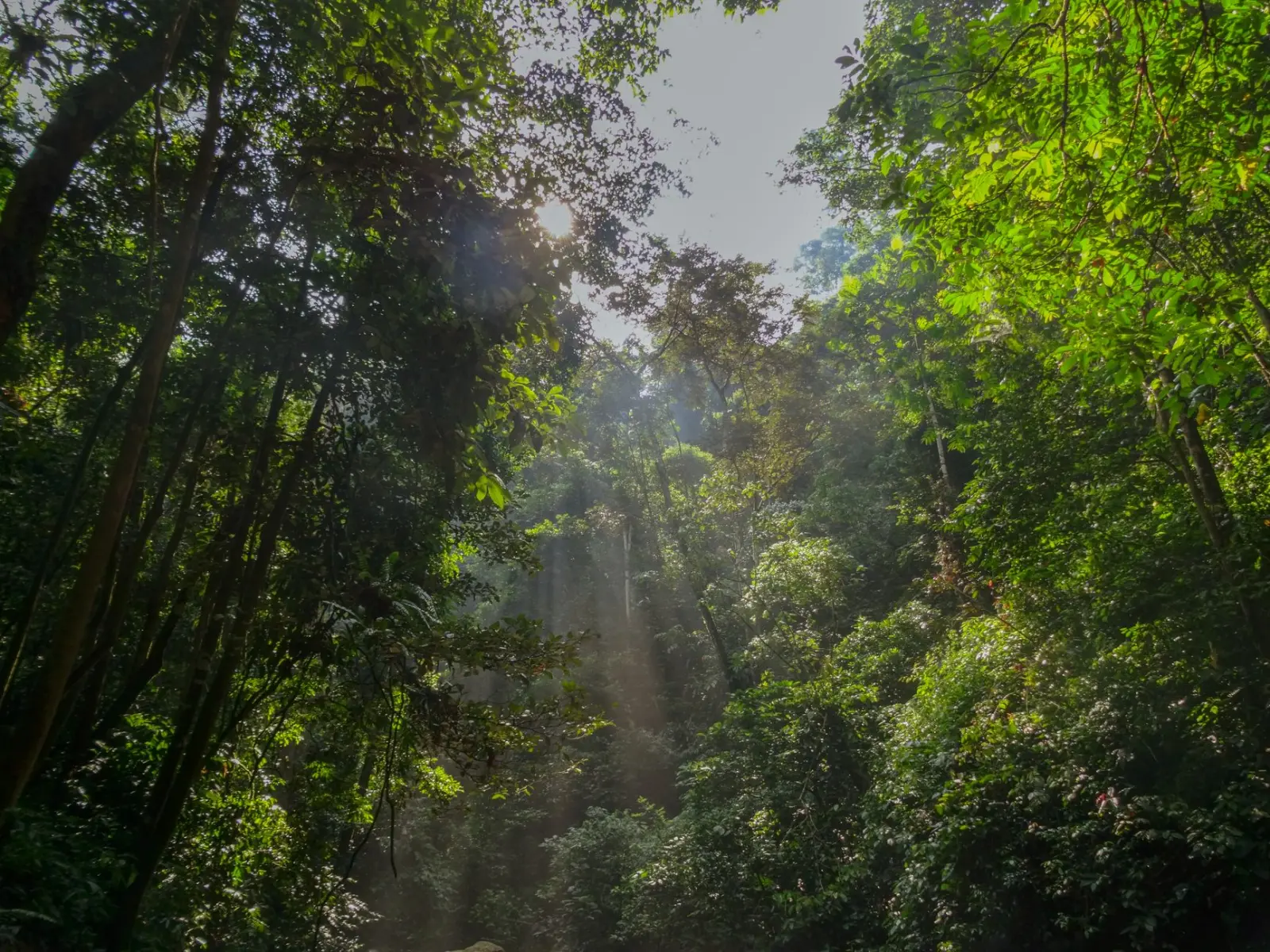
Rainforest fragmentation in Australia doesn’t announce itself with drama. It happens quietly, in increments. A logging operation here, a clearing for agriculture there, a road carved through dense canopy. Over years, what was once a continuous forest becomes a patchwork of isolated blocks separated by unsuitable habitat. The consequences ripple through the ecosystem in ways that aren’t always visible from a distance, but become undeniable once you spend time moving through these broken landscapes.
I’ve walked through both intact rainforest and fragmented sections across Queensland and northern New South Wales, and the difference in what you encounter is stark. In a continuous forest, you move through layers of interdependence. In a fragmented one, you notice absences more than presences. Certain bird calls disappear. The understory composition shifts. Seedlings of particular species become scarce. These aren’t random losses – they’re the direct result of how fragmentation disrupts the fundamental processes that keep a rainforest functioning.
The Movement Problem
Fragmentation first breaks connectivity. Large animals that range across territories – cassowaries, tree kangaroos, various macropod species – suddenly face barriers. A forest block of 50 hectares might have been adequate when connected to a larger system, but isolated, it becomes a dead end. The animals still move through it, but they can’t access the resources or genetic diversity they need from neighboring populations. Over time, isolated populations decline or vanish entirely.
The issue isn’t just about big, mobile animals. Smaller creatures that move through the understory – frogs, small mammals, insects – also struggle with fragmented habitat. A gap of cleared land that might be 200 meters wide is functionally impassable for many species that evolved in a continuous canopy. They don’t cross open space. They don’t adapt to it. They simply don’t move between fragments, which means genetic exchange between populations stops. Within a few generations, you see reduced genetic diversity and increased susceptibility to local extinctions.
Microclimatic Collapse at the Edges
What people often underestimate is how much a rainforest’s internal climate depends on its mass and continuity. An intact rainforest maintains stable humidity, temperature, and light conditions in its interior. The canopy is dense enough that the forest floor stays cool and moist even during dry seasons. Fragment a forest, and you expose vast new edge areas to direct sunlight, wind, and temperature fluctuations.
In fragmented forests, the edge effect penetrates deeper than most realize. I’ve measured humidity and temperature differences between the interior of a small fragment and its edge, and the gradient is significant – sometimes a 10 to 15 degree Celsius difference in temperature and a 20 to 30 percent difference in humidity across just 50 meters. This sounds minor in abstract terms, but for organisms adapted to stable rainforest conditions, it’s extreme. Seedlings that would thrive in the cool, moist interior of a large forest struggle or die at the edges of fragments. Soil organisms that depend on consistent moisture become stressed. Fungi and lichens that require high humidity retreat.
The smaller the fragment, the more pronounced this effect. A 10-hectare patch might have almost no true interior habitat at all – most of it is edge. The vegetation composition shifts toward species that tolerate drier, hotter conditions. Gradually, the fragment becomes less like the original rainforest and more like a transitional ecosystem, even if the trees are still technically rainforest species.
Reproduction and Pollination Breakdown
Fragmentation disrupts reproduction in ways that take years to become apparent. Many rainforest plants depend on specific pollinators – birds, insects, bats – that move between flowering trees. In a continuous forest, a flowering tree attracts pollinators from a wide area. In a fragmented landscape, a small isolated patch might have few or no pollinators visiting it. The flowers go unpollinated, or pollination rates drop sharply.
I’ve observed this with several fig species and other canopy trees. In intact forest, you see consistent fruit production. In fragmented areas, the same species produces fruit sporadically or not at all, even though the trees are healthy and flowering. The problem isn’t the tree – it’s the absence of the animals that pollinate it. Over multiple generations, trees that can’t reproduce effectively are replaced by species that either self-pollinate or attract more generalist pollinators. The composition of the forest shifts, subtly but measurably.
Seed dispersal faces similar pressures. Large frugivores – cassowaries, pigeons, flying foxes – that traditionally moved seeds across distances become confined to individual fragments. Smaller seed-dispersing animals remain, but they don’t move seeds as far or as effectively. The result is reduced genetic mixing between plant populations and, in some cases, a shift toward species with smaller seeds that disperse more passively.
Invasive Species and Disturbance
Fragmented forests are more vulnerable to invasion by weeds and non-native species. The edges are disturbed, the microclimate is altered, and the native plant community is weakened by stress. These are ideal conditions for aggressive colonizers. Lantana, privet, and various grasses establish themselves more readily in fragmented forests than in continuous ones. Once established, they’re difficult to remove and they further alter the ecosystem.
The disturbance tolerance of fragmented forests is lower, paradoxically. You’d think a forest already under stress would be resilient, but the opposite is often true. A small gap from a fallen tree in an intact forest is quickly recolonized by shade-tolerant seedlings. In a fragmented forest, the same gap might be colonized by weeds or remain open longer because the seed source for native regeneration is weak. Storms, cyclones, and other natural disturbances that the forest would normally recover from can trigger more lasting changes in fragmented areas.
Cascading Changes in Food Webs
The loss of certain plant species or the reduction in fruit and seed production ripples through the food web. Frugivores that depend on particular trees become scarce. Insectivores that fed on insects associated with those plants decline. Predators that hunted the herbivores move elsewhere or disappear. It’s not a simple linear chain – it’s a web with multiple feedback loops, and fragmentation pulls on many threads at once.
In fragmented rainforests I’ve studied, there’s often a noticeable decline in large predatory birds and an increase in generalist species. The specialized species that depend on specific resources or large territories can’t persist. The ecosystem becomes less diverse and more dominated by species that tolerate disturbance and can thrive on whatever resources remain. This isn’t a collapse in the sense of total ecosystem failure, but it is a fundamental shift toward a simpler, less resilient system.
The reality of rainforest fragmentation is that it doesn’t work like an on-off switch. The forest doesn’t suddenly stop being a forest. Instead, it becomes progressively less capable of supporting the full range of species and processes that defined it. Connectivity breaks, microclimates shift, reproduction falters, and invasive species gain ground. Each of these changes is manageable in isolation, perhaps, but together they create a cascade that’s difficult to reverse. The fragmented forest persists, sometimes for decades, but it’s fundamentally different from what it was – less diverse, less stable, and less able to adapt to future pressures.