
The Wet Tropics around Cairns attracts walkers who’ve heard the mythology – rainforest canopy walks, hidden waterfalls, pristine wilderness. The reality is more textured. After years of guiding people through these trails and watching first-timers navigate them, I’ve learned that reputation and suitability rarely align. A walk that appears straightforward on a map often involves creek crossings that change with rainfall, or humidity levels that exhaust people faster than they anticipate. The inverse is also true: less celebrated routes often deliver more reliable experiences.
The first thing to understand is that the Wet Tropics isn’t a single destination. It’s a region spanning from Cairns north to the Daintree, with trails scattered across different elevations, vegetation types, and access points. Some walks sit in lowland rainforest where the air feels thick and breathing becomes deliberate. Others climb into cooler montane forest where the canopy opens slightly and the temperature drops noticeably. This variation matters more than most visitors realize, because it determines not just what you’ll see, but how your body will respond.
The Barron Falls and Kuranda Approach
Barron Falls Walk is often the first choice for visitors staying in Cairns. It’s accessible, relatively short at around 1.5 kilometers, and the falls themselves are genuinely impressive, particularly after rain. The track is well-maintained and the gradient is moderate. What people don’t always anticipate is the humidity. Even in cooler months, the rainforest holds moisture like a greenhouse. You’ll feel sweat accumulating within minutes, and the sensation doesn’t ease as you walk. It’s not dangerous, but it’s uncomfortable if you’re expecting a crisp mountain hike. The walk also gets busy, especially mid-morning. If you go early – before 8 AM – you’ll have the track largely to yourself and the light through the canopy is better.
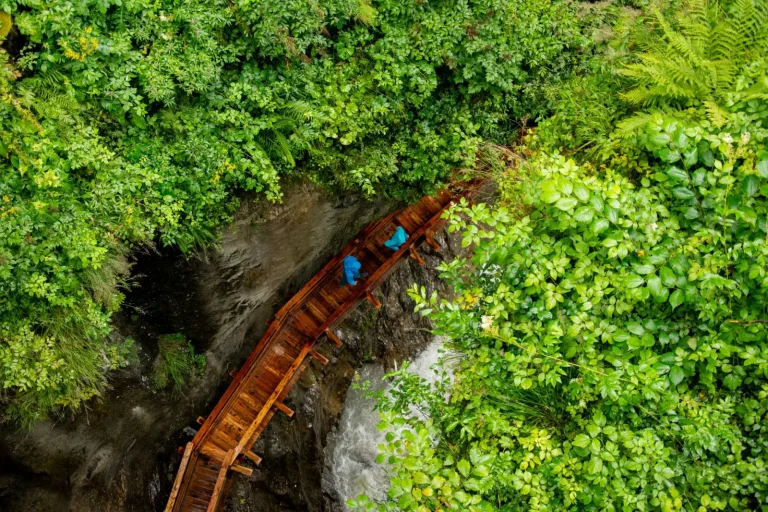
The Kuranda Scenic Railway connects to several short walks in that area. The Rainforest Nature Walk near the railway station is extremely gentle and takes about 30 minutes. It’s more of an introduction to the forest structure than a proper walk, but for people with limited mobility or those jet-lagged and not yet acclimatized, it serves a purpose. The boardwalk keeps you above the muddy forest floor, and the interpretation boards explain the layered ecosystem. I’ve seen elderly visitors find this walk genuinely satisfying because it requires almost no physical effort while still delivering forest immersion.
Crater Lakes and Elevation Change
Lake Barrine and Lake Eacham sit in volcanic craters and offer walking loops that feel different from lowland rainforest. The Crater Lakes Circuit is approximately 11 kilometers if you do both lakes, though most first-timers walk just one. The elevation is higher than the coastal plain, so the air feels fresher. The walks are mostly flat, following the lake margins, and the scenery is consistent – rainforest reflected in still water. This consistency is actually an asset for newcomers. There are no surprises, no scrambling sections, no creek crossings that require judgment calls about water levels.
What I’ve observed is that people often underestimate how long these walks take. The terrain is easy, so visitors assume they’ll move quickly. In practice, the combination of humidity, the forest’s visual density, and the mental effort of navigating the track means most people move slower than they would on an equivalent suburban walk. A 5-kilometer loop might take two hours rather than one. This isn’t a problem if you’ve accepted it beforehand, but it becomes frustrating if you’re watching the time.
Mossman Gorge and Water Crossings
Mossman Gorge is north of Cairns and has become increasingly popular. The walk itself is short – around 2.4 kilometers to the main swimming hole – but it involves creek crossings. This is where experience matters. In dry periods, the creek is shallow and the rocks are stable. After heavy rain, the same creek becomes a serious obstacle. I’ve seen fit visitors turn back because the water was too high or the current too strong. The gorge is spectacular, with towering rainforest walls and clear pools, but you need to check recent rainfall before committing. Local guides or the information center can tell you whether conditions are walkable.
The other consideration is that Mossman Gorge is genuinely slippery. The rocks are smooth and often wet. Proper footwear matters here – not just for grip, but for ankle support. I’ve seen people arrive in casual shoes and regret it within minutes. The walk is short enough that you might think casual footwear is fine. It isn’t. The combination of wet rock, uneven footing, and the need to balance while crossing the creek demands proper hiking shoes.
The Daintree and Logistics
The Daintree region, further north, contains some of the oldest rainforest in the world. Walks here include Marrdja Boardwalk and Dubuji Boardwalk, both of which are short, elevated, and relatively easy. These boardwalks are excellent for first-timers because they remove the uncertainty of footwork. You’re not navigating muddy, root-strewn forest floor. You’re walking on a constructed path that keeps you dry and safe. The trade-off is that you’re somewhat separated from the forest itself. The boardwalk experience is mediated, less immersive than walking directly through the vegetation.
The Daintree requires a separate trip from Cairns – it’s about 90 minutes’ drive, and you need to factor in the ferry crossing of the Daintree River. This makes it a half-day commitment minimum. Many first-time visitors underestimate the logistics and end up feeling rushed. If you’re going to the Daintree, plan to spend at least four to five hours in the region. Walk one or two trails, have a meal, and actually absorb the experience. Trying to cram it into a two-hour visit defeats the purpose.
What Actually Matters for First-Timers
The most reliable first-timer walks are those that combine short distance, minimal elevation gain, and established infrastructure. Barron Falls, Crater Lakes, and the Daintree boardwalks all fit this profile. They’re not the most adventurous options, but they’re the ones where you’ll actually finish feeling satisfied rather than exhausted or frustrated.
Fitness matters less than people assume. I’ve seen very fit visitors struggle with humidity and the mental fatigue of navigating unfamiliar terrain, while less athletic people move steadily and enjoy themselves. What actually determines success is realistic expectations about pace, comfort with being warm and slightly damp, and acceptance that rainforest walking feels different from other environments. The forest is dense, the air is heavy, and progress feels slower than it should. This is normal. It’s not a sign that you’re unfit or that something is wrong. It’s just how rainforest walking feels.
Timing your visit matters more than which walk you choose. The wet season, roughly November to April, brings higher humidity, more insects, and unpredictable creek levels. The dry season is more comfortable, but it’s also busier and the creeks are lower, which can be anticlimactic if you were hoping to see waterfalls. The shoulder months – May, June, September, October – are often the sweet spot. Humidity is manageable, rainfall is moderate, and crowds are lighter than peak season.
One final observation: the walks that disappoint first-timers are usually those chosen for their reputation rather than their suitability. A walk that’s famous for its difficulty or its remoteness will frustrate someone on their first visit to the region. The best approach is to choose something moderate, complete it successfully, and use that experience to gauge what you might attempt next. Confidence builds on the Wet Tropics, and it builds fastest when you’ve had a positive experience early on.