
Barron Falls in Far North Queensland sits in a rainforest gorge that looks dramatically different depending on when you visit. The waterfall itself is a permanent fixture, but the volume of water moving through the gorge varies enough that it fundamentally changes what you experience there. After multiple visits across different seasons and years, I’ve noticed patterns that most casual visitors miss – and some that catch them off guard.
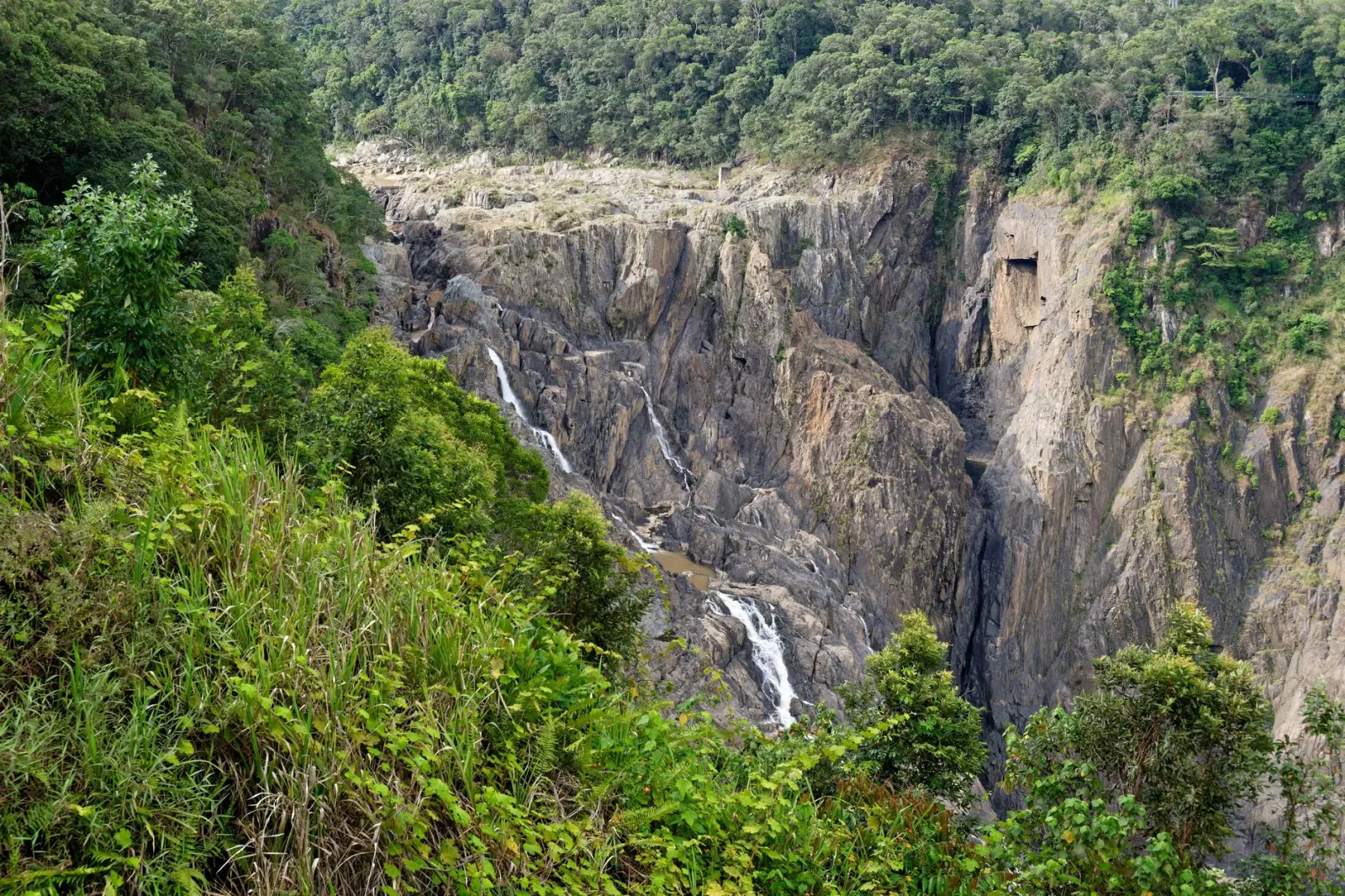
The gorge is cut into volcanic basalt, which means the rock is dark, dense, and doesn’t absorb water the way softer stone does. When heavy rain falls in the catchment upstream, water moves through the system quickly. The falls can shift from a modest cascade to a powerful torrent in hours. Conversely, during dry spells, the flow drops to a thin ribbon that looks almost apologetic against the cliff face. This isn’t random variation – it’s tied directly to rainfall patterns in the Atherton Tablelands, where most of the catchment sits.
Seasonal Rhythm and What Drives It
The wet season in Far North Queensland runs roughly November through March, though the heaviest rainfall typically concentrates between December and February. During this window, the catchment receives sustained and intense downpours. The result is consistent, powerful flow at Barron Falls. The gorge fills with noise and spray. If you’re standing on the viewing platform, you feel the mist on your face and hear the roar clearly. The water at the base churns and froths.
The dry season – May through September – is when flow becomes noticeably lighter. By July and August, the falls often drop to a fraction of their wet-season volume. The water still moves, but it’s quieter, more contemplative. Some visitors find this version disappointing. Others prefer it because the gorge feels less overwhelming and the walking tracks are drier and safer.
What complicates this simple seasonal picture is that rainfall isn’t evenly distributed. A single heavy storm in the catchment can spike flow dramatically, even in the dry season. I’ve seen the falls transition from thin to substantial within a day or two of significant rain, then gradually decline again as the system drains. This variability means that timing matters more than the calendar date alone.
Access and Safety Across Flow States
The main viewing platform at Barron Falls is well-maintained and safe across all flow conditions. That’s not where complications arise. The issue is with the walking tracks that descend into the gorge and approach the falls more closely. During high flow periods, the tracks can become slippery or even partially submerged. Spray from the falls creates a fine mist that coats rocks and vegetation. Footing becomes uncertain. I’ve watched experienced walkers lose their balance on sections that seemed manageable because they underestimated how slick the rock becomes.
The gorge itself is steep and the vegetation is thick. If you slip, there’s not much to grab. The drop isn’t sheer everywhere, but it’s unforgiving in most places. Park rangers and local guides take water levels seriously for this reason. When flow is high, some sections of track may be closed or marked as hazardous. This isn’t overcaution – it’s based on actual incidents and near-misses.
During dry periods, the tracks are much safer underfoot. The rock dries out. Grip improves. The vegetation is less slippery. You can move more confidently and take time to observe details – the ferns clinging to the cliff face, the small pools where water collects, the way the basalt is fractured and weathered. The experience shifts from “get through this safely” to “explore and observe.”
The Gorge Itself: Geology and Flow Dynamics
The gorge is narrow in places, which means water velocity can increase significantly during high flow. The basalt walls channel water like a natural trough. Where the gorge widens slightly, the water spreads and slows. Where it narrows, it accelerates and deepens. This creates variation in water color and behavior even within a short distance. High flow water is usually milky or tan-colored because it’s carrying sediment and organic matter from upstream. Lower flow water is clearer and you can see the rock beneath the surface more easily.
The pools at the base of the falls are deeper during high flow periods. They also drain and refill more dynamically. I’ve noticed that the ecosystem in these pools changes with flow conditions. During sustained high flow, certain species seem to move downstream or shelter in calmer areas. During low flow, the pools become more stable habitats and you see different organisms – small fish, invertebrates, water insects – that prefer quieter water.
One detail that often goes unnoticed is the sound profile of the gorge. High flow creates a continuous roar that echoes off the basalt walls. It’s immersive but can be overwhelming. Low flow lets you hear the individual components – the main cascade, the smaller streams running down the cliff face, the water trickling through the vegetation. If you’re interested in the finer details of the place, low flow periods offer more opportunity to observe without being dominated by noise.
Practical Timing Considerations
If you want to see Barron Falls at significant flow, the wet season is your best bet. December through February offers the highest probability of powerful water movement. However, this is also when the gorge is most crowded and the tracks are most challenging. The viewing platform remains accessible, but if you want to walk the lower tracks, you need to be confident on slippery terrain and comfortable with steep drops nearby.
If you prefer easier walking and a more intimate experience with the gorge itself, aim for the dry season. June through August typically offers lower flow, drier tracks, and fewer visitors. The falls are less dramatic, but the gorge is more accessible for exploration. You can spend time observing the rock formations, the vegetation, and the smaller water features that get overwhelmed by high flow.
The shoulder seasons – April, May, September, and October – are unpredictable. Flow can be anywhere on the spectrum depending on recent rainfall. If you’re planning a specific trip, check recent rainfall data for the Atherton Tablelands rather than relying on seasonal generalizations. Local visitor centers and ranger stations have current information about track conditions and flow rates.
Weather forecasts matter too. If heavy rain is predicted in the days before your visit, expect higher flow and more challenging conditions. If there’s been a dry spell, expect lower flow and easier walking. Neither scenario is inherently better – it depends on what you’re hoping to experience and how confident you are moving through the gorge under different conditions.
The Barron Falls gorge reveals itself differently across its seasonal cycle. The waterfall is always there, but the gorge’s character – its mood, its accessibility, its physical demands – shifts with water movement. Understanding these patterns helps you plan a visit that matches your interests and abilities rather than arriving unprepared for what you’ll actually encounter.