
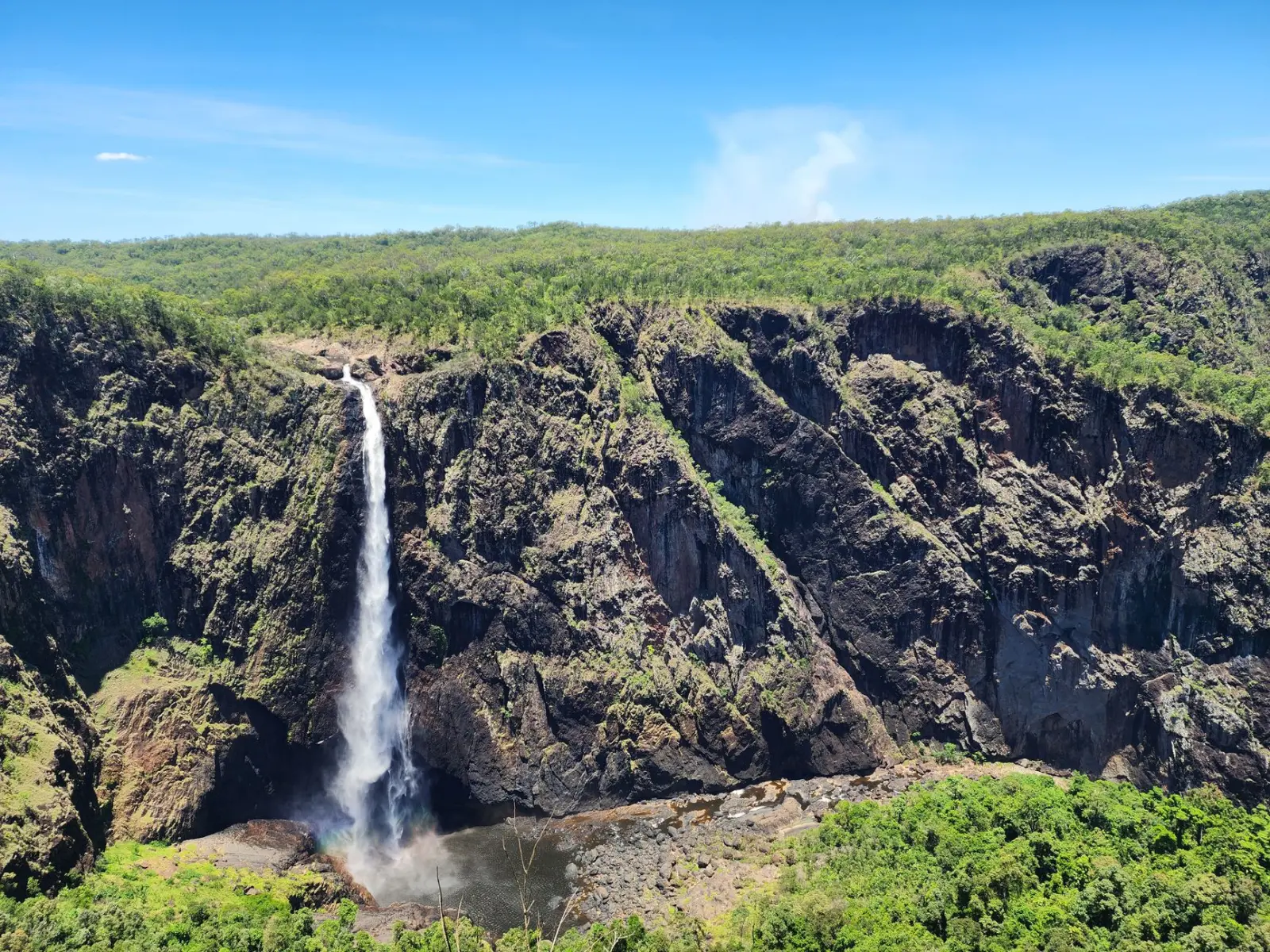
Wallaman Falls sits in far north Queensland, about two hours inland from Ingham, and it holds the distinction of being Australia’s tallest permanent single-drop waterfall at 268 metres. That figure matters because it distinguishes Wallaman from other falls that cascade in stages – this one commits to a straight plunge. I’ve visited it several times across different seasons, and the experience varies dramatically depending on when you arrive and how prepared you are for what the rainforest actually requires of you.
The falls exist within a pocket of subtropical rainforest that feels genuinely isolated. You don’t stumble onto Wallaman by accident. The drive from the highway winds through agricultural land, then narrows into a winding approach road that eventually terminates at a small parking area. The isolation is real, not manufactured for tourism. There’s a basic visitor facility, but this isn’t a manicured attraction with multiple facilities and crowds. That’s both its appeal and its practical challenge.
The walk to the main viewing platform takes roughly 15 minutes from the car park, descending through rainforest on a formed track. The path is well-maintained but steep in sections, and the rainforest canopy keeps it perpetually damp. Even on dry days, moisture lingers here. The soil stays soft, and tree roots cross the path regularly. If you’re arriving with worn footwear or expecting a casual stroll, you’ll notice the difference quickly. The descent is manageable, but the return climb – when you’re fatigued and your legs are already tired – is where people feel the gradient.
Water Volume and Seasonal Reality
The height of Wallaman is consistent, but the visual impact and the character of the falls change dramatically with rainfall. During the wet season (December through March), the falls become a powerful torrent. The volume of water is substantial, and the sound is genuinely loud. Mist rises from the base and creates a humid microclimate around the viewing area. The rainforest responds to this water abundance – everything is greener, more lush, and the air feels heavier.
In the dry season, the falls thin considerably. You’ll still see water falling from 268 metres, but it becomes more of a thread than a sheet. The mist dissipates. The sound reduces to a softer background presence. Some people find the dry-season version disappointing because their expectation was shaped by photographs taken during wetter months. Others prefer it because the viewing area is less crowded and the experience feels more intimate. Neither version is objectively better – they’re simply different expressions of the same geographic feature.
The rainforest itself is less affected by seasonal variation than you might expect. The vegetation remains dense year-round. The canopy is thick enough that the understory stays shaded and relatively cool even in summer. Ferns, palms, and smaller trees create multiple layers. Fallen logs and leaf litter cover the ground. It’s genuinely rainforest ecology, not just scattered trees with ferns underneath.
The Hike Beyond the Main Platform
Most visitors stop at the main viewing platform and return to the car park. That’s a reasonable choice given the time and effort. But there’s a longer walk that descends further into the rainforest toward the base of the falls. This track is less frequented, less maintained, and considerably more demanding. I’ve done it several times, and it requires different preparation than the main platform walk.
The extended walk adds another 30 to 40 minutes of descent, depending on fitness and how carefully you move. The track becomes narrower, steeper, and more exposed in places. Handholds become necessary rather than optional. The rainforest closes in more densely. You’re moving through genuinely wild terrain, not a manicured park walk. The reward is proximity to the falls themselves and a sense of being in the rainforest rather than observing it from a distance.
The return climb from the base is where fatigue becomes a real factor. You’ve already descended 15 minutes to the main platform, then another 30 or 40 minutes further down. The return means climbing back up that extended section, then the initial steep section, then the final stretch to the car park. Total time can easily reach three hours for the full walk. In warm weather, this matters. People underestimate how much energy the climb requires, especially if they’re not regularly hiking in humid conditions.
What the Environment Actually Demands
The rainforest here is wet, slippery, and unforgiving to careless movement. The track itself is solid, but the surrounding environment is slick. Moss and algae grow on rocks and exposed tree roots. After rain, the track becomes genuinely treacherous. I’ve seen people slip on sections that looked innocuous. Proper footwear isn’t optional – it’s a practical necessity. Shoes with grip and ankle support perform noticeably better than casual sneakers or sandals.
The humidity is constant. Even in the cooler months, the rainforest maintains moisture. In summer, it becomes oppressive. The air feels thick. Sweat doesn’t evaporate efficiently. Your clothing gets damp from both perspiration and ambient moisture. This affects how you feel physically and how long you can comfortably stay active. People accustomed to dry-climate hiking sometimes underestimate the energy cost of moving through humid rainforest.
Insects are present but not overwhelming. Mosquitoes exist, particularly near the base of the falls where moisture is highest. Leeches appear during and after rain. They’re not dangerous, but they’re an annoyance if you’re not expecting them. Insect repellent is worth bringing. Long sleeves and pants reduce exposure, though they increase heat stress in warm weather. It’s a trade-off without a perfect solution.
Water is available at the visitor facility, but if you’re doing the extended walk, carrying sufficient water matters. The walk takes longer than people typically anticipate, and dehydration in humid conditions sneaks up on you. A litre or more is reasonable to carry, especially in warm months.
Timing and Practical Logistics
The drive from Ingham takes roughly two hours depending on which direction you’re coming from. If you’re based on the coast, it’s a significant inland detour. The road is sealed but winding, and it’s not a quick journey. This means Wallaman works best as a dedicated destination, not something you squeeze in between other activities. People sometimes treat it as a quick stop and find themselves rushed, which diminishes the experience.
Starting early matters. The parking area fills on weekends and public holidays, but more importantly, an early start gives you daylight for the full walk and avoids hiking back in fading light. The rainforest canopy reduces light penetration, so dusk arrives earlier than it would in open terrain. I’ve done the walk in afternoon light and found the return journey darker than anticipated.
The visitor facility has toilets and basic shelter, but there’s no food service. If you’re planning to spend several hours here, bringing snacks and water is essential. The isolation that makes Wallaman appealing also means you can’t rely on nearby services. Self-sufficiency is expected.
Wallaman Falls is worth visiting, but it rewards preparation and realistic expectations. The rainforest setting is its defining feature – not just a backdrop to the falls themselves. The water drop is impressive, but the environment demands respect for what it actually is: wet, steep, humid, and genuinely remote. People who arrive understanding those conditions tend to have a better experience than those expecting a casual waterfall viewing.