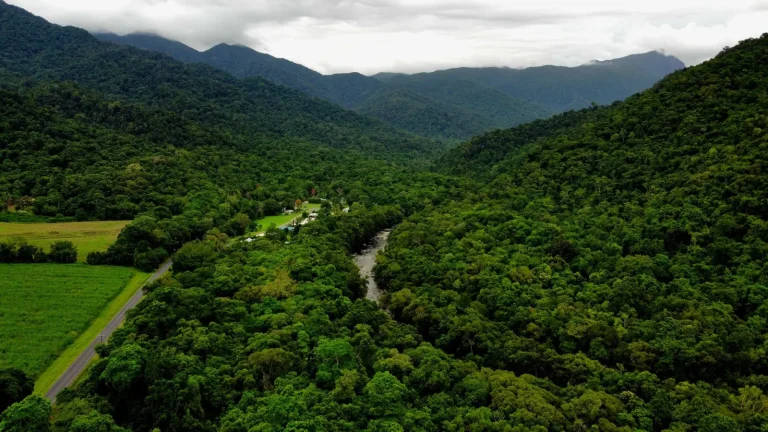

Lamington National Park sits on the Queensland-New South Wales border as one of Australia’s oldest protected rainforests. After multiple visits across different seasons, the park reveals itself not as a uniform green expanse but as a layered, demanding landscape where elevation, moisture, and time create distinct ecological zones. The Gondwana World Heritage designation reflects something real: this isn’t just scenery. It’s a remnant of an ancient forest system that once covered much of eastern Australia, and walking through it feels different from other rainforests because the structure, the species composition, and the sheer age of the place work on you in ways that aren’t immediately obvious.
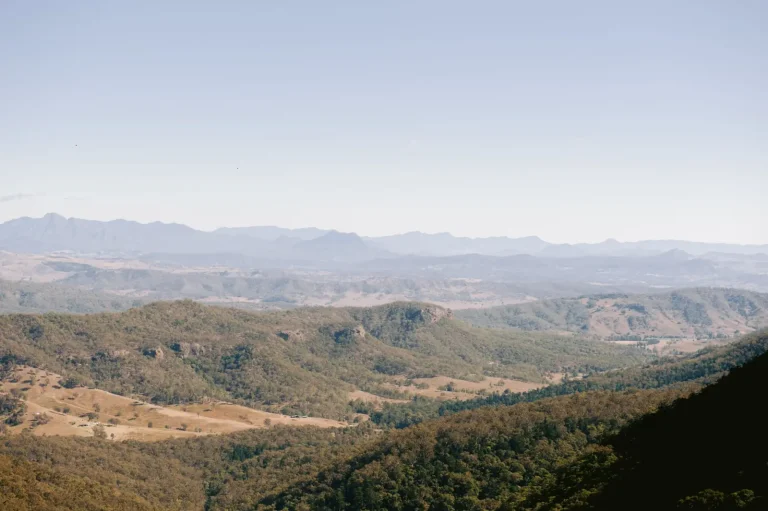
The first thing to understand is that Lamington operates at altitude. The park’s main plateau sits around 1000 metres, with peaks reaching toward 1200 metres. This elevation changes everything – temperature, rainfall patterns, vegetation type, and how your body responds to the terrain. The air is cooler than the coastal lowlands, sometimes noticeably so, and the humidity feels different because the cloud cover is frequent and the ground stays wetter longer. Trails that look moderate on a map become genuinely taxing because the combination of slope, soft ground, and moisture means your footing is never entirely certain. I’ve watched fit walkers underestimate this repeatedly, arriving at the plateau expecting an easy afternoon and instead finding themselves fatigued by mid-morning.
The Forest Structure and What It Tells You
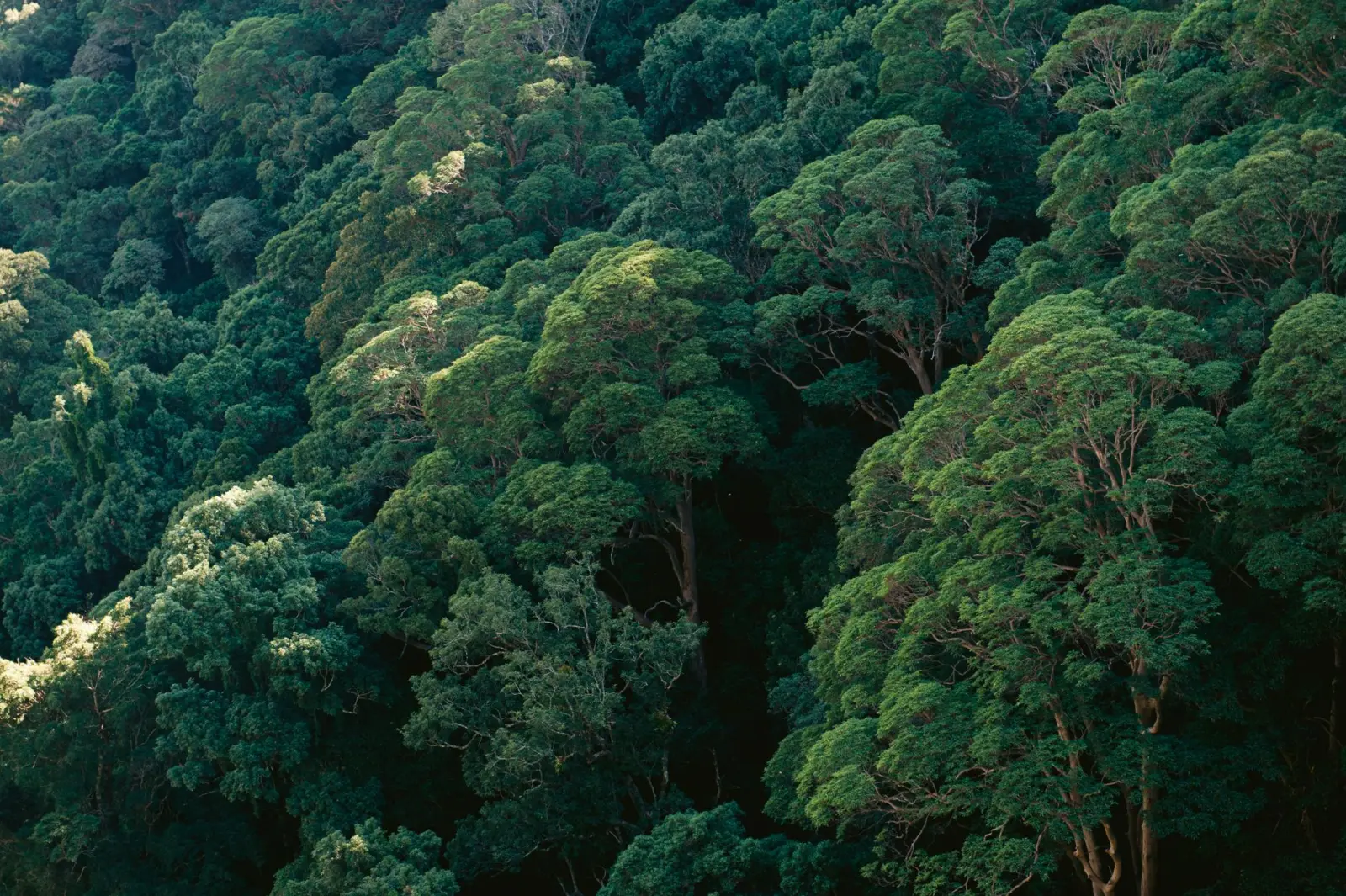
Gondwana rainforests have a particular architecture that becomes apparent once you stop looking at the canopy and start observing the vertical layers. The tallest trees – the emergents – are often separated by substantial gaps, which is unusual in tropical rainforests where you’d expect a dense, continuous canopy. These gaps exist because many of Lamington’s dominant species are slow-growing, long-lived trees that don’t form a tight competitive layer. Below them sits the main canopy, then an understory of smaller trees and palms, then a dense shrub layer, and finally a forest floor that’s rarely bare soil – it’s usually covered in ferns, seedlings, and decomposing material.
This layering matters practically. The light changes as you move through the forest. In some sections, particularly where the understory is thick, you’re walking in near-twilight even at midday. In other areas, especially where a large emergent has fallen and opened the canopy, the light is surprisingly bright and the vegetation becomes denser, more tangled. The trails themselves reflect this: some sections are relatively open and easy to navigate, while others require careful footwork because the ground is obscured by ferns and fallen branches. The park maintains trails reasonably well, but maintenance is reactive rather than preventive, so after heavy rain, sections can become slippery and root systems become more prominent obstacles.
Seasonal Variation and Visitor Experience
Lamington’s rainforest changes noticeably between seasons, though it never becomes dormant or dry. Winter (June to August) is cooler and drier – relatively speaking. Trails are more manageable, visibility is better, and the air feels clearer. This is when most visitors come, and it’s when the park feels most accessible. However, “drier” doesn’t mean dry. The forest still receives substantial rainfall, and the ground remains sodden. Winter also brings lower cloud cover at the plateau, which means views from lookout points are more likely to be clear, though you might wait hours for cloud to clear.
Summer (December to February) transforms the experience. Rainfall increases significantly, humidity rises, and the forest becomes actively dripping. Trails that were straightforward in winter become slick and require genuine caution. The understory vegetation grows more vigorously, and insects become far more active. Leeches appear in wetter areas, which is a minor but persistent annoyance – they’re not dangerous but they’re relentless, and managing them requires either accepting the bites or using salt or insect repellent preventively. The canopy becomes denser as deciduous species leaf out, and the light becomes even more subdued. Visitor numbers drop significantly in summer, which changes the social experience of the park considerably. You’re more likely to have sections of trail entirely to yourself, which some people prefer and others find isolating.
What the Gondwana Designation Actually Means
The World Heritage listing isn’t purely symbolic. Lamington contains plant species and ecological communities that exist nowhere else on Earth or only in a handful of other locations. The park protects subtropical rainforest types that are genuinely ancient – some of the plant families present have fossil records going back tens of millions of years. This means the forest isn’t just old in the sense of having old trees; it’s old in the sense that the entire ecosystem represents a survival of something that used to be far more widespread.
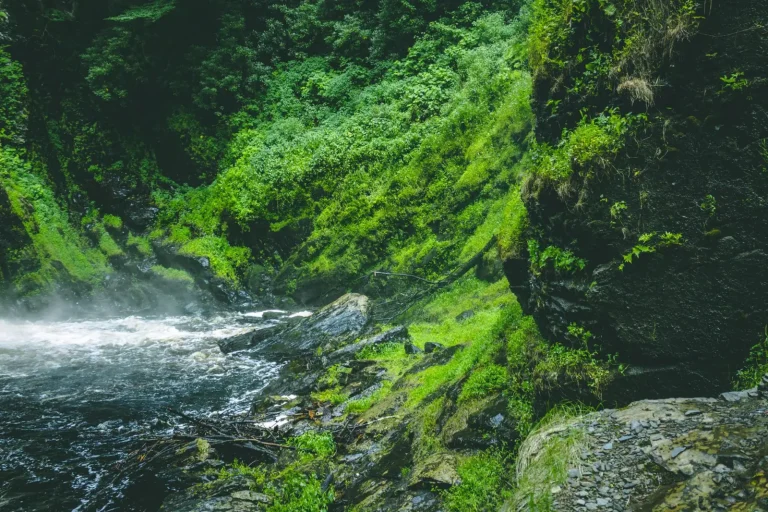
Walking through this landscape, you notice certain things if you’re paying attention. The diversity of fern species is extraordinary – there are tree ferns, ground ferns, epiphytic ferns growing on other plants, and ferns at every stage of decomposition. The bird life reflects this age and complexity: species here have evolved in this specific environment for millennia, and their behavior and ecology are adapted to these particular conditions. You’ll hear birds you won’t encounter in younger or more disturbed forests. Similarly, the invertebrate life is complex and largely invisible – the forest floor is a working ecosystem of decomposers, predators, and parasites that process the enormous volume of organic material constantly falling from the canopy.
This ecological complexity means that casual disturbance has outsized effects. Trails that are heavily used develop erosion patterns that are slow to recover because the forest floor is delicate and the understory species are slow-growing. Invasive species, particularly weeds and feral animals, can disrupt the balance in ways that take decades to manifest visibly. The park management is aware of these issues, but managing a World Heritage rainforest with limited resources means prioritizing certain areas and accepting that other areas receive less intervention.
Practical Realities of Spending Time Here
Accommodation at Lamington ranges from the established O’Reilly’s Rainforest Retreat at the southern end to more basic camping and cabin options. The choice affects your experience substantially. Staying at the plateau allows you to do early morning walks when the forest is most active and the light is best. Day visits from the Gold Coast are possible but require early starts and mean you’re walking in the warmest part of the day, when the forest feels more oppressive and you’re more likely to encounter other visitors.
The main trails – Picnic Creek, Morans Falls, Rainforest Circuit – are well-marked and reasonably maintained, but “well-maintained” is relative. A trail that’s fine in winter can be treacherous after heavy rain. The distances are often shorter than they feel because the terrain is uneven and your pace is slower than on flat ground. A three-kilometre walk can take ninety minutes or more, particularly if you’re moving carefully on slippery sections or if you’re stopping frequently to observe the forest.
Water is available at some points along trails, but carrying your own is essential. The forest canopy is so dense that you don’t notice the sun’s intensity, but you’re still losing moisture through exertion and the humid air. Dehydration sneaks up on you in rainforests because the environment feels wet and cool, but you’re working hard and sweating under the vegetation. Similarly, insect protection is worth taking seriously. Mosquitoes are present, particularly near water, and while they’re not a constant plague, they can be persistent in certain areas and seasons.
The forest demands respect for its physical reality. It’s not hostile, but it’s indifferent to your comfort. The terrain is unforgiving if you’re not paying attention, the weather can change quickly, and getting lost is possible despite trail marking because the forest looks similar in many directions and landmarks are subtle. Most people who visit Lamington have straightforward experiences, but the park’s age, complexity, and elevation mean that things can go wrong faster than in more manicured landscapes. This isn’t a reason to avoid it – it’s a reason to approach it with realistic expectations and appropriate preparation.