
The Gold Coast hinterland rainforest is one of those places that looks deceptively straightforward on a map. You see the green patches, the elevation lines, the marked trails, and it seems manageable. The reality, though, involves a different set of variables entirely. After spending considerable time moving through these forests – in different seasons, at different times of day, and under varying weather conditions – certain patterns emerge that most casual visitors don’t anticipate until they’re already committed to being there.
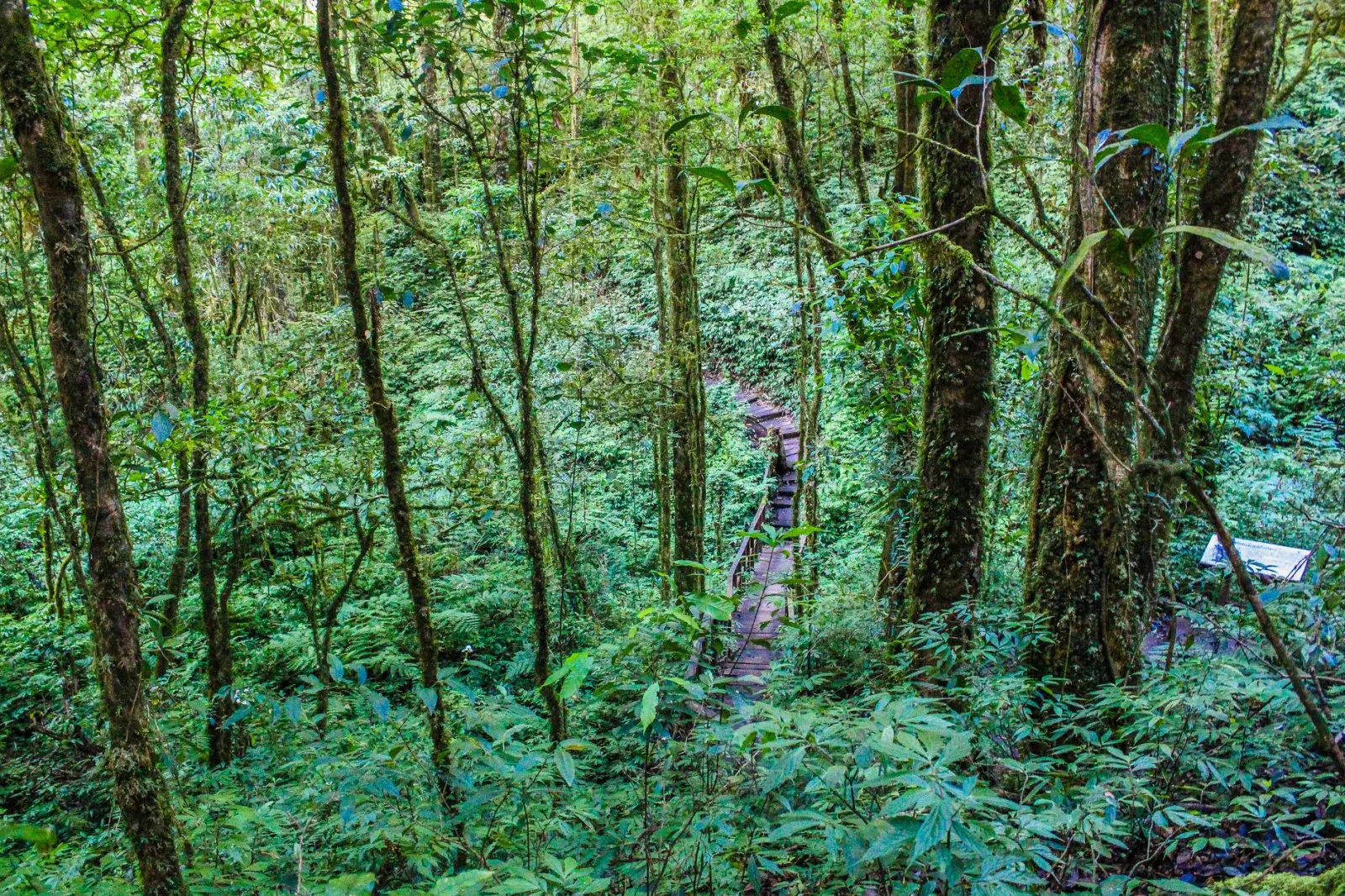
What strikes you first is the density. The subtropical rainforest here isn’t sparse or park-like. It’s layered, thick, and the canopy creates a perpetual dimness that affects everything from visibility to temperature regulation to your sense of direction. The forest floor is uneven in ways that photographs don’t convey. Roots, rocks, and decades of accumulated organic matter create a surface that demands constant attention to foot placement. This isn’t a leisurely walk. Even on well-maintained trails, your pace will be slower than you expect, and your legs will feel it differently than walking on flat ground.
The Water Factor
Water dominates the hinterland rainforest experience in ways that are easy to underestimate. The region receives significant rainfall, and the forest is designed to handle and channel it. This means that even when it hasn’t rained recently, the ground retains moisture. Trails can be muddy or slick weeks after the last downpour. During the wet season – roughly November through March – entire sections become genuinely treacherous. Creeks that appear minor on maps swell rapidly and can cut off access to certain areas within hours.
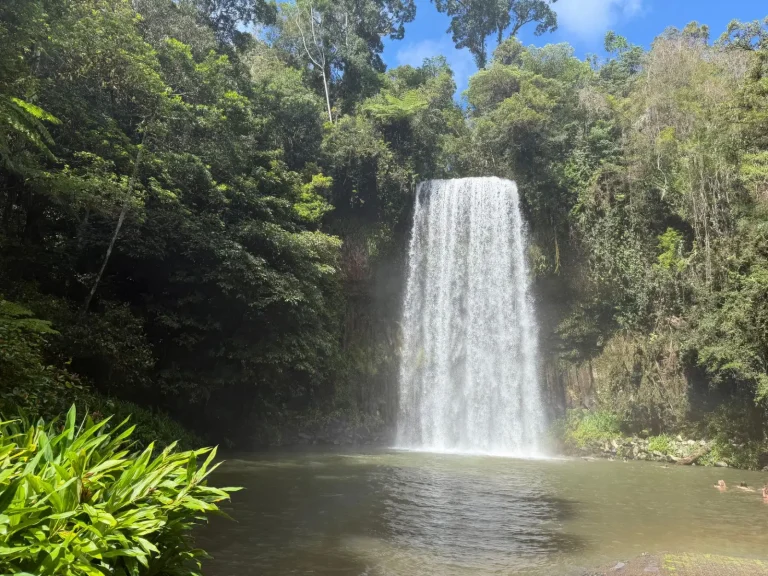
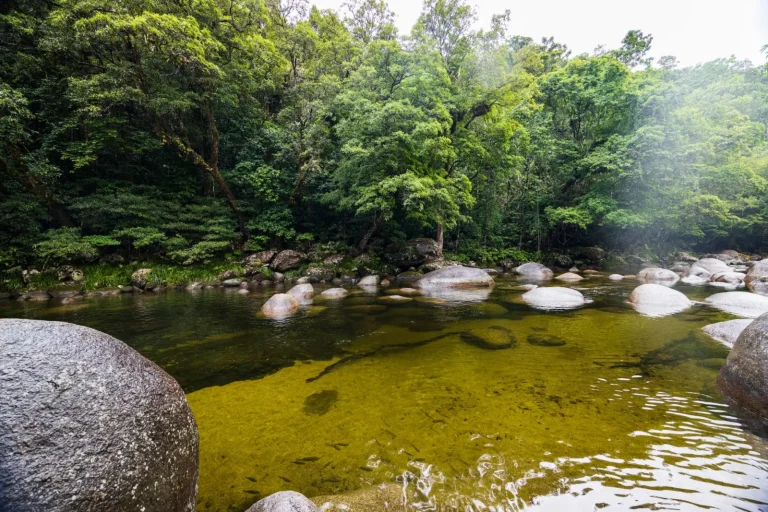
The waterfalls and creek systems that draw people to the hinterland are real attractions, but they’re also the source of most practical complications. The walks to reach them often involve creek crossings that require judgment calls about water depth and current. Rocks become slippery in ways that aren’t obvious until you’re standing on them. The water itself is cold year-round, and immersion – whether accidental or intentional – produces a shock that people from warmer climates often underestimate.
Timing and Light
The forest’s relationship with daylight is distinctive. The canopy is so dense that twilight arrives earlier than the actual sunset time. By 4 PM during winter months, the light is already fading noticeably. This has practical consequences. If you start a walk at 2 PM assuming you have three hours of daylight, you might find yourself navigating with a torch by 4:30 PM. The forest doesn’t feel dangerous in low light, but it becomes slower and more cognitively demanding. Foot placement becomes less certain. Navigation becomes less intuitive.
Summer extends daylight, but it also brings heat and humidity that interact with the forest’s microclimate in specific ways. The lack of direct sun means temperatures stay relatively moderate, but the humidity is relentless. Sweat doesn’t evaporate efficiently. Clothing becomes heavy. The physical demand increases not because of steep terrain, but because of the constant low-level effort required to move through moisture-laden air while maintaining balance on uneven ground.
What the Forest Contains
The wildlife and flora of the hinterland rainforest are present but not always visible. You’re more likely to hear birds than see them. Insects are everywhere – some benign, some with genuine capacity to cause discomfort. Leeches appear during wet periods and attach themselves to skin with patient persistence. They’re not dangerous, but their presence requires attention and acceptance. Snakes exist in the forest, though encounters are rare. The real concern is stepping near one accidentally, which is why staying on marked trails matters more than people realize.
The vegetation itself presents both beauty and practical obstacles. Stinging trees grow in certain areas, and contact with their leaves produces a sting that can last for hours or days. Lawyer vines – wait-a-while vines – have hooks that catch clothing and skin. These aren’t catastrophic hazards, but they’re frequent enough that experienced walkers move with a certain deliberateness, checking the path ahead rather than pushing through.
Physical Demands and Recovery
The hinterland rainforest walks are often described as moderate or easy based on distance and elevation gain. This classification misses something important. A five-kilometer walk through rainforest demands more from your body than a five-kilometer walk on a maintained path through open terrain. The uneven surface, the constant micro-adjustments required for balance, the humidity, and the mental engagement of navigating through dense vegetation all accumulate. People often underestimate how tired they’ll be, and they underestimate how their legs will feel the following day.
Fitness matters, but it’s not the primary factor. Someone who runs marathons might struggle more in the rainforest than someone who hikes regularly in similar terrain. The specific muscle groups and movement patterns required are different. Your ankles and calves work harder. Your core is engaged continuously for stability. Your feet need to be conditioned for the impact of uneven surfaces.
Practical Realities for Visitors
The hinterland rainforest is accessible and worth experiencing, but it requires a different approach than many people bring to it. Footwear matters significantly. Proper hiking boots with ankle support and good grip reduce the risk of twisted ankles and slips. Casual sneakers are insufficient. Water is essential – more than you think you’ll need. The forest doesn’t feel hot, but dehydration happens anyway because the humidity masks your sweat loss.
Navigation is straightforward on marked trails, but it’s worth carrying a map or GPS device. The forest is disorienting in ways that are hard to predict. Trails can be less obvious than you expect, particularly where they intersect or where maintenance has been inconsistent. Getting lost is possible even on popular routes, particularly if you’re moving quickly and not paying attention to trail markers.
Weather changes rapidly in the hinterland. A forecast of clear skies can shift to rain within hours. Mist rolls in and visibility drops suddenly. This isn’t dangerous if you’re on a marked trail, but it’s worth knowing. Waterproof layers are practical even on days that don’t look like they’ll be wet. The forest is wet enough that rain gear serves multiple purposes – protection from rain, protection from spray when crossing creeks, and a barrier against the constant moisture in the air.
The Gold Coast hinterland rainforest rewards patience and realistic expectations. It’s not a challenging wilderness destination, but it’s not a casual stroll either. It’s a place where the forest sets the pace, where conditions vary significantly based on season and time of day, and where the experience depends largely on how well you’ve prepared for the actual environment rather than the idealized version of it. The beauty is genuine, the walks are worthwhile, and the experience is memorable – provided you approach it with respect for what the forest actually is rather than what it appears to be from a distance.