
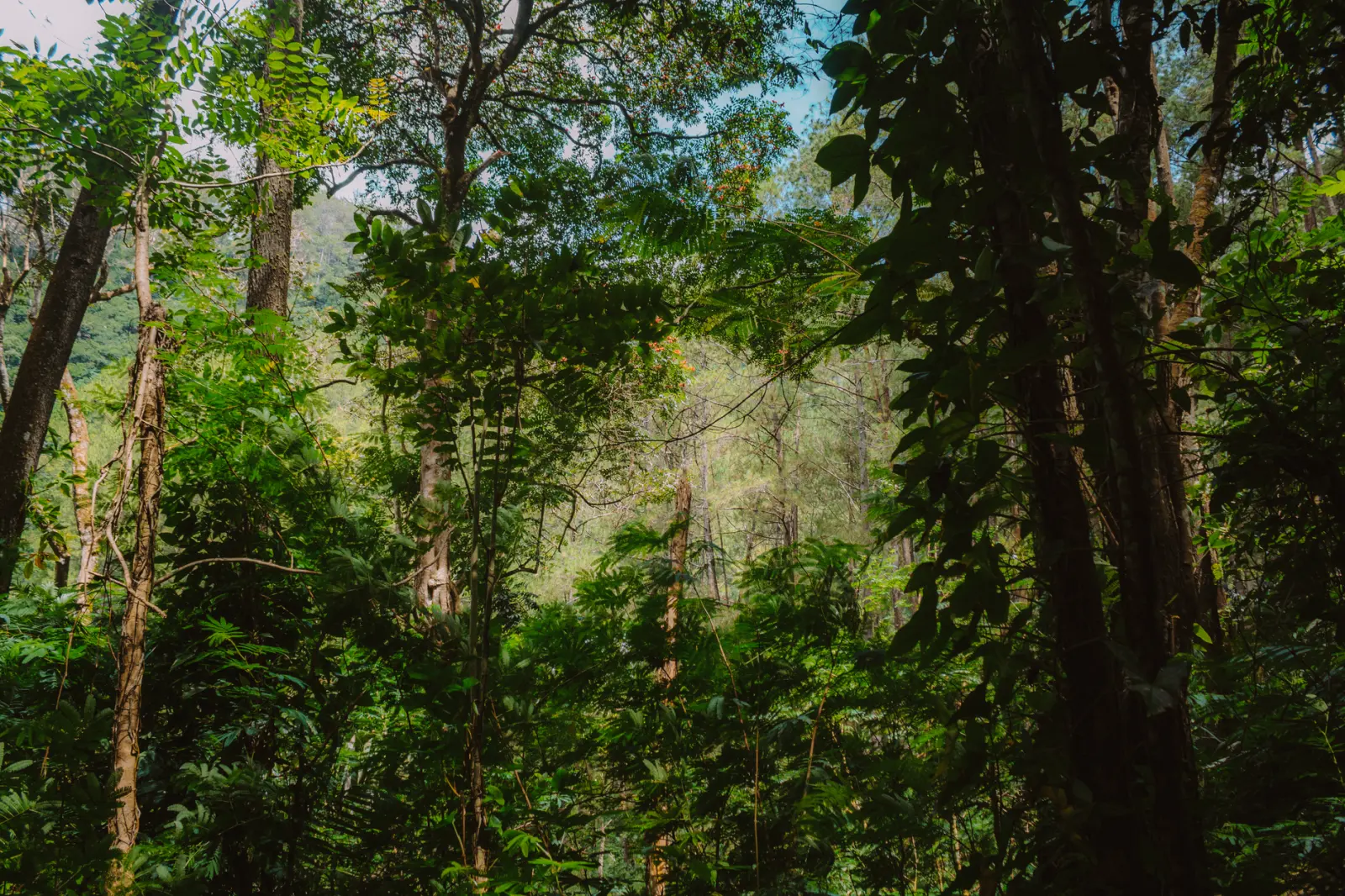
The Daintree lowlands sit at sea level or just above it, which means the air carries weight. When you first step into the forest from the coastal road, the humidity hits before the shade does. The canopy is dense enough that direct sun becomes theoretical, but that density traps moisture and heat in a way that open-air hiking doesn’t. After a few hundred metres, your shirt is damp regardless of pace. This isn’t dramatic or dangerous for most people, but it’s the baseline condition. Acclimatisation matters more here than elevation does.
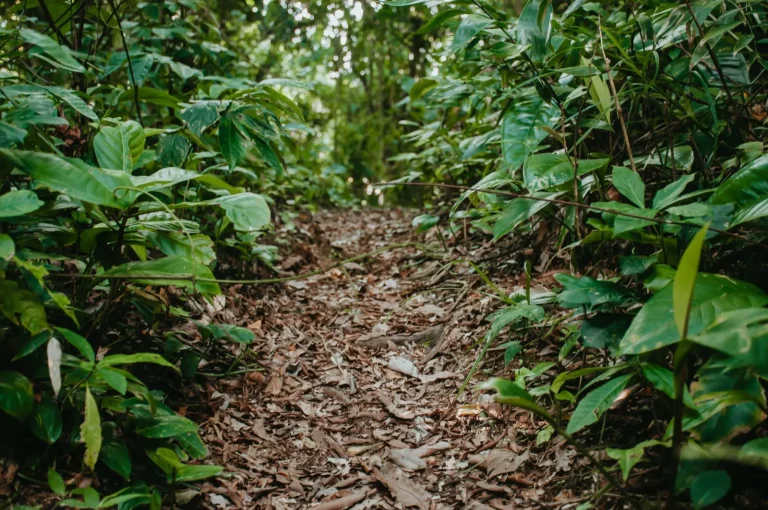
The walking surface itself changes depending on recent rainfall and maintenance. Well-used tracks near Mossman Gorge or the main boardwalk sections are compacted and relatively stable. Venture into less-trafficked areas, and the ground becomes soft, root-laden, and occasionally waterlogged. The soil doesn’t drain quickly in the lowlands. After rain, puddles persist for days, and what looks like solid ground might be a thin crust over mud. Boots with grip matter. Lightweight trainers will work on maintained paths, but they offer no ankle support and no protection if you step into a depression hidden by leaf litter.
The Physical Reality of Heat and Pace
Walking speed in the Daintree lowlands is slower than you’d expect from the distance. A 5-kilometre walk might take two hours, not because the terrain is steep – it isn’t – but because the combination of humidity, uneven footing, and heat load accumulates quickly. Your body is working harder than the gradient suggests. Sweat evaporates poorly in high humidity, so you don’t cool as efficiently. People often underestimate this and set out with insufficient water or without accounting for the time cost. A morning walk that seemed manageable on the map becomes a midday slog if you start late.
The best walking window is early morning, ideally before 9 a.m. By midday, the forest floor temperature rises, and the air feels actively oppressive. Late afternoon walks are possible but less comfortable. You lose light quickly under the canopy, and the forest becomes darker earlier than you’d anticipate. Headtorches are useful even on afternoon walks if you’re not back by 5 p.m.
What Lives Here and How It Behaves
The Daintree has a reputation for wildlife that often exceeds the actual risk. Crocodiles are present in waterways and some deeper pools, but they’re in specific areas, not throughout the forest. Snakes exist but are rarely encountered on foot during the day. Cassowaries – large, flightless birds – are genuinely present and will defend territory if surprised, but attacks on walkers are uncommon and usually happen when people feed them or approach nests. The more common irritants are smaller: leeches in wet conditions, mosquitoes at dusk, and occasionally march flies that bite persistently.
Leeches deserve specific mention because they’re more common than many walkers expect. After rain or in permanently damp sections, they’re active. They don’t cause serious harm, but they’re unpleasant and persistent. Salt, insect repellent, or simply removing them after the walk is standard practice. Wearing long socks and tucking trousers into boots helps but doesn’t eliminate the problem. Accepting that you might pick up a few is more realistic than trying to avoid them entirely.
Navigation and Trail Conditions
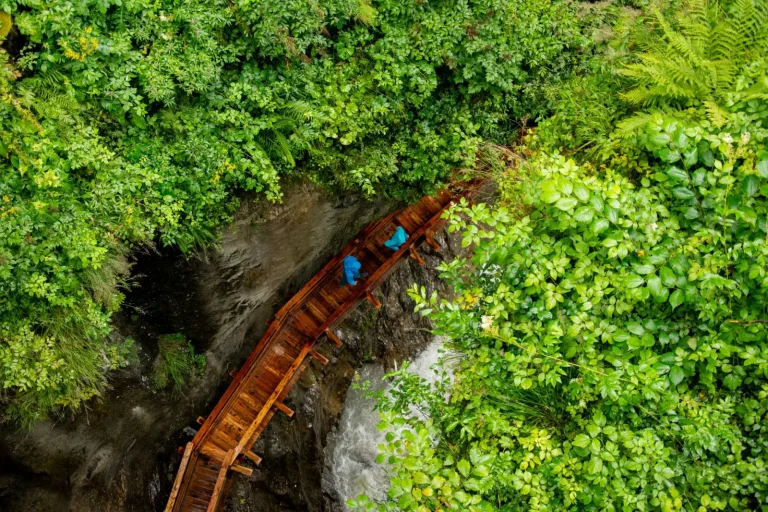
The main tracks are marked and reasonably easy to follow. Mossman Gorge, the Daintree Discovery Centre trails, and the boardwalk sections near the river are well-maintained and clearly signed. Secondary tracks are less obvious. Vegetation grows quickly in the tropics, and a trail that was clear three months ago might be partially overgrown. GPS or a map is useful, but the forest canopy can affect signal reliability. Many people navigate by following the most-walked path, which usually works but occasionally leads to confusion at junctions.
Water crossings are common. Small streams can be crossed on rocks or fallen logs, but after heavy rain, some become impassable or require careful wading. The water is cold and moves faster than it appears. Waterproof bags for electronics and valuables are practical. Slip-resistant footwear or removable shoes for wading prevents injury on slick rocks.
Practical Logistics and Timing
Most lowland walks are day trips. Camping is possible but requires permits and specific sites. The forest floor is damp, insects are active at night, and the darkness is complete without artificial light. Day walks of 2 to 4 hours are more typical and more comfortable. Starting early means you finish before afternoon heat peaks and before light becomes an issue.
Water is essential. The forest has streams, but drinking from them without treatment carries risk. Carrying 2 to 3 litres per person is standard for a half-day walk. Electrolyte drinks are more useful than plain water in high heat and humidity. Food is less critical for short walks, but something with carbohydrates helps sustain energy. The physical effort is steady rather than intense, but it’s sustained, and energy depletion creeps up gradually.
Guides are available and often worthwhile. Local knowledge about wildlife, plant identification, and current trail conditions is valuable. A guide also means you’re not navigating alone, which is reassuring in an unfamiliar forest. The cost is moderate, and the experience is richer with someone who understands what you’re looking at.
The Daintree lowlands are walkable for most fitness levels, but they demand respect for conditions rather than difficulty. The forest is not hostile, but it is indifferent. Heat, humidity, and terrain require realistic planning and acceptance that progress will be slower than you anticipate. Those who adjust expectations and prepare for moisture and sustained physical effort find the experience absorbing. The forest’s age and density create an atmosphere that few other places match. It’s not about conquering the walk; it’s about moving through it at a pace the environment dictates.