
The Boyd’s forest dragon is not an animal you stumble upon easily. After years of moving through the wet tropics of northeastern Australia, I’ve learned that spotting one requires patience, the right conditions, and often a measure of luck. These small, cryptic lizards spend most of their time perched motionless on tree trunks and branches, relying on stillness and camouflage rather than speed or aggression. They’re common enough in suitable habitat that locals know they’re there, yet elusive enough that many visitors spend weeks in the rainforest without seeing one.
What strikes you first about these dragons, if you do manage to locate one, is how perfectly they blend into their surroundings. The mottled grey and brown coloration isn’t flashy or decorative – it’s functional. Against the weathered bark of a rainforest tree, a stationary dragon becomes nearly invisible. This isn’t a dramatic adaptation like the frills of a frilled lizard or the colour-change capacity of some skinks. It’s quieter than that, and more effective in the dense, shadowed environment where these animals live.
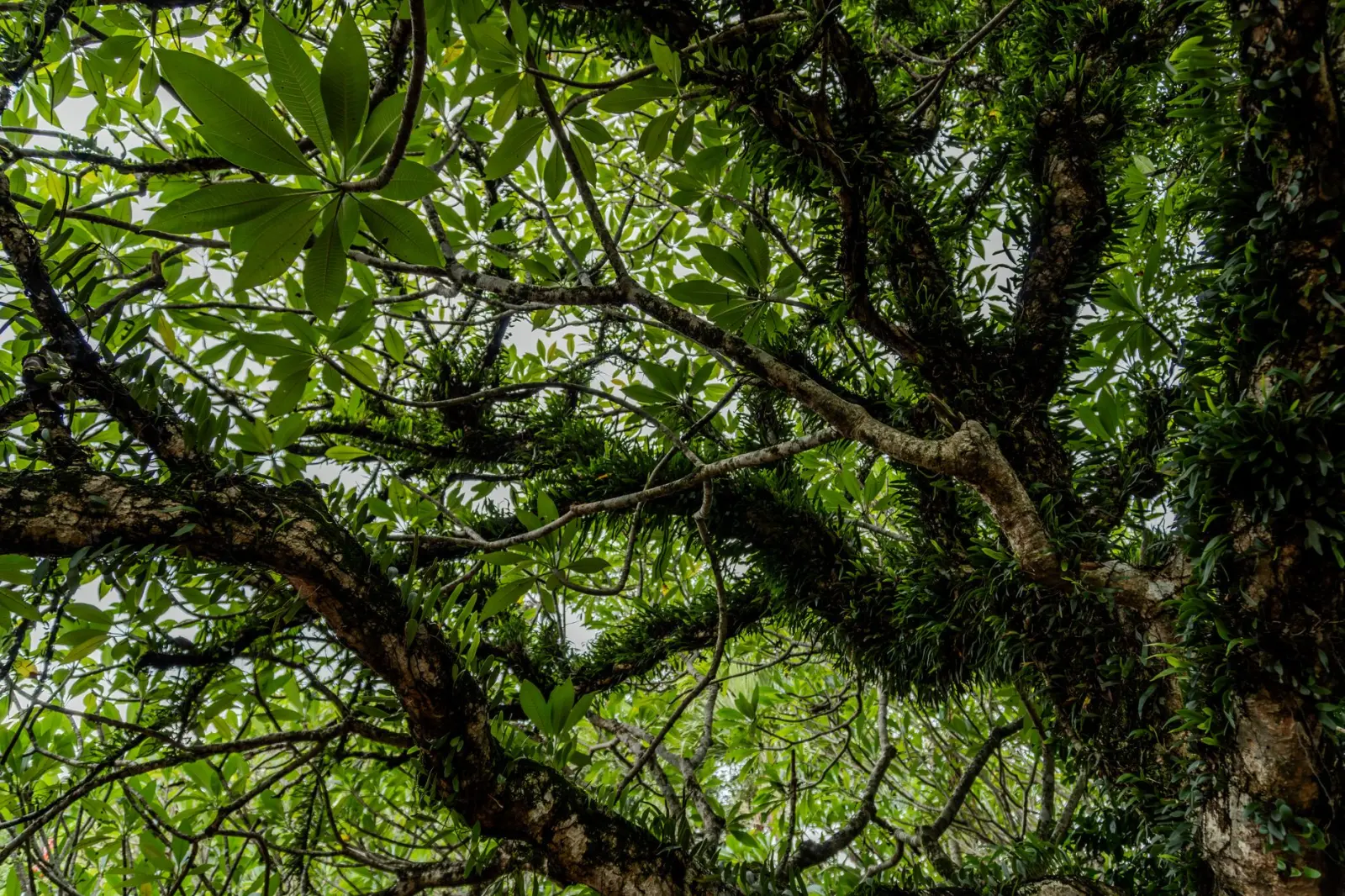
The wet tropics where Boyd’s forest dragons occur represent one of Australia’s most ancient and stable ecosystems. The rainforest here receives substantial rainfall year-round, creating an environment of high humidity, consistent moisture, and dense vegetation layering. Unlike the drier eucalypt forests or open woodlands found elsewhere in Australia, this is a place where the canopy is thick, the understory complex, and the ground perpetually damp. For a small lizard, these conditions mean abundant invertebrate prey, shelter from temperature extremes, and the kind of structural complexity that allows a predator to hunt effectively while remaining hidden from larger threats.
Behaviour and Daily Patterns
Boyd’s forest dragons are ambush predators. They position themselves on suitable perches – usually on vertical or near-vertical tree trunks – and wait. The waiting is the key to understanding their ecology. Unlike active foragers that move constantly through the environment, these dragons invest in finding the right spot and then remaining there for extended periods. When an insect or small arthropod passes within striking range, the dragon’s head rotates with surprising speed and precision. The strike itself is quick, but the setup takes patience.
Activity levels fluctuate with temperature and light. On warm, humid days with adequate light filtering through the canopy, dragons are more likely to be alert and responsive. During cooler periods or heavy cloud cover, they become even more still, almost statue-like. This isn’t laziness – it’s energy conservation in an environment where prey availability is relatively consistent but energy expenditure needs to be minimized. A dragon that wastes energy moving or hunting actively in poor conditions is a dragon that may not survive lean periods.
Height preference varies, but most observations place them between one and four metres above the ground. They’re not canopy-top dwellers, but they’re not ground-level either. This middle zone offers a balance: enough light and insect traffic to make hunting viable, but enough cover and proximity to shelter that escape routes are available. I’ve found them occasionally lower on large tree buttresses and occasionally higher on suitable trunks, but the mid-story zone is where you’re most likely to encounter them.
Habitat Requirements and Distribution
Not all rainforest is suitable for Boyd’s forest dragons. They’re specialists, not generalists. They require the kind of mature, undisturbed rainforest where large trees with suitable bark texture are abundant and where the canopy structure creates the right light and humidity conditions. Disturbed areas, regrowth forest, and rainforest margins often lack the specific conditions these dragons need. This makes them useful as an indicator species – their presence suggests a rainforest of reasonable age and integrity.
The wet tropics of far north Queensland represent the core of their range, with populations extending into suitable habitat in the Atherton Tableland region and surrounding areas. The distribution is patchy because rainforest itself is patchy in this landscape. Where rainforest persists, Boyd’s forest dragons are often present. Where it has been cleared or degraded, they’re absent. This makes them vulnerable to habitat loss in a way that more generalist lizards are not.
Rainfall and humidity are non-negotiable for these animals. The wet tropics receive between 1,500 and 4,000 millimetres of rain annually depending on location, with some areas receiving substantially more. This isn’t incidental to the dragons’ ecology – it’s fundamental. The moisture supports the invertebrate populations they feed on, maintains the bark and branch conditions that provide shelter, and prevents the kind of desiccation stress that would be lethal to an animal with their physiology and behaviour patterns.
Reproduction and Life History
Breeding occurs during the warmer months, with females laying small clutches of eggs in protected microsites. The exact timing and clutch sizes vary, but these are not prolific breeders. A female might produce one or two clutches per year, with relatively small numbers of eggs per clutch. This reproductive strategy reflects the stability of their environment – in a consistent rainforest ecosystem with reliable food availability, there’s no selective pressure for high fecundity. Instead, investment is in producing offspring that are reasonably well-developed and capable of finding suitable microhabitats immediately after hatching.
Hatchlings are miniature versions of adults, fully independent from the moment of emergence. They face the same predation pressures and environmental challenges as larger dragons, but with even less margin for error. Mortality in the early weeks and months is undoubtedly high, though quantifying it in a wild population is nearly impossible. Those that survive to reach adult size have navigated a gauntlet of predators, parasites, and environmental stresses.
Ecological Role and Interactions
As a mid-sized predator of invertebrates, Boyd’s forest dragons occupy a specific niche in the rainforest food web. They consume insects and small arthropods, which keeps invertebrate populations in check. In turn, they’re preyed upon by larger predators including snakes, larger lizards, and potentially some bird species. This is a modest role in the broader ecosystem, but it’s a real one. Remove Boyd’s forest dragons from a rainforest and the invertebrate community would shift, albeit perhaps subtly.
Parasites and disease affect these dragons as they do all wild animals. Mites, ticks, and internal parasites are common findings in wild populations. Most dragons carry parasite loads that don’t appear to significantly impact their health or survival, but in stressed or immunocompromised individuals, parasites can become problematic. This is another reason why habitat quality and stability matter – a healthy dragon in a stable environment can tolerate parasite loads that might be lethal to a stressed individual in degraded habitat.
The relationship between Boyd’s forest dragons and human activity in the wet tropics is largely one of avoidance. They don’t adapt well to human-modified landscapes. They’re not aggressive toward humans and pose no threat. They’re simply animals that require specific conditions, and those conditions are increasingly limited to protected rainforest areas. Their presence in a rainforest is a sign that the forest itself is functioning reasonably well.
Observing these dragons in their natural habitat reveals something about how complex ecosystems actually work. There are no dramatic interactions, no obvious relationships to the untrained eye. Just a small reptile, perfectly adapted to a specific microhabitat, waiting patiently for prey. That simplicity, though, masks the intricate web of dependencies and conditions that allow such an animal to exist. The wet tropics rainforest is one of the few places in Australia where those conditions still reliably exist, and that’s precisely why Boyd’s forest dragons remain there, unchanged in their essentials for thousands of years.