
Spending time in the wet tropics of northeastern Australia, you eventually realize that some animals seem designed to avoid human observation entirely. The musky rat-kangaroo is one of them. It’s a creature that most people who live near its habitat will never encounter, and those who do often don’t recognize what they’ve seen. The animal is small, nocturnal, and moves through the forest floor with such deliberate quietness that you can walk past one without noticing. Yet this modest marsupial represents something genuinely ancient in the Australian fauna – a living link to a time when the continent’s mammals were radically different from what we see today.
What strikes you first when you learn about the musky rat-kangaroo is how primitive it actually is. This isn’t a casual observation or marketing language. The animal retains features that most other marsupials lost millions of years ago. It has five toes on its hind feet, whereas most kangaroos and wallabies have reduced to four. It has a functional second toe on its front feet. These aren’t quirks. They’re remnants of a body plan that predates the radiation of modern marsupials. In evolutionary terms, the musky rat-kangaroo sits closer to the ancestral marsupial form than almost any other living Australian mammal. When you’re watching one move through leaf litter at night, you’re essentially watching a mammal that has changed very little in tens of millions of years.
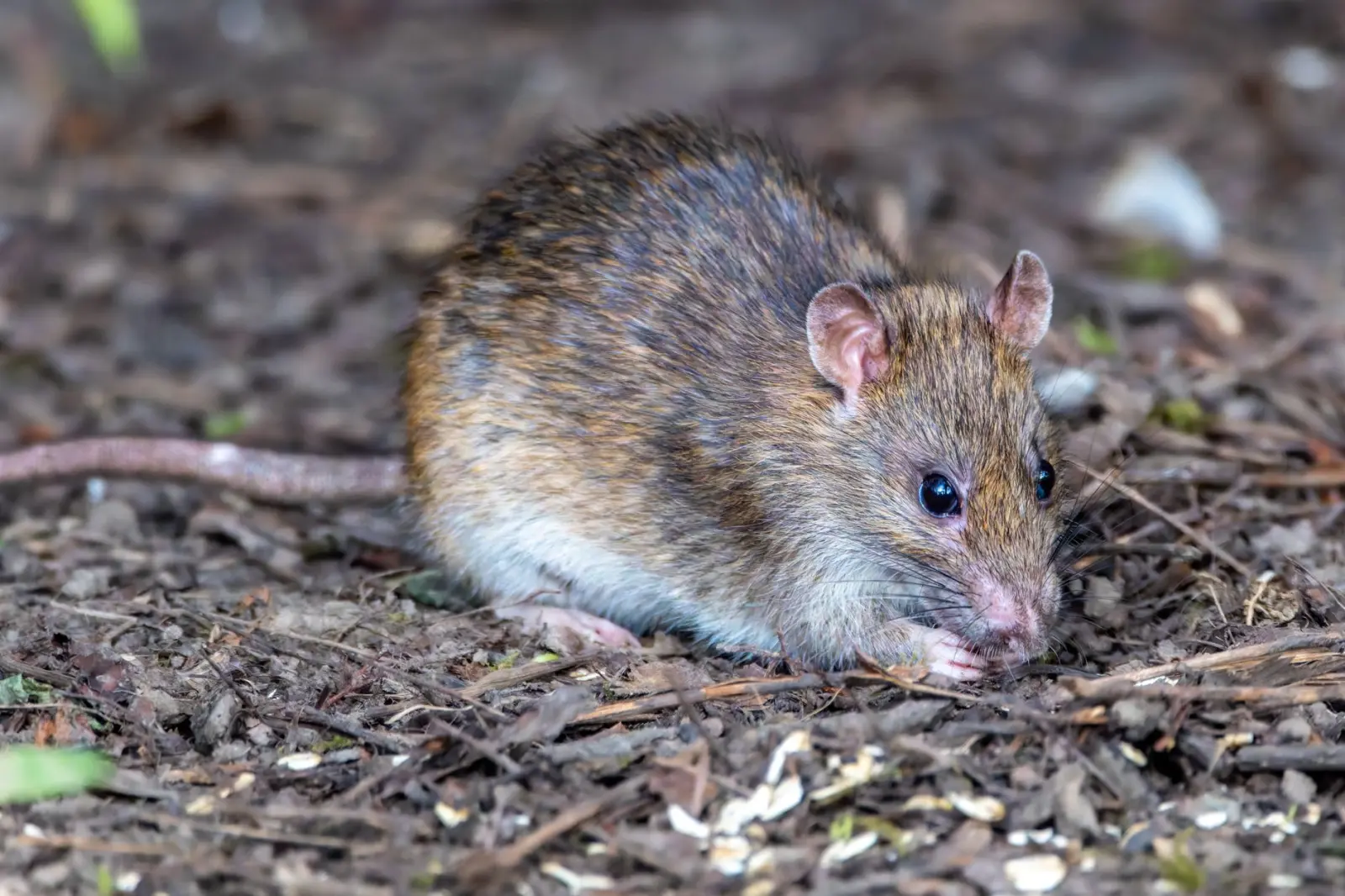
The animal itself is small – weighing around 500 grams, roughly the size of a large rat, though the hind legs give it a distinctly kangaroo-like appearance. Its fur is dark brown and somewhat coarse. The tail is relatively short and hairless, used for balance rather than as a fat-storage organ like some other marsupials employ. The most distinctive feature, however, is the scent gland that gives the animal its common name. When threatened or during social interactions, the musky rat-kangaroo produces a strong odor that is immediately recognizable once you’ve encountered it. It’s not pleasant, and it lingers in the forest air. This chemical communication system is another ancient feature, one that predates the more visual and vocal signals that dominate modern marsupial behavior.
Habitat and Distribution
The musky rat-kangaroo is found only in a small region of rainforest in far northeastern Queensland, primarily around the Atherton Tablelands and nearby areas. This range is fragmented and has contracted significantly over the past century as rainforest has been cleared for agriculture and development. The animal requires dense, undisturbed rainforest with a thick leaf litter layer and adequate moisture. It doesn’t tolerate open areas or degraded habitat well. If you’re looking for one, you need to be in genuine rainforest – not regrowth, not cleared land with scattered trees, but dense, closed-canopy forest where the understory is thick and the ground is perpetually damp.
The fragmentation of its habitat is a real constraint on the species. Populations in different rainforest patches have become isolated from one another, which creates genetic bottlenecks and reduces the overall resilience of the species. A bushfire, a severe drought, or a localized disease outbreak in one patch could eliminate an entire subpopulation with no possibility of recolonization from elsewhere. This isn’t theoretical risk – it’s the current reality for many rainforest animals in Australia. The musky rat-kangaroo’s dependence on specific, undisturbed forest conditions makes it particularly vulnerable to the landscape changes that have accelerated over recent decades.
Behavior and Ecology
The musky rat-kangaroo is nocturnal and solitary. It spends the day in a burrow or dense vegetation, emerging at night to forage on the forest floor. Unlike many kangaroos that are herbivorous, the musky rat-kangaroo is omnivorous, feeding on fallen fruit, seeds, invertebrates, and other small food items. It moves through the forest with a distinctive gait – a kind of bounding run that uses the hind legs powerfully but also engages the front limbs more than typical kangaroos do. This locomotion reflects its more generalized body plan. It’s not specialized for long-distance hopping across open ground like larger kangaroos. Instead, it’s adapted for moving efficiently through cluttered forest terrain.
Reproduction in the musky rat-kangaroo is relatively simple compared to many marsupials. Females have a functional pouch, but it’s less elaborate than in larger kangaroos. The breeding season is not strictly seasonal – animals can breed throughout the year if conditions are suitable. Litter sizes are small, typically one or two young. The gestation period is short, around 21 days, and the pouch life is relatively brief. Young are weaned and independent within a few months. This reproductive strategy reflects an ancient pattern. The musky rat-kangaroo hasn’t evolved the specialized reproductive machinery that more derived marsupials have developed. In some ways, this simplicity is an advantage – it allows flexibility in breeding timing. In other ways, it means the animal can’t produce large numbers of offspring quickly, which limits its capacity to recover from population declines.
Why It Matters
The significance of the musky rat-kangaroo extends beyond its own survival. It’s a window into what Australian marsupials were like before specialization and radiation led to the diversity we see today. By studying this animal – its anatomy, behavior, genetics, and ecology – scientists can better understand the evolutionary trajectory of the entire marsupial lineage. Every piece of information about how it lives, reproduces, and interacts with its environment adds to our understanding of how mammals adapt and change over geological timescales.
The animal is also an indicator of rainforest health. Where musky rat-kangaroos persist, the rainforest is usually relatively intact and undisturbed. Their presence suggests that the complex web of relationships between plants, invertebrates, fungi, and larger animals is still functioning. Their absence often signals degradation. In this sense, they function as a biological marker – not in the way that some charismatic species do, but in a more subtle way. Their quiet persistence in the forest is a sign that something essential is still working.
Conservation efforts for the musky rat-kangaroo are modest compared to those for larger, more visible animals. There’s no major public campaign to save it. Funding is limited. Yet the work being done – habitat protection, population monitoring, genetic research – is important. The Atherton Tablelands region has seen significant conservation investment in recent years, and some rainforest patches have been protected or restored. These efforts benefit the musky rat-kangaroo along with hundreds of other species that share its habitat. The animal doesn’t need to be charismatic to be worth protecting. Its antiquity and its role in the ecosystem are sufficient justification.