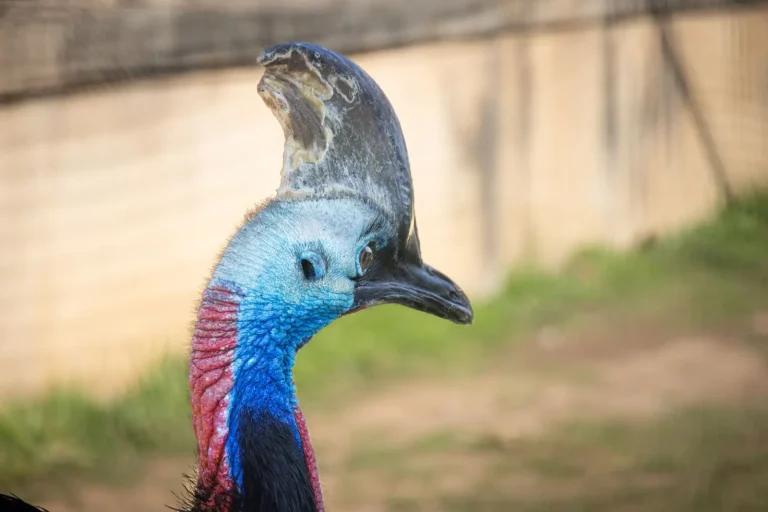

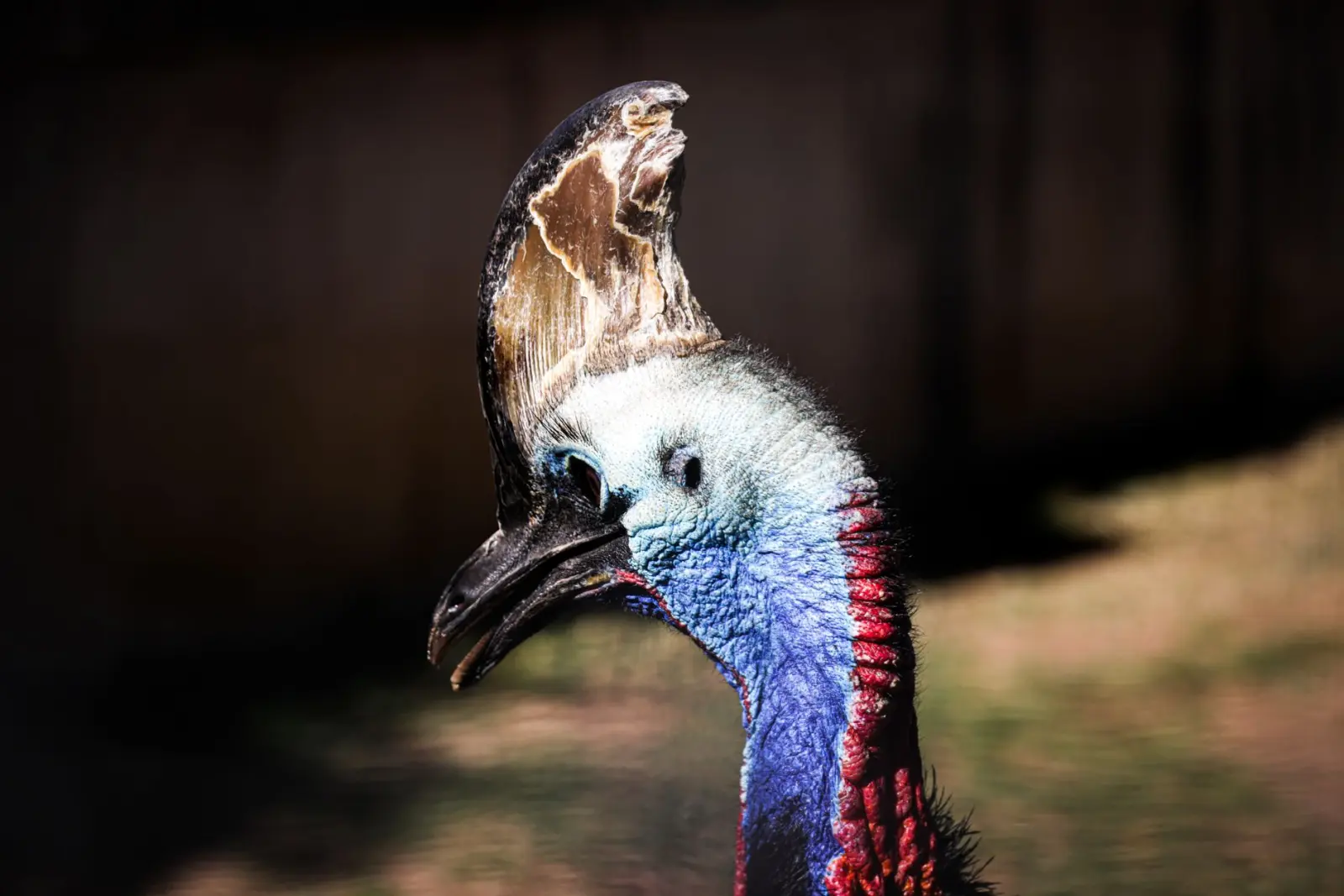
Spending time in the wet tropics rainforest of northeastern Australia, you become aware of the cassowary before you see one. There’s a particular quality to the forest when they’re moving through it – a heaviness in the air, a sense of something large and deliberate occupying the space. The southern cassowary is not a bird that moves quietly or apologetically. It crashes through the understory with a kind of indifferent confidence, and once you’ve witnessed that, the forest feels different. You understand that you’re not simply walking through a landscape; you’re moving through territory that belongs to something else entirely.
The cassowary’s relationship with the rainforest is fundamentally about food. Unlike many birds, cassowaries spend most of their waking hours on the ground, foraging through leaf litter and fallen fruit. They’re not scavengers in the opportunistic sense; they’re systematic feeders with specific preferences and patterns. The birds move through the forest following fruiting cycles, and if you pay attention to which trees are producing, you can predict where cassowaries will be. This isn’t random wandering. It’s a learned geography, one that individual birds maintain across years.
The Seasonal Rhythm of Feeding
The wet tropics has a distinct seasonal pattern, and the cassowary’s life follows it closely. During the wet season, fruit availability is generally high, but it’s not evenly distributed. Some trees fruit prolifically; others produce little. The birds develop routes through their territory, visiting productive trees on a regular schedule. I’ve observed the same individuals returning to particular feeding areas on what appears to be a weekly cycle, moving between patches of fruit-bearing trees as if following an invisible timetable.
The dry season is harder. Fruit becomes scarcer, and the birds have to range more widely to find enough food. This is when they’re most visible to people, because they venture closer to human settlements and gardens where cultivated fruit trees offer an easy alternative to foraging in depleted rainforest. This isn’t aggression or territorial expansion on the cassowary’s part; it’s simple economics. A fruit tree in someone’s yard is a reliable food source when the forest isn’t providing.
What often gets overlooked is that cassowaries are selective feeders. They don’t eat every fruit they encounter. They prefer certain species, and they seem to assess ripeness and quality before consuming. They’ll reject fruit that doesn’t meet their standards, dropping it back to the ground. This selectivity matters because it means their presence in an area is tied to the availability of specific food sources, not just general abundance.
Movement and Territory
A cassowary’s territory is substantial. Adult birds maintain ranges that can span several square kilometres, and they move through this space in ways that seem purposeful rather than random. They follow established pathways through the forest, and these routes often follow natural contours and gaps in the vegetation. Over time, these pathways become worn, visible as cleared lines through the undergrowth where the bird has repeatedly passed.
The size of a territory depends partly on food availability. In areas where fruit is abundant and reliably distributed, territories can be smaller. In regions where food is more scattered, birds range more widely. I’ve noticed that territorial boundaries aren’t rigid lines but rather overlapping zones where different birds’ ranges intersect. These overlap areas are where tensions arise, though actual physical conflict seems rare. More often, the birds simply avoid each other, adjusting their movement patterns to minimize direct encounters.
Solitary birds are the norm in the wet tropics. Cassowaries are not social animals in any meaningful sense. They don’t form flocks or groups, and they don’t cooperate in feeding or any other activity. Pairs exist only during breeding season, and even then, the relationship is transactional rather than companionable. Once chicks fledge, the family breaks apart. The young birds disperse, and the parents return to solitary existence.
Breeding and Parental Investment
Breeding season introduces a different dynamic to cassowary behaviour. Males take on the primary role of incubation and chick-rearing, a pattern that’s unusual among large birds. The male sits on the eggs for about fifty days without leaving, relying on stored fat reserves to sustain him through this period. This is an enormous metabolic commitment, and it makes males particularly vulnerable during breeding season. They lose weight rapidly, and they’re less mobile, less able to flee from threats.
Once chicks hatch, the male leads them through the forest, teaching them where to feed and how to navigate the terrain. Young cassowaries are vulnerable for an extended period. They’re reliant on their father for protection and guidance, and this dependency lasts for months. During this time, the male is highly responsive to perceived threats. He’ll charge at animals or people that come too close to his chicks, not out of aggression but out of parental protection. This is where most human-cassowary conflicts arise – not from the bird’s inherent danger, but from the intersection of human activity and the bird’s need to protect its young.
Ecological Role and Forest Dynamics
The cassowary’s ecological function in the rainforest is significant, though it operates largely out of sight. The bird is a major seed disperser for numerous rainforest plants. It consumes fruit and defecates seeds across its territory, effectively distributing plant genetics across the landscape. Some rainforest plants have evolved specifically to be consumed by cassowaries, producing fruit that’s attractive to the bird and seeds that can survive passage through its digestive system.
This dispersal role means that cassowary populations directly affect forest composition and regeneration. In areas where cassowary numbers have declined, certain plant species become less abundant. The forest structure changes subtly over time. This isn’t dramatic or immediately obvious, but it’s real. I’ve seen areas where cassowary populations recovered, and over years, the understory composition shifted noticeably as plants that depend on cassowary dispersal became more common.
The bird’s presence also shapes how other animals use the forest. Smaller animals follow in the wake of cassowaries, feeding on insects and invertebrates disturbed by the larger bird’s foraging. The pathways cassowaries create through dense vegetation become corridors used by other species. The forest is not a static backdrop to cassowary life; it’s actively shaped by it.
Living or working in the wet tropics, you learn that the cassowary is not a novelty or a tourist attraction, though it’s often treated as such. It’s a functional part of the rainforest ecosystem, a large animal with specific needs and patterns that have evolved over thousands of years. Understanding those patterns – the seasonal movements, the territorial behaviour, the feeding preferences, the breeding cycles – gives you a more accurate sense of what the forest actually is and how it works. The cassowary isn’t separate from the rainforest; it’s integral to it. And when you see one moving through the understory with that characteristic indifference to your presence, you’re witnessing something that’s been happening in that forest long before humans arrived and will continue long after we’ve moved on.