
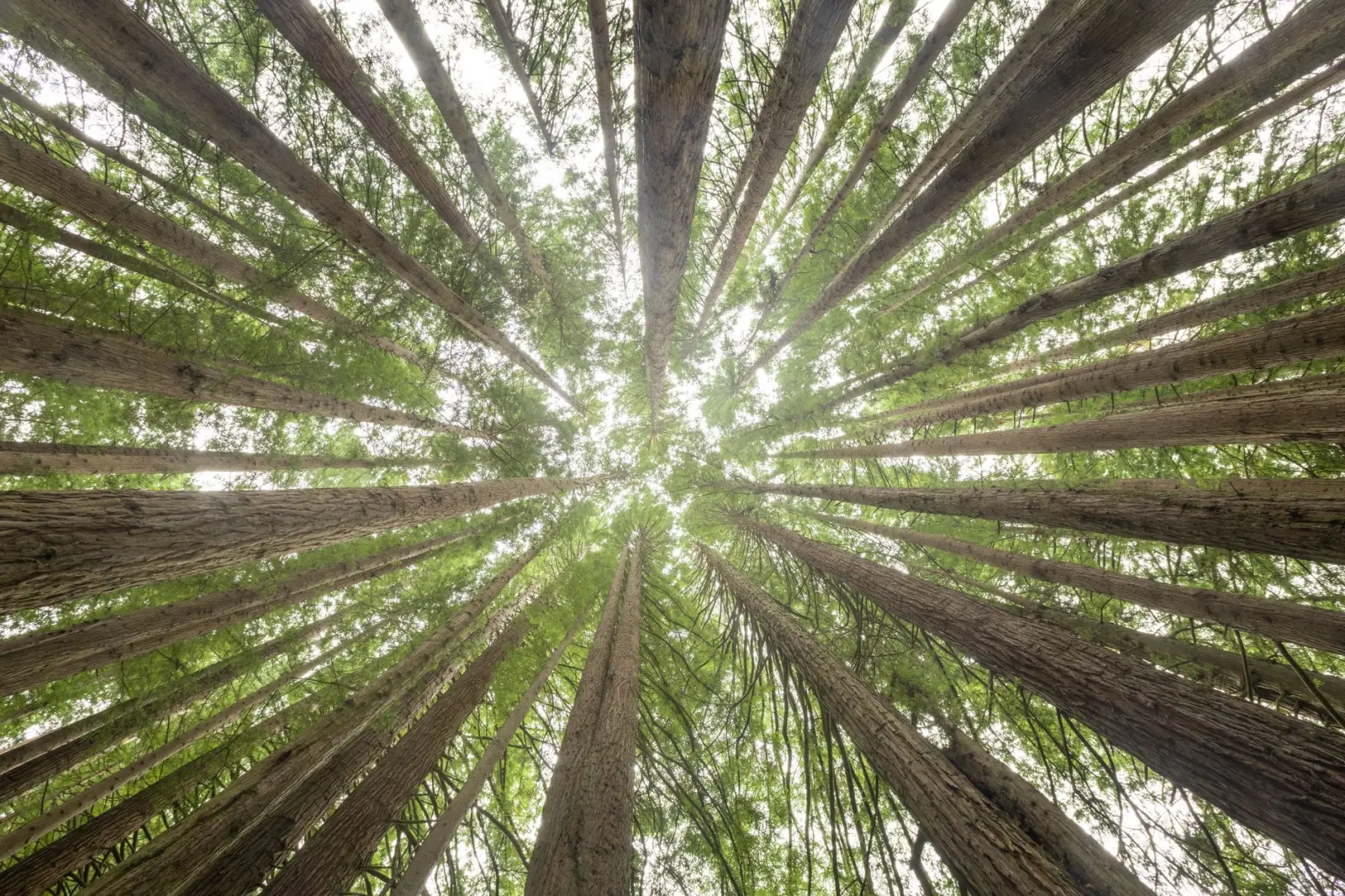
When you walk into an Australian rainforest, you’re moving through a landscape that has essentially remained in place for over 100 million years. This isn’t hyperbole. The wet tropical forests of northeastern Queensland, the subtropical rainforests of the Border Ranges, and the temperate pockets along Tasmania’s southwest have survived in recognizable form since the Cretaceous period. That persistence is unusual enough to warrant attention, especially when you consider what the planet has endured in that span.
Most people assume rainforests are fragile, that they need perfect conditions to exist. The reality is more complex. Australian rainforests are remarkably stubborn. They’ve weathered the breakup of Gondwana, the formation of the Great Dividing Range, multiple ice ages, and dramatic swings in rainfall and temperature. They didn’t simply vanish and regrow – they adapted in place, shifted their boundaries, and held on through periods when the climate was radically different from today.
The key to understanding this longevity is recognizing that Australian rainforests are not a single ecosystem. They’re a collection of distinct communities, each with its own history and survival strategy. The wet tropics around Cairns operate under entirely different rules than the cool temperate rainforests of Tasmaniaor the dry rainforests inland from the Queensland coast. Each has its own lineage, its own set of plants and animals, and its own reasons for being where it is.
The Gondwanan Legacy
Australia’s rainforests are fundamentally Gondwanan in origin. When the supercontinent began to fragment roughly 180 million years ago, Australia was still connected to Antarctica and South America. The plants and animals that thrived in those ancient rainforests – the ancestors of modern kauri pines, Antarctic beeches, and primitive flowering plants – were distributed across this vast landmass. As the continents drifted apart and climates changed, these species were isolated on their respective continents. In Australia, they didn’t go extinct. Instead, they persisted in refugia, pockets of landscape where conditions remained suitable for their survival.
You can see this Gondwanan heritage directly if you know what to look for. The Antarctic beech, found in small populations in Queensland and New South Wales rainforests, is a living fossil. Its relatives are found in Chile and New Zealand. The kauri pines, the Araucarias, and the primitive flowering plants that dominate the understory of northern Australian rainforests are all Gondwanan holdovers. They’re not recent arrivals or successful colonizers. They’re survivors from a much older world.
This matters because it explains why Australian rainforests contain species found nowhere else on Earth. They’re not unique because they evolved in isolation recently. They’re unique because they’ve been isolated for an extremely long time, and the species within them have had millions of years to diverge from their continental cousins. A plant or animal you encounter in a Queensland rainforest might have a relative in South America, but that relationship is so ancient that the two species have become completely distinct.
Climate Shifts and Rainforest Boundaries
The distribution of Australian rainforests today is not random. It reflects the outcome of millions of years of climatic change. During the Eocene epoch, roughly 50 million years ago, Australia was warmer and wetter than it is now. Rainforests covered much larger areas. As the climate cooled and dried over subsequent millions of years, rainforests contracted. They retreated to areas where moisture remained reliable – coastal ranges, high-altitude plateaus, and pockets where local geography trapped moisture-laden winds.
The ice ages complicated this further. During glacial periods, sea levels dropped and rainfall patterns shifted. Rainforests in some regions expanded into newly available territory. In others, they fragmented into isolated patches. When the ice melted and sea levels rose, some of those expanded areas became isolated again. This cycle repeated multiple times over the past few million years. The result is a mosaic of rainforest communities, some of which have been isolated from each other for so long that they’ve become genetically and ecologically distinct.
What’s striking is how precisely rainforests track moisture availability. In northern Queensland, you can stand at the edge of a rainforest and watch the boundary shift within meters. On one side, dense wet forest. On the other, eucalyptus woodland. That boundary isn’t arbitrary. It marks the limit of where moisture-dependent plants can survive. As climate patterns shift, those boundaries move. They move slowly, but they do move. Over thousands of years, a rainforest can expand or contract significantly.
Why Rainforests Persisted When Others Didn’t
Australia’s rainforests survived where rainforests on other continents didn’t, partly because Australia had refugia – areas where suitable conditions persisted even during harsh climate periods. The high rainfall areas of the coast and ranges provided these refugia. But survival also depended on the specific species composition of each rainforest. Rainforests that contained a high diversity of drought-tolerant species had better odds of weathering dry periods. Those that didn’t faced extinction.
This explains why Australian rainforests are structurally different from tropical rainforests elsewhere. They contain a higher proportion of sclerophyllous plants – species with tough, waxy leaves adapted to drought stress. They’re not as lush or as dense as rainforests in Southeast Asia or the Amazon. They’re a compromise between rainforest and dry forest, reflecting millions of years of selection for drought tolerance. This makes them less vulnerable to drying than purely tropical rainforests, but it also means they’re less productive and less structurally complex.
The fauna reflects similar adaptations. Many animals in Australian rainforests are generalists rather than specialists. They can exploit a broader range of food sources and habitats than their counterparts in more stable tropical rainforests. This flexibility has been crucial to their survival through climate oscillations. A specialist frugivore that depends on a single tree species faces extinction if that tree becomes rare. A generalist that eats fruit from multiple species can adapt.
The Fragmentation Problem
What makes ancient rainforests vulnerable now is not climate change alone, though that’s part of it. It’s fragmentation. Over the past 200 years, humans have cleared vast areas of Australian rainforest for agriculture, logging, and development. What remains is often broken into small, isolated patches. This isolation is fundamentally different from the natural isolation that occurred during past climate shifts.
When rainforests naturally fragmented during ice ages, the process was gradual. Species had time to adapt or migrate. When humans fragment rainforests, it happens in decades. Species that require large territories or specific habitat conditions can disappear quickly. Genetic diversity declines in isolated populations. Inbreeding becomes a problem. Diseases and pests can sweep through small populations without resistance.
The wet tropics of Queensland illustrate this clearly. What was once a continuous rainforest from the coast to the inland ranges is now a patchwork of reserves separated by cleared land. Some of these patches are only a few hundred hectares. For species that require thousands of hectares, that’s effectively a death sentence. The rainforest persists, but its ecological integrity is compromised. It’s a shadow of what it once was.
The ancient resilience of Australian rainforests came from their ability to adapt to gradual change across vast landscapes. That resilience doesn’t translate well to a fragmented, rapidly changing world. The rainforests are still there. They’re still ancient. But the conditions that allowed them to survive for 100 million years are no longer in place.