
Heavy rain transforms an Australian rainforest in ways that aren’t always obvious from a distance. You notice it first in the sound – the forest becomes louder, wetter, more alive in a way that’s hard to describe until you’ve stood in it. The canopy drips for hours after the rain stops. Water runs down every trunk and branch. The air thickens with moisture and the smell of wet earth, decomposing leaf litter, and something almost mineral that comes from the soil itself.
I’ve spent enough time in rainforests across Queensland and northern New South Wales to recognize the pattern. After a solid day or two of heavy rain – the kind that dumps 100mm or more – the forest floor becomes treacherous. Roots that were merely slippery become genuinely hazardous. Tracks that were manageable become channels for runoff. The leaf litter, which normally provides some grip, becomes a slick mat that slides under your boots. Walking becomes slower and more deliberate. If you’re planning to move through the forest after heavy rain, you need to accept that pace and adjust your timing accordingly.
Water Movement and Erosion
The most visible change is how water moves through the landscape. Rainforests are designed to handle water, but heavy rain still creates temporary chaos. Water doesn’t soak evenly into the ground. Instead, it follows the path of least resistance – running down slopes, concentrating in gullies, and carving small channels through the forest floor. I’ve watched established walking tracks become temporary streams. Erosion happens fast in these conditions. A track that’s been stable for years can develop a pronounced gully after a few days of heavy downpour.
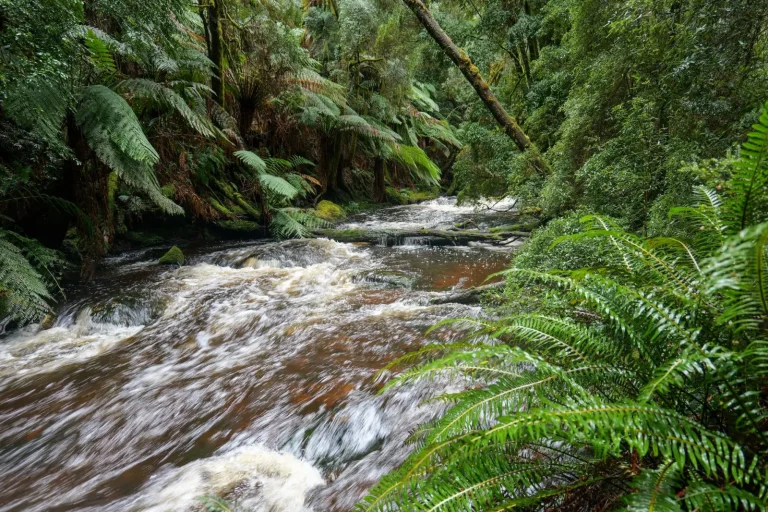
Streams and creeks that were modest become genuinely dangerous. Water that was ankle-deep becomes thigh-deep and fast-moving. The color changes from clear or pale brown to chocolate brown, thick with suspended sediment and leaf matter. Crossing becomes impossible or foolish. I’ve had to turn back more than once because a creek crossing that’s normally straightforward became impassable. The water moves with real force, and the visibility underwater drops to nothing. Rocks become slippery and unstable underfoot.
Canopy and Understory Response
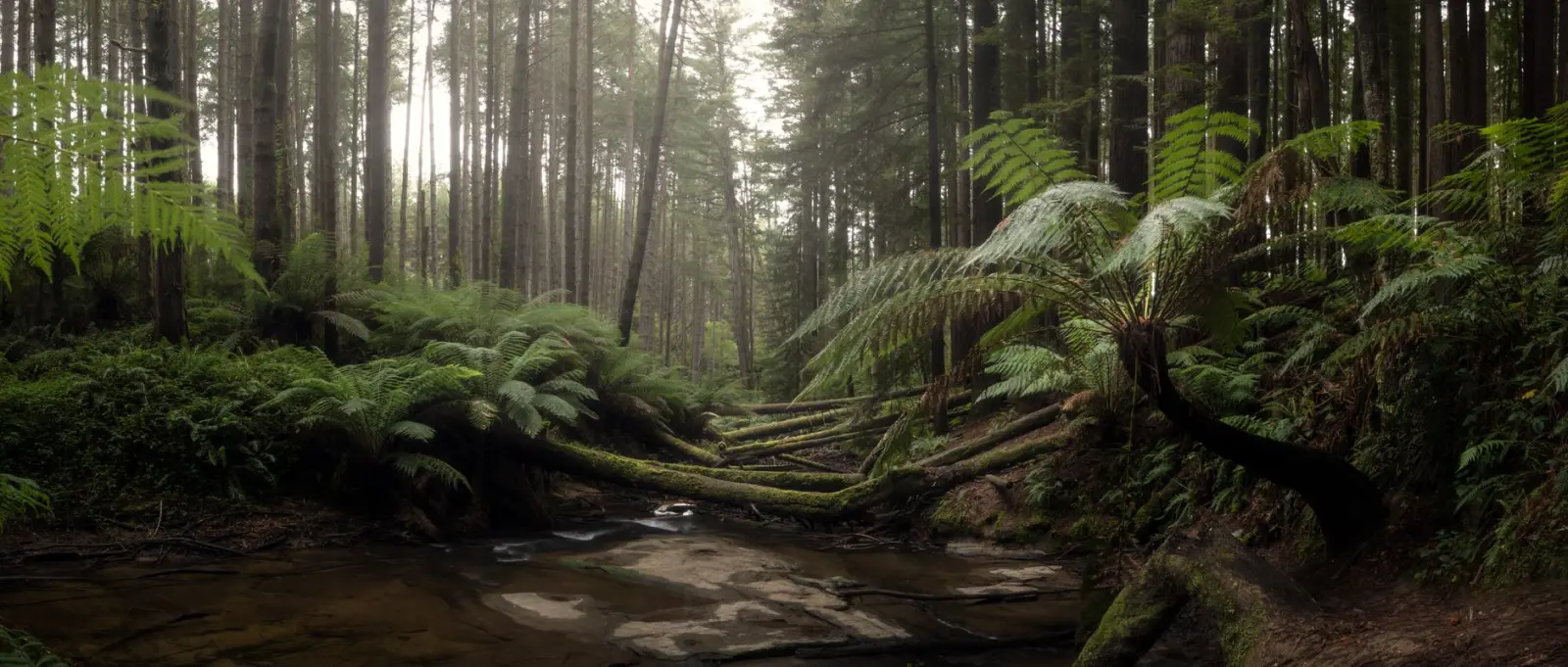
The vegetation itself responds in subtle ways. The canopy becomes heavier, weighted down by water. In the hours immediately after rain stops, water continues to drip from the upper layers. This isn’t just moisture – it’s a genuine volume of water moving through the forest structure. Leaves hang lower than usual. The understory, which can feel relatively open in dry conditions, becomes denser and more claustrophobic because everything is saturated and drooping.
What strikes me most is how the forest’s transparency changes. In normal conditions, you can see some distance through the trees, especially horizontally. After heavy rain, the moisture in the air creates a kind of haze. Visibility drops. The forest becomes more intimate and more disorienting at the same time. Landmarks that would normally be visible from a distance disappear into the mist and moisture. Navigation becomes harder, even on marked trails.
Wildlife Behavior Shifts
Animals respond quickly to heavy rain. In the immediate aftermath, the forest becomes quieter. Many creatures retreat or shelter. The usual soundscape of birds, insects, and small mammals calling or moving through the understory diminishes. This can last anywhere from a few hours to a full day depending on the intensity of the rain and the species involved. Then, gradually, activity returns – but it’s different. Insects emerge in greater numbers. Frogs become more vocal. The forest shifts from a relatively quiet state to one that’s almost frenetic with activity.
Insects are particularly affected. Wet conditions bring out certain species while others retreat. Leeches become more active and more visible on wet vegetation. This is worth noting if you’re traveling through rainforest after heavy rain – the risk of leech attachment increases noticeably. They’re not dangerous, but they’re persistent and the bites itch for days. I’ve learned to check regularly and accept that a rainforest walk after heavy rain almost always includes at least a few leech encounters.
Fungal and Decomposition Activity
The forest floor changes in ways that are less visible but significant. Moisture accelerates decomposition. Fungi fruit more prolifically. The smell of the forest intensifies – that rich, earthy, slightly sweet smell of active decay and growth. After a few days of wet conditions, you’ll notice more mushrooms and toadstools appearing on logs, the forest floor, and even on living trees. This is the forest’s nutrient cycling system working at full speed.
The increase in fungal activity is tied directly to the moisture and temperature. Rainforests are warm and now they’re wet. Conditions for fungal growth become optimal. This is part of the forest’s normal cycle, but it’s pronounced enough that you notice it. The visual landscape changes as fungi fruit across the understory. Some are small and delicate. Others are substantial and strange-looking. The diversity is remarkable if you take time to observe it.
Water seepage also changes the forest floor’s stability. Soil becomes saturated. In steep areas, this can increase the risk of slips and small landslides. I’ve seen sections of track collapse after prolonged heavy rain, especially where water concentrates and flows downslope. The forest floor, which seems solid, can become unstable surprisingly quickly. This is particularly relevant if you’re hiking in hilly or mountainous rainforest terrain.
Practical Realities for Movement
If you’re traveling through rainforest after heavy rain, your pace will slow by at least 30 to 50 percent. This isn’t negotiable – it’s a reality of the conditions. Footing is uncertain. Visibility is reduced. Mental focus required for safe movement increases. Fatigue accumulates faster. A walk that normally takes three hours might take four and a half or five. Plan accordingly. Don’t schedule tight connections or assume you can maintain normal hiking pace.
Visibility also affects navigation. Even on well-marked trails, the reduced sight lines and moisture-laden air make it easier to miss markers or lose confidence in your direction. GPS devices can be helpful, but they’re not foolproof in dense forest. The best approach is to move slowly, stay aware, and don’t hesitate to turn back if conditions feel unsafe or if you’re uncertain about your route.
The forest changes again over the following days. Water gradually drains away. The soil begins to dry from the surface down. The canopy stops dripping. Visibility improves. The intense activity of insects and fungi continues for a while but gradually normalizes. Within a week, most of the obvious changes have passed, though the forest floor remains softer and more prone to erosion than it was before the rain. The cycle repeats with the next heavy rainfall, which in tropical and subtropical regions can arrive with little warning.