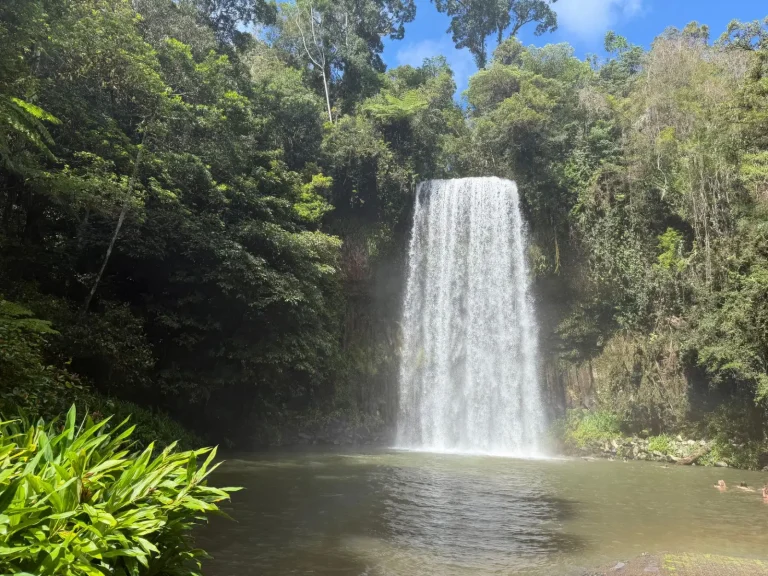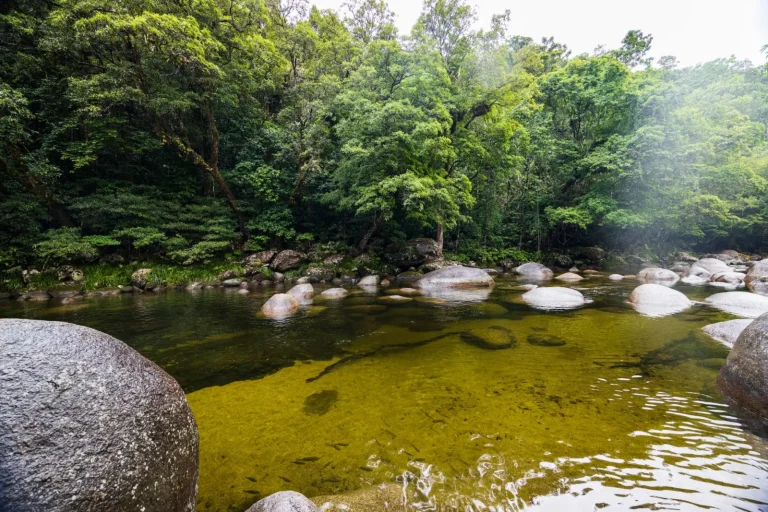

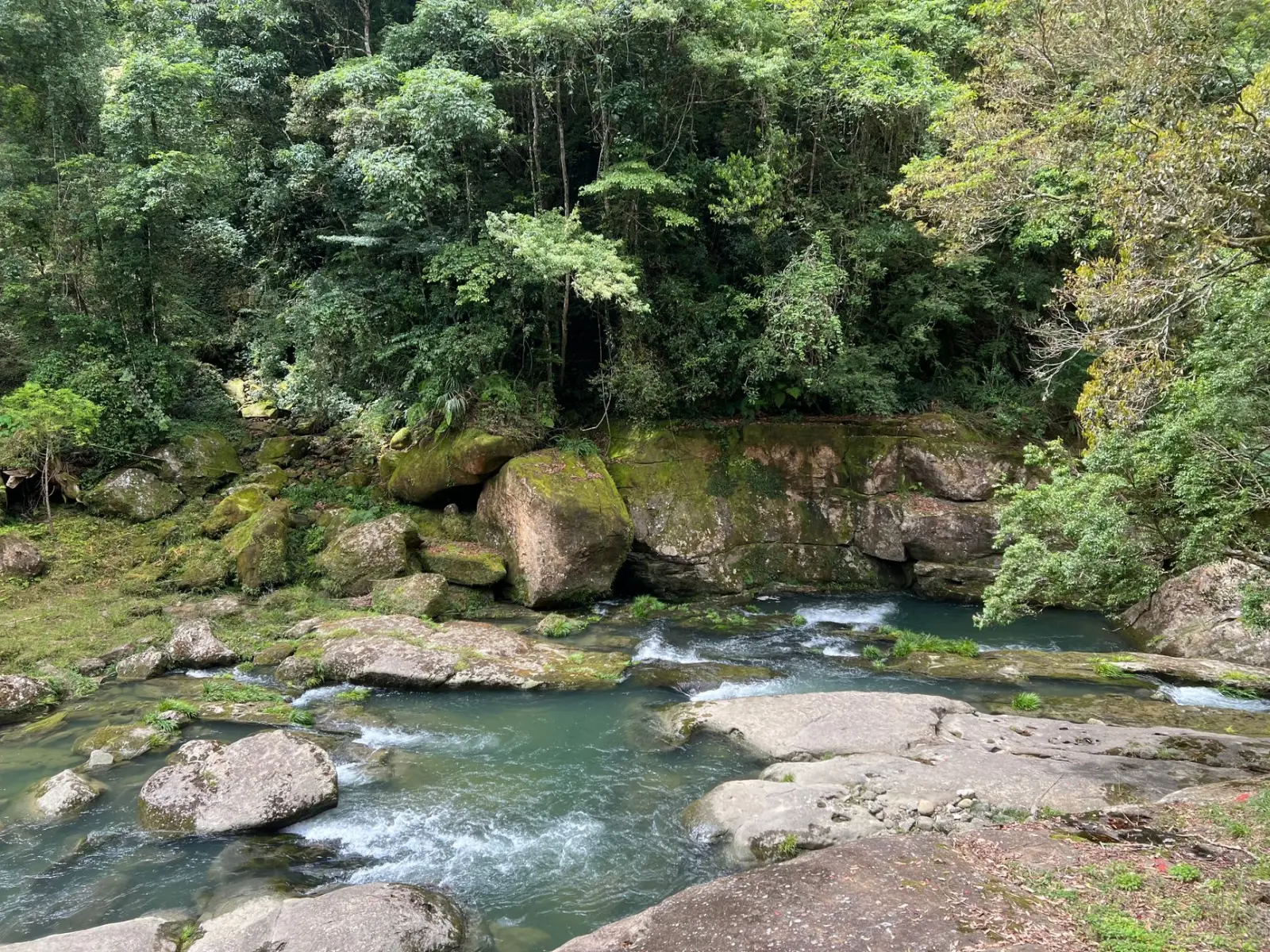
Mossman Gorge maintains water clarity that seems almost implausible for a tropical rainforest creek. I’ve visited during wet season downpours and dry season lows, and the water rarely turns the brown or grey you’d expect from heavy rainfall or geological runoff. The reason isn’t luck or seasonal timing – it’s a combination of specific geological and hydrological conditions that have been in place for a long time.
The catchment feeding Mossman Gorge sits on granitic bedrock with minimal clay and silt deposits. This matters more than most people realize. When rain falls on clay-heavy terrain, water picks up fine sediment particles that stay suspended, turning water opaque. Granite and similar hard rock shed water quickly without breaking down into fine particles. The creek bed itself is largely composed of larger boulders and stones rather than the fine sediment that would cloud the water. This geological foundation is the primary reason the gorge maintains visibility even after heavy rainfall.
Rainfall and Flow Dynamics
The Daintree region receives substantial rainfall, particularly during the monsoon season from December to March. You might assume this would muddy the water, but the opposite often occurs. Heavy, concentrated rainfall creates fast-moving water that flushes through the gorge quickly. The water doesn’t linger long enough to accumulate suspended sediment. Lighter, intermittent rain allows water to seep through the system more gradually, and by the time it reaches the main pool, it has already filtered through soil and rock layers.
The gorge’s steep gradient also plays a role. Water moves through the system with enough velocity to prevent sediment from settling. Slower-moving creeks and pools tend to accumulate silt; fast-moving water keeps particles in motion and carries them downstream. The combination of steep terrain and high rainfall volume creates conditions where water is constantly refreshed rather than stagnant.
Vegetation and Organic Matter
The dense rainforest canopy surrounding Mossman Gorge filters incoming water before it reaches the creek. Leaf litter and organic matter break down in the soil layer, but the fine root systems and humus act as a natural filter. Water percolating through this material loses suspended particles before entering the main waterway. This is different from areas where creeks run through cleared land or sparse vegetation – those systems often show higher sediment loads because water reaches the creek directly without filtration.
The rainforest also stabilizes the banks. Root systems hold soil in place, preventing erosion that would otherwise contribute sediment to the water. Where banks are exposed or vegetation is sparse, you see noticeably higher turbidity after rain. The Daintree’s thick vegetation has essentially armored the gorge against the sediment contribution that would otherwise come from bank collapse and erosion.
Limited Human Impact and Disturbance
The gorge’s protected status means minimal development in the immediate catchment. No mining, logging, or large-scale land clearing upstream contributes sediment. The walking tracks are managed to prevent erosion, and visitor numbers are regulated. In comparison, creeks flowing through areas with historical logging or agricultural use often carry visible sediment loads years after disturbance ceases. The Mossman Gorge catchment hasn’t experienced that level of disruption, which preserves the natural clarity.
Swimming and wading are concentrated in specific pools rather than spread throughout the gorge. This containment prevents the kind of bank disturbance and sediment resuspension that occurs when people access a creek at multiple points. The designated swimming area has been stable long enough that the banks are well-established and less prone to erosion.
Seasonal Variation and What Changes
Water clarity does shift seasonally, though not dramatically. During the wet season, visibility might drop from 10 meters to 5 or 6 meters after heavy rain, but the water rarely becomes brown. In the dry season, visibility can extend to 12 meters or more. These variations are normal and expected. What’s notable is that even at its least clear, Mossman Gorge remains transparent enough for swimming and snorkeling – something that can’t be said for many tropical creeks.
The depth of the main pool also contributes to perceived clarity. Deeper water appears clearer than shallow water with the same sediment load, simply because light penetrates further before reflecting off the bottom. Mossman Gorge’s main swimming pool is deep enough that this optical effect enhances the sense of clarity.
The water’s clarity is ultimately the result of a stable system where geology, vegetation, hydrology, and protection converge. It’s not a temporary condition or seasonal phenomenon. The conditions that keep the water clear have been in place for decades, and they’re unlikely to change unless the catchment itself is significantly altered. For visitors, this means the clarity you see on any given day reflects genuine hydrological stability rather than luck or timing.