
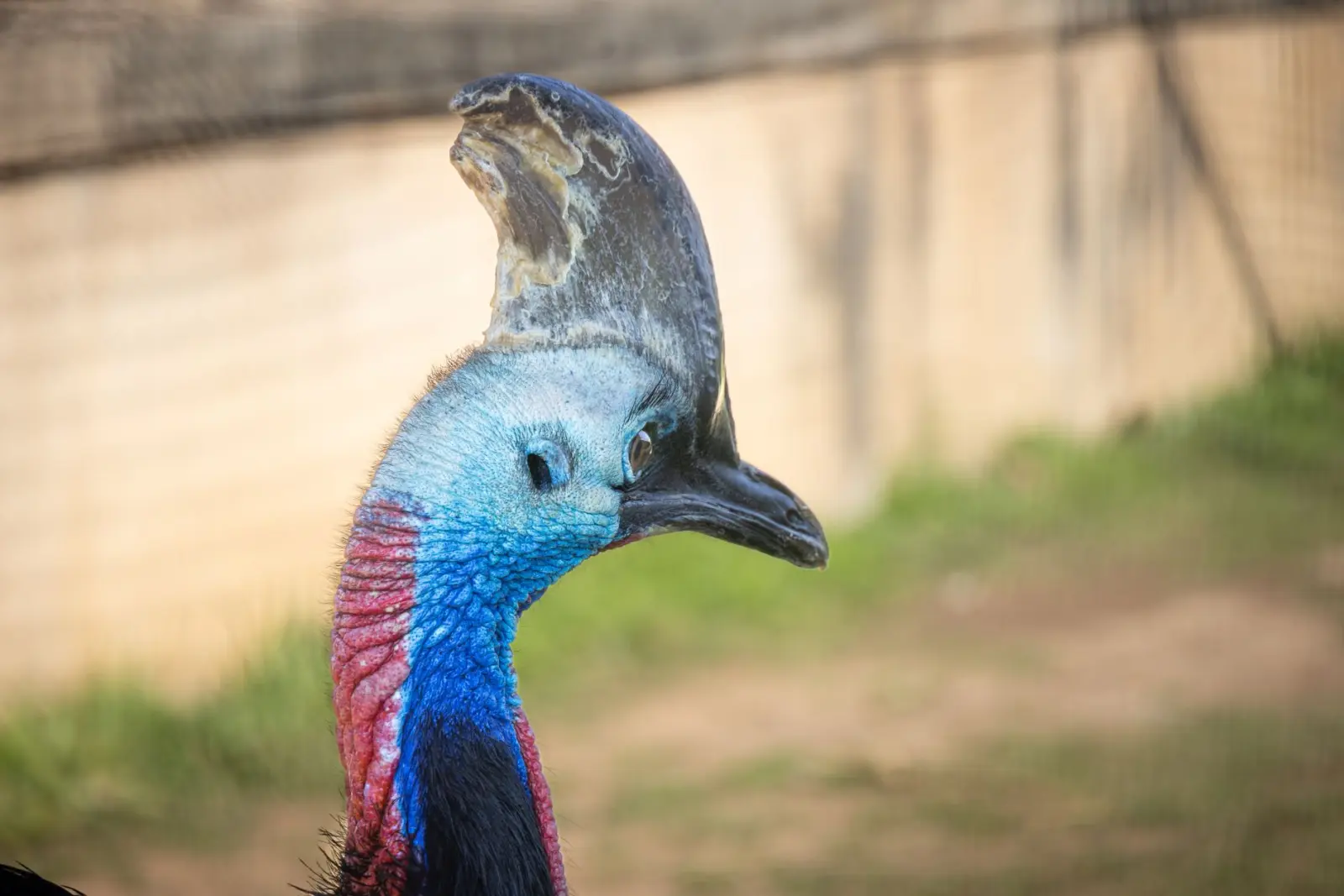
Spend enough time in the rainforests of northeastern Australia, and you begin to notice something that doesn’t appear in most wildlife guides: the cassowary’s influence extends far beyond its own survival. The bird itself is hard to miss – a six-foot-tall flightless creature with a distinctive blue head and a prominent casque, or helmet-like structure on its crown. But what matters more than the bird’s appearance is what it does every single day as it moves through the forest. A cassowary’s diet consists almost entirely of fruit, and the sheer volume it consumes creates a cascade of ecological consequences that ripple through the entire rainforest structure.
Over years of observation in these forests, the pattern becomes unmistakable. Cassowaries eat fruit that few other animals can digest, and they deposit seeds across vast distances. This isn’t a minor service. In a rainforest where many tree species depend on animal dispersal for reproduction, the cassowary becomes something closer to a living highway for genetic material. Without it, entire plant communities would fragment and eventually disappear.
The Fruit Dependency and Seasonal Patterns
Cassowaries are not opportunistic feeders. They are specialists, and their specialization creates a tight relationship with fruiting cycles. During peak fruiting seasons, a single bird can consume hundreds of fruits daily. The bird’s digestive system is designed to process large seeds that other animals cannot handle – seeds from native fig species, quandongs, and other rainforest fruits that are often toxic or physically difficult for smaller animals to manage.
What makes this relationship particularly important is timing. Rainforest fruiting is not evenly distributed throughout the year. There are boom years and lean years, and the cassowary’s movements follow these patterns closely. When fruit is scarce in one area, the birds travel, sometimes covering several kilometers in a single day. This movement is not random. It follows the fruit, which means it also follows the distribution of seed-bearing plants. The bird becomes a mobile seed bank, carrying viable seeds from productive patches to new areas.
The digestive process itself matters. When a cassowary consumes a fruit, the seed passes through its system largely intact. The bird’s gut does not break down the seed coat the way a smaller animal’s might. Instead, the seed emerges ready to germinate, often with the seed coat slightly scarified by the passage through the bird’s digestive tract. This is not accidental. The relationship between the cassowary and these plants has evolved over thousands of years, creating a dependency that is now impossible to reverse without the bird.
Seed Dispersal and Forest Structure
Walk through a rainforest where cassowaries are present and absent, and the difference becomes visible. In areas where cassowaries still roam, you find a broader distribution of large-fruited tree species. The forest canopy contains a higher diversity of fig trees, and the understory supports more of the shade-tolerant species that depend on these trees for food and shelter. In areas where cassowaries have disappeared or been eliminated, the forest begins to homogenize. Certain species become dominant because they can spread through other means – wind, water, or smaller animals. But the large-fruited species that require the cassowary’s dispersal services gradually vanish.
This shift happens slowly enough that it is easy to miss if you are not paying attention. A tree that would normally fruit every few years might fail to produce offspring for a generation. The next generation of that species becomes smaller and more scattered. Within a few decades, a species that was once common becomes rare, and within a century, it may be functionally extinct in that region. The cassowary’s absence does not kill the forest overnight. It starves it of diversity.
The spatial pattern of seed dispersal also matters. When a cassowary moves through the forest, it does not deposit seeds randomly. It tends to rest in certain areas – often near water sources or in clearings where visibility is better. These resting spots become seed deposition zones. Over time, these areas develop different vegetation patterns than surrounding forest. Some of the most productive patches in a healthy rainforest show this signature of cassowary use: a concentration of large-fruited species that would be far less common if dispersal depended solely on wind or water.
Interactions with Other Species
The cassowary’s role extends beyond simple seed dispersal. The bird’s feeding behavior creates physical disturbance in the forest. As it moves through the understory searching for fallen fruit, it kicks through leaf litter and overturns small branches. This disturbance exposes soil, creates gaps in the leaf layer, and affects the microhabitats available for invertebrates and smaller vertebrates. In some cases, this disturbance is beneficial. Seeds that land on bare soil have better germination rates than those buried under thick leaf litter. In other cases, the disturbance can be detrimental to species that depend on undisturbed forest floor conditions.
Other animals also depend on the cassowary’s food sources indirectly. When a cassowary feeds on fruit from a tall tree, some fruit falls to the ground uneaten. Smaller animals – wallabies, possums, and various bird species – benefit from this spillage. The cassowary’s presence means more fruit production overall, which supports a broader food web. Remove the cassowary, and the abundance of certain fruit sources declines, which affects the survival rates of these dependent species.
There is also a competitive element. During lean years, when fruit is scarce, cassowaries and other frugivores compete more intensely. The cassowary’s size and strength give it an advantage in accessing fruit in tall trees or in defended feeding areas. But this competition also drives the cassowary to move more extensively, which can actually increase seed dispersal during periods when it matters most – when food is scarce and the bird must travel farther to find it.
The Practical Reality of Conservation
Understanding the cassowary’s ecological role is one thing. Protecting it in a landscape increasingly fragmented by human settlement is another. The bird requires large, continuous forest areas to maintain viable populations. A rainforest patch of a few hundred hectares might support a cassowary temporarily, but it cannot sustain a breeding population indefinitely. The bird needs access to multiple fruiting zones across seasons, which means it needs forest corridors connecting different patches.
In practice, this means that cassowary conservation is inseparable from landscape-scale forest protection. It is not enough to protect a single reserve. The forest network must be connected, and it must be large enough to support the bird’s seasonal movements. When this does not happen – when reserves become isolated islands in a sea of cleared land – cassowary populations decline, and the ecological consequences cascade through the forest.
The loss of cassowaries in fragmented landscapes is often slow and difficult to detect in real time. A forest can look healthy for decades after cassowaries disappear, but the seed rain changes. The composition of the next generation of trees shifts. The understory becomes less diverse. By the time these changes become obvious, the trajectory is difficult to reverse. Replanting individual trees is possible, but recreating the seed dispersal network that a living cassowary population provides is not.
What becomes clear after years of working in these forests is that the cassowary is not simply another species that happens to live in the rainforest. It is a structural component of the ecosystem itself. The forest that exists today – its composition, its diversity, its productivity – exists partly because cassowaries have been moving through it for thousands of years, dispersing seeds and shaping plant communities. Losing the cassowary means losing the mechanism that maintains this particular forest structure. A rainforest without cassowaries may still be a forest, but it will be a fundamentally different one.