

Spend enough time walking through Australian rainforests – particularly in Queensland’s wet tropics or northern New South Wales – and you stop noticing individual trees. Instead, you notice the strangler figs. They’re everywhere. Wrapped around host trees like botanical pythons, their aerial roots creating latticed trunks that eventually hollow out and replace the original host. The first time you see a mature strangler fig, it’s striking. After a hundred encounters, it becomes the baseline. That prevalence isn’t accidental or random. It reflects a set of ecological advantages that have made these plants exceptionally successful in rainforest environments.
The strangler fig’s lifecycle is fundamentally different from most rainforest plants, and that difference explains much of their dominance. A strangler fig seed doesn’t germinate on the forest floor like a typical plant. Instead, it arrives high in the canopy, usually deposited by a bird or bat that has eaten the fruit. The seed lodges in a crevice or moss pocket on the branch of an established tree – often 20 to 40 meters above ground. This is the critical advantage. Rather than competing with thousands of seedlings on the shaded forest floor, the young fig begins life in direct sunlight, already positioned above the competition. That head start matters enormously in a rainforest environment where light is the limiting resource.
Germination in the Canopy Changes Everything
Once established on a host branch, the strangler fig develops aerial roots that initially hang down like thin cables. These roots aren’t searching for soil – not yet. They’re exploring the environment, and as they encounter moisture and organic matter accumulating on the host tree’s bark, they begin to thicken and branch. The fig is essentially building its own soil ecosystem in the canopy, trapping leaf litter, dust, and decomposing matter in the network of its roots. Over time, this creates a nutrient-rich substrate that supports the fig’s growth independent of the host tree’s vascular system.
The host tree itself becomes almost incidental to the process. As the fig’s root system expands and thickens, it gradually envelops the host’s trunk. The fig’s roots fuse together, creating a latticed cylinder that eventually becomes woody and rigid. The original host tree continues photosynthesizing and transporting water through its own cambium for years, sometimes decades. But the strangler fig is now competing directly for light, and its canopy position gives it the advantage. Slowly, the host tree weakens. Its growth slows. Eventually, it dies – sometimes from direct competition for light, sometimes from the mechanical stress of being wrapped, sometimes simply from old age accelerated by the burden of supporting a massive parasite.
Why Birds and Bats Make This Strategy Work
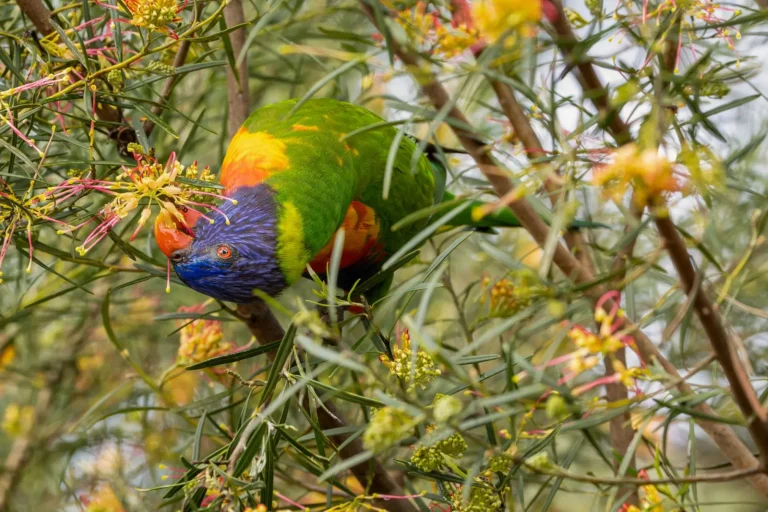
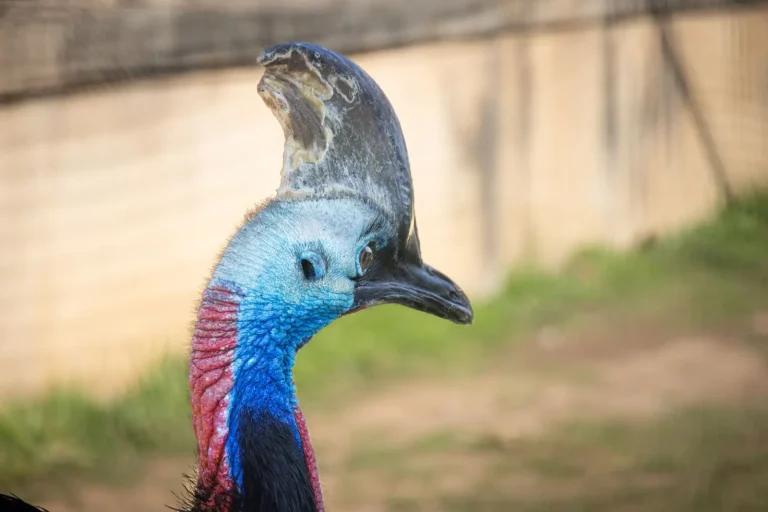
The dispersal mechanism is inseparable from the strangler fig’s success. Figs produce fruit year-round in tropical rainforests, which means there’s always a food source for frugivorous birds and bats. These animals don’t eat the fruit and drop seeds randomly. They defecate while perched in trees, often at considerable heights. A cassowary or a flying fox feeding in the canopy naturally deposits seeds high up, exactly where a strangler fig needs to be. This isn’t mutualism in the classical sense – the fig benefits far more than the disperser – but it’s a relationship that works. The animal gets reliable nutrition. The fig gets reliable placement in the canopy.
This dispersal advantage compounds over time. In a rainforest where most plants are competing for canopy space, the strangler fig starts every generation with a significant head start. Its seeds don’t need to survive the gauntlet of predation, fungal infection, and competition on the forest floor. They arrive pre-positioned in the one place where light is abundant. Over hundreds of years, this creates a visible pattern: strangler figs become disproportionately common in the canopy layer.
The Competitive Edge in Nutrient-Poor Environments
Australian rainforests, particularly in the wet tropics, are often nutrient-poor despite their lush appearance. The soil is heavily weathered, and much of the nutrient cycling happens in the canopy itself – in the form of epiphytes, mosses, and accumulated organic matter. The strangler fig’s strategy of building its own nutrient-capture system in the canopy is perfectly adapted to this reality. Rather than relying on root systems in poor soil, the fig creates a self-contained ecosystem in the air. It captures its own organic matter, hosts its own microbial communities, and cycles its own nutrients.
This is why you see strangler figs thriving in areas where other large trees struggle. They’re not dependent on soil fertility in the way a typical forest tree is. They’re dependent on light, moisture, and a suitable host tree – all of which are abundant in a rainforest. A young fig can establish itself on a host tree and begin growing while the forest floor remains dark and nutrient-poor. By the time the fig reaches maturity and the host tree dies, the fig’s root system is so extensive and self-sufficient that it can support a massive canopy.
The practical result is visible on any rainforest walk. Mature strangler figs are often the largest trees in the canopy, their hollow trunks wide enough to walk through. Younger figs at various stages of development are scattered throughout the forest, some still clearly attached to their hosts, others having already killed and replaced them. The species isn’t rare or specialized. It’s abundant because the strategy works reliably in rainforest conditions.
Structural Dominance and Long-Term Persistence
Once a strangler fig reaches maturity and its host tree dies, it becomes a structural anchor in the rainforest. The hollow trunk – which seems like a weakness – actually provides shelter and habitat for countless organisms. Possums nest inside. Insects colonize the bark. The fig becomes a microhabitat in itself, supporting far more biodiversity than the original host tree did. This is often overlooked when people first observe a strangler fig. The hollow trunk looks like a failure, but it’s actually a sign of success. The fig has completely replaced its host and is now functioning as an independent tree, supporting an entire ecosystem within its structure.
The persistence of strangler figs in Australian rainforests also reflects their reproductive strategy. Once established, a mature fig produces hundreds of thousands of seeds annually. Many of these seeds will fail to establish – they’ll land on unsuitable surfaces or be eaten before they germinate. But in a rainforest with thousands of potential host trees, the odds favor success. A single mature strangler fig can seed the canopy with enough offspring to ensure that several will eventually establish themselves on suitable hosts. This reproductive abundance, combined with the canopy dispersal advantage, creates a self-reinforcing pattern of prevalence.
After years of moving through rainforests, the presence of strangler figs stops feeling like a curiosity and starts feeling like an inevitability. They’re successful because they’ve solved the central problem of rainforest life: how to access light without competing on the crowded forest floor. Their strategy is elegant, and it works so well that they’ve become one of the defining features of Australian rainforest structure. They’re not invasive or problematic in the way that introduced species are. They’re simply doing what they’ve evolved to do, and doing it very effectively.