
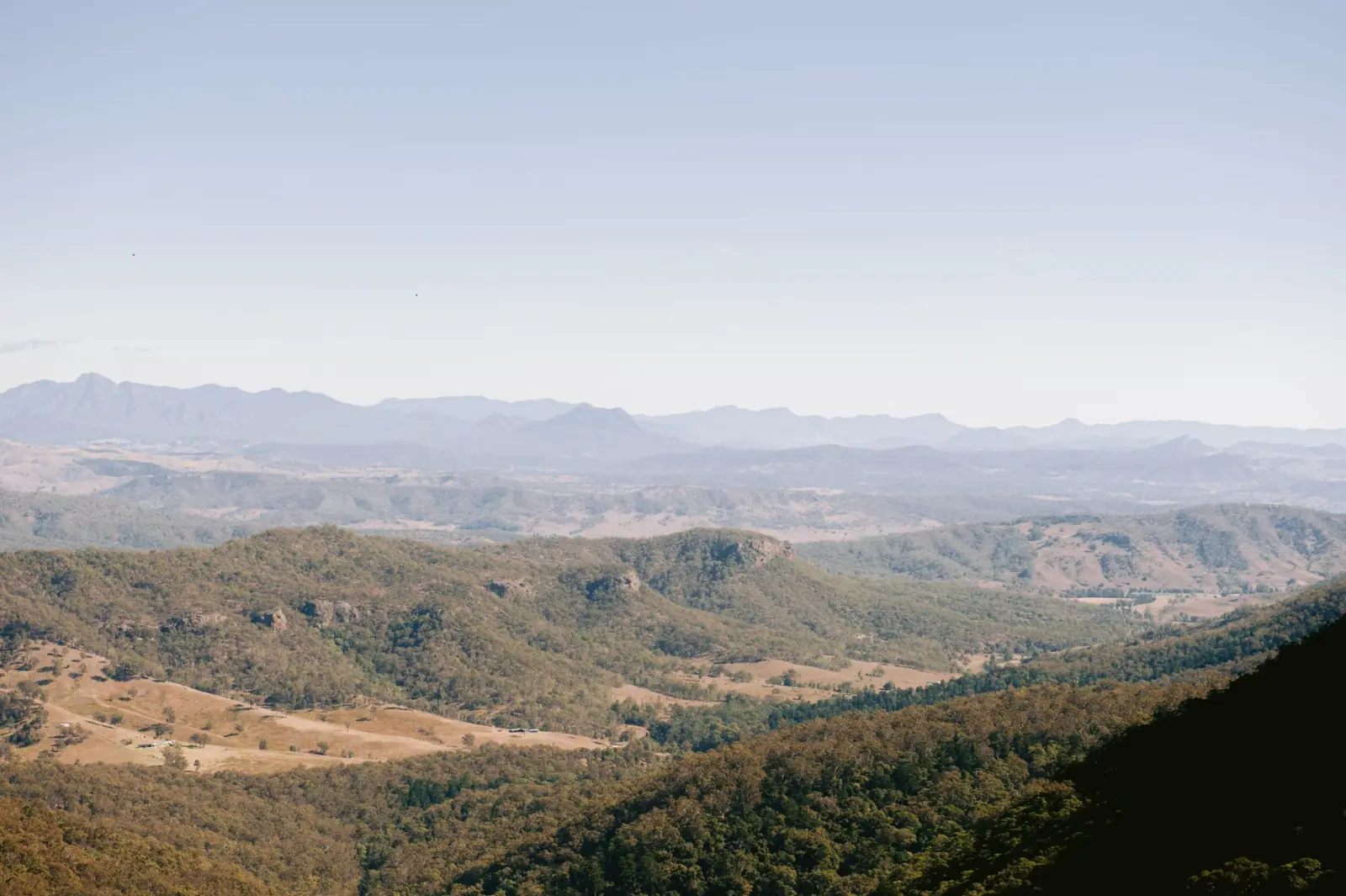
Lamington National Park sits on the Queensland – New South Wales border as one of Australia’s older protected rainforests, and spending time walking through it reveals something that photographs and park brochures rarely convey: you’re moving through a landscape that has persisted in recognisable form for tens of millions of years. Not unchanged, but continuous in its essential character. The forest here isn’t a museum piece or a relic preserved in amber. It’s a functioning ecosystem that has absorbed multiple climate shifts, volcanic events, and species turnovers while maintaining its structural integrity and ecological role.
The Gondwana connection is real but often misunderstood. When people hear “ancient Gondwana landscape,” they typically imagine a frozen moment from 180 million years ago. What you actually encounter at Lamington is something more nuanced: a forest type that originated during Gondwana’s breakup and has continuously occupied this subtropical plateau ever since. The plant families here – the Antarctic beeches, the primitive conifers, the fern understory – do trace their lineages back to that supercontinent. But the specific trees you walk past are not Gondwanan originals. They’re descendants, adapted to local conditions over millions of years of incremental change.
The Volcanic Foundation
Understanding Lamington’s landscape requires acknowledging its volcanic origin. The plateau itself formed from volcanic activity roughly 23 million years ago, during the Miocene. This is not ancient by geological standards – it’s recent enough that the volcanic structures remain recognisable. Walking the ridge trails, you notice the basalt outcrops, the way the soil sits dark and mineral-rich, and the particular steepness of the valleys. These aren’t accidental features. They’re direct consequences of how the lava flowed, cooled, and fractured.
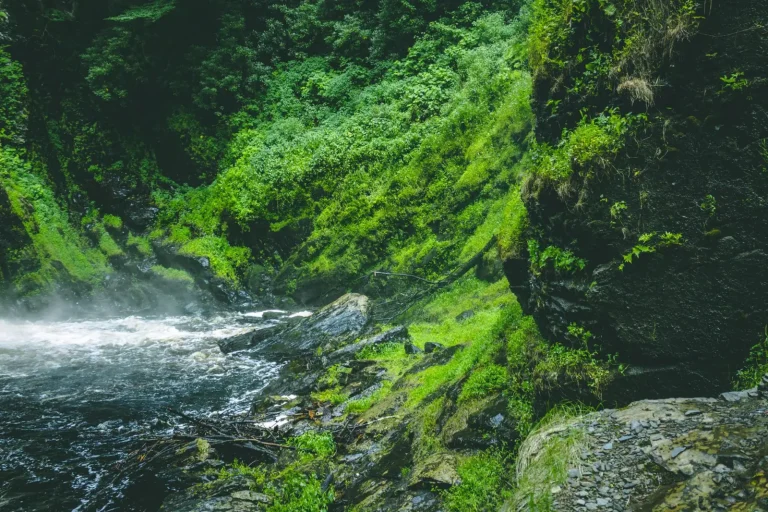
The basalt bedrock matters because it shapes water movement, soil chemistry, and therefore plant distribution. Streams here don’t meander gently. They drop steeply through gorges, and the water is typically clear and acidic because basalt doesn’t buffer pH the way limestone does. The forest canopy responds to this. You see different plant communities at different elevations and aspects, not because of arbitrary zoning but because water availability, temperature, and soil depth change measurably as you move across the plateau. The highest points – around 1100 metres – support Antarctic beech forest that looks almost temperate. Lower elevations transition into subtropical rainforest with different dominant species and structural characteristics.
Plant Families That Signal Deep Time
The botanical composition is where the Gondwana connection becomes tangible. Antarctic beech, *Nothofagus moorei*, is the most obvious example. This tree occurs in only a handful of locations along the Australian east coast, and its closest living relatives are in South America and New Zealand. You don’t need a field guide to recognise it – the small, neat leaves and the overall form are distinctly different from the broader-leafed rainforest trees around it. Walking through a stand of Antarctic beech, you’re in a forest type that has no modern equivalent elsewhere in Australia. It’s a living remnant, not because it’s unchanged, but because the conditions that allow it to persist here are rare.
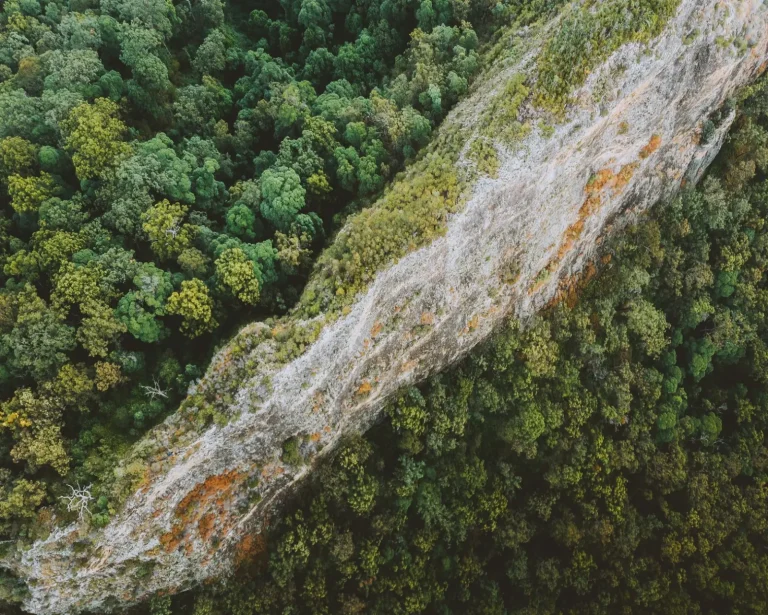
Alongside the Antarctic beech are conifers like *Podocarpus* and *Araucaria*, primitive by angiosperm standards but perfectly functional. The fern layer is unusually diverse – tree ferns, ground ferns, epiphytic ferns on branches. This layering is characteristic of old-growth rainforest that has experienced minimal disturbance. Lamington’s protected status since 1915 means the forest has had roughly a century without large-scale logging or clearing. That’s long enough for structural complexity to rebuild, but not long enough to erase the marks of earlier disturbance. If you look carefully at the canopy, you can see evidence of past selective logging in the size distribution of larger trees and in the presence of regrowth species mixed with old-growth forms.
What the Landscape Actually Demands
Visiting Lamington requires accepting its physical constraints. The plateau is high enough that weather changes rapidly. Morning cloud cover is common, and afternoon rain is frequent, especially during summer. The trails are steep – the park’s elevation range and the volcanic topography mean that walking distances are deceptive. A 5-kilometre trail can involve 400 metres of elevation gain, and the basalt rock is unforgiving underfoot. Most visitors underestimate fatigue on these walks, particularly if they’re accustomed to flatter terrain.
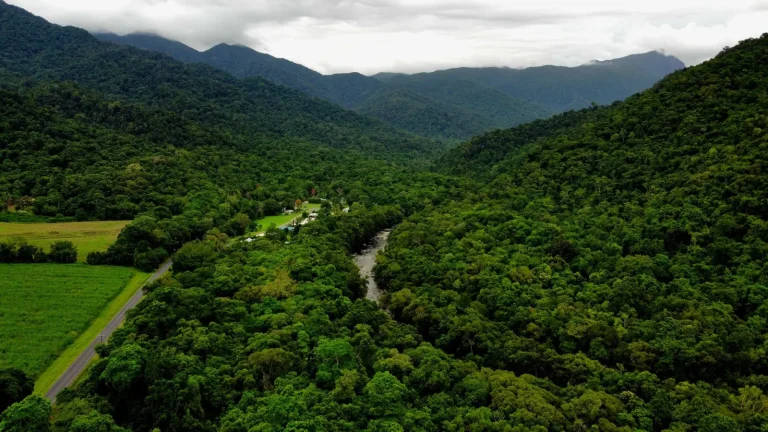
The forest itself is dense. Visibility into the canopy is limited by the layered structure, and the understory is thick with vegetation. This isn’t a landscape for casual wandering. Trails are well-marked and maintained, but they’re narrow and require attention. The humidity is persistent, particularly in the lower elevation subtropical sections. Even on days that seem cool at the plateau’s edge, the forest interior feels warm and damp. Insect life is abundant – mosquitoes and leeches during wet periods, various biting insects year-round. This isn’t a problem that ruins the experience, but it’s a reality that affects how long you can comfortably spend in the forest and what clothing and precautions make sense.
The streams are cold and flow quickly. The water quality is good, but the current is strong enough that crossing requires care, particularly after rain. Several of the major walks involve stream crossings, and the rocks are slippery. This is manageable with appropriate footwear and attention, but it’s a genuine hazard that the park’s promotional material downplays.
Ecological Patterns Worth Noticing
Spending time in the forest reveals patterns that connect to its age and continuity. The plant diversity is high, but it’s not evenly distributed. Certain species cluster in specific microclimates – particular ridge lines, sheltered gullies, or areas with particular soil conditions. This patchiness reflects millennia of local adaptation. Species haven’t spread uniformly across the plateau; they’ve established where conditions suit them and have persisted in those locations.
Wildlife is present but not always obvious. The forest supports numerous bird species, some of which are endemic to small ranges. Lyrebirds are common and vocal, particularly in the gullies. Reptiles are present but rarely seen. Mammals are mostly nocturnal or crepuscular. The absence of large, visible megafauna is notable – Australia’s rainforests lack the charismatic large animals that characterise tropical forests elsewhere. This reflects Australia’s Pleistocene extinctions and the continent’s subsequent mammalian history. The forest is ecologically complete without large predators or grazers, a pattern that has held for millions of years.
Lamington’s value as a Gondwana landscape rests on this continuity of function, not on pristine preservation. The forest has changed, recovered from disturbance, and continues to respond to current conditions. What makes it significant is that the fundamental ecological structure – the plant families, the community composition, the relationship between geology and biology – reflects patterns that extend back to the supercontinent’s breakup. Walking through it is less like stepping into a museum and more like witnessing a conversation that has been ongoing for an extraordinarily long time.