
The Daintree Rainforest draws people in with promises of ancient wilderness and biodiversity. Most visitors arrive with a fixed number of days, a mental checklist of lookouts and walking trails, and an underlying sense that they need to see everything before moving on. I’ve watched this pattern repeat countless times, and it almost always produces the same outcome: people leave feeling they’ve glimpsed something remarkable but never quite understood it.
Rushing the Daintree doesn’t just mean missing details. It means missing the entire texture of being in a living system that operates on scales and rhythms completely foreign to how we normally move through the world. The rainforest doesn’t perform on demand. The animals don’t appear because you’ve allocated two hours to a trail. The light doesn’t cooperate with your schedule. And the deeper you want to go – not in distance, but in genuine observation – the more time you need to simply sit and let your eyes adjust.
I’ve learned this through repetition and through watching what changes when people give themselves permission to be inefficient. A three-day visit to the Daintree where you’re moving between accommodation, checking off walks, and photographing obvious landmarks will feel full. A three-day visit where you stay in one place, walk the same trails multiple times at different times of day, and spend hours on a riverbank watching for movement will feel transformative. The difference isn’t the location. It’s the pace.
What Actually Takes Time in the Rainforest
Most people underestimate how long it takes to move through the Daintree physically. The terrain itself isn’t technically difficult, but it’s relentless. Boardwalks are well-maintained, but they’re also narrow and crowded during peak hours. Walking trails range from gentle to moderately steep, and humidity affects your pace more than gradient does. A 2-kilometer walk that might take 30 minutes in temperate conditions often takes 45 minutes to an hour here, especially if you’re not acclimated. Add in the fact that you’ll want to stop regularly to look at things, and a “quick morning walk” easily becomes a half-day commitment.
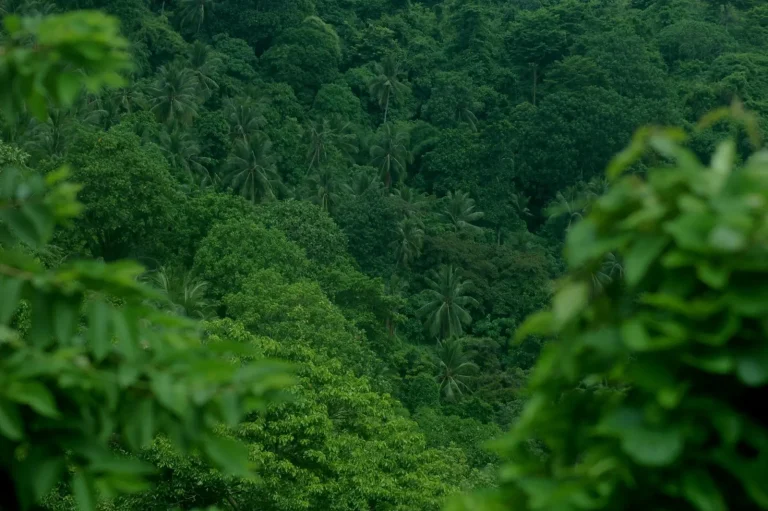
But the real time sink isn’t movement. It’s the adjustment period your eyes and attention need to actually see what’s in front of you. The rainforest is visually overwhelming at first. There’s so much green, so much texture, so much layering of vegetation that your brain struggles to parse individual elements. Birdcalls overlap. Insects are everywhere but invisible. The canopy is dense enough that light comes in fragments. For the first few hours, you’re essentially looking at a wall of undifferentiated nature.
Then something shifts. Your eyes start to separate the layers. You begin recognizing which sounds belong to which birds. You notice that certain trees have particular shapes, that vines follow particular patterns, that the forest floor isn’t uniform. This isn’t a mystical process. It’s simple visual and auditory adaptation. But it takes time – usually several hours of actual exposure before your perception begins to settle.
This is why returning to the same location multiple times matters far more than visiting many different locations. The first walk through Mossman Gorge is disorienting. The second walk, a day or two later, suddenly reveals structure. You notice which pools have fish, where the water is deepest, where the rock formations create interesting shadows. The third walk becomes almost meditative because you’re no longer struggling to process the basic visual information.
Logistics That Eat Time (And Why Accepting That Matters)
The Daintree sits roughly 80 kilometers north of Cairns, and reaching it involves driving through Cairns, heading north through Port Douglas, and then continuing another 30 kilometers to the main rainforest areas. If you’re staying in Cairns or Port Douglas and making day trips, you’re spending 2-3 hours in a car each day just to get there and back. That’s not time in the rainforest. That’s commute time.
Staying within or very close to the Daintree itself changes everything. Accommodation options range from basic to upscale, and they’re scattered throughout the region rather than concentrated in one town. This creates a practical problem: you need to decide where to base yourself. The choice matters because it determines how much time you spend driving between your accommodation and actual activities.
The Daintree River crossing is another time factor people often overlook. The vehicular ferry operates regularly but has limited capacity, and during peak tourist hours (roughly 9 AM to 3 PM), you can wait 20-30 minutes for a crossing. If you’re planning to cross multiple times in a day or visit attractions on both sides of the river, these waits accumulate. Building this into your schedule rather than treating it as an unexpected delay makes a real difference in your stress level and your actual available time.
Weather is the final logistics factor that forces patience. The Daintree is tropical, which means afternoon rain is common, particularly during the wet season (November to April). A walk that was perfectly pleasant at 8 AM becomes unpleasant by 2 PM. Some trails become genuinely unsafe after heavy rain due to slippery surfaces and flash flood risk in gullies. Rather than fighting this, experienced visitors build their days around it: early starts for main activities, flexibility for afternoon changes of plan, and acceptance that some days will be shorter than expected.
The Value of Repetition Over Coverage
The Daintree has a finite number of major walking trails and viewing areas. You could theoretically visit most of them in a single day if you moved quickly and didn’t linger. Some visitors do exactly this, checking off Mossman Gorge, Daintree Discovery Centre, Marrdja Boardwalk, and a couple of other spots before moving on. They see the locations. They take photographs. They’ve been there.
But the rainforest reveals itself through repetition, not coverage. Walking the same 1-kilometer boardwalk three times over two days teaches you more than walking five different boardwalks once. You begin to recognize individual trees. You learn which spots are likely to have cassowaries or other wildlife at particular times. You notice seasonal changes in flowering or fruiting. You understand the structure of the ecosystem rather than just observing its surface.
This approach requires accepting that you won’t see everything. You’ll miss certain attractions because you’re spending time on repeated visits to places you’ve already been. That’s not a failure of planning. It’s a deliberate trade-off that produces deeper understanding in exchange for broader coverage.
Most people find this genuinely difficult at first. There’s a cultural assumption that travel means seeing as much as possible, that returning to the same location is wasted time. But in the Daintree, the opposite is true. Depth of experience comes from staying put and returning to the same places, not from moving quickly between different locations.
Building a Realistic Daintree Schedule
A realistic Daintree visit that actually allows you to absorb the place requires at least four full days on-site. This means arriving early enough to get settled and do one walk the first day, having two full days for exploration and repetition, and a final partial day before departure. Anything less than four days tends to feel rushed, regardless of how well you plan.
Within those four days, a practical structure might look like this: early morning walk (starting around 7 AM) to take advantage of better light and fewer crowds, a midday break during the hottest and often wettest part of the day, and either a late afternoon walk or a stationary observation period (sitting by a river or on a boardwalk, simply watching). This rhythm respects the rainforest’s own patterns and your own energy levels.
Choosing which areas to focus on depends on your interests, but concentration matters more than variety. If you’re interested in birdwatching, spend your time in areas known for bird activity and return to those areas multiple times. If you’re interested in the river ecosystem, base yourself near Mossman Gorge or the Daintree River and explore that area thoroughly. If you want a general sense of the rainforest, the Marrdja Boardwalk and Daintree Discovery Centre provide good foundational understanding, but even then, visiting them multiple times reveals more than a single visit.
The Daintree Discovery Centre deserves particular mention because it’s easy to dismiss as a tourist facility. But it actually provides essential context for understanding what you’re seeing in the forest. Spending an hour there before your first walk, and then returning partway through your visit, helps your brain organize what it’s observing. This isn’t wasted time. It’s scaffolding that makes the rest of your experience coherent.
One practical consideration: if you’re traveling alone or with a partner, hiring a guide for one or two walks changes your experience substantially. A good local guide doesn’t just point out animals. They explain the relationships between species, the structure of the forest, the seasonal patterns, and the threats the ecosystem faces. This transforms what you see on subsequent unguided walks because you now have a framework for understanding it.
The Daintree doesn’t reward rushing. It rewards patience, repetition, and acceptance that you’re moving at a different pace than you normally do. This shift in pace is often the most valuable part of visiting, precisely because it’s so contrary to how most people travel. The rainforest itself doesn’t change based on how fast you move through it. But your capacity to actually perceive it does.