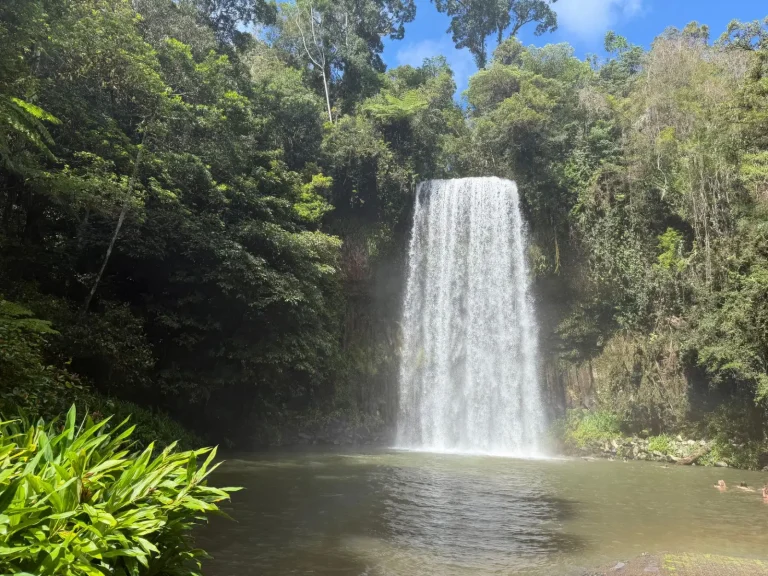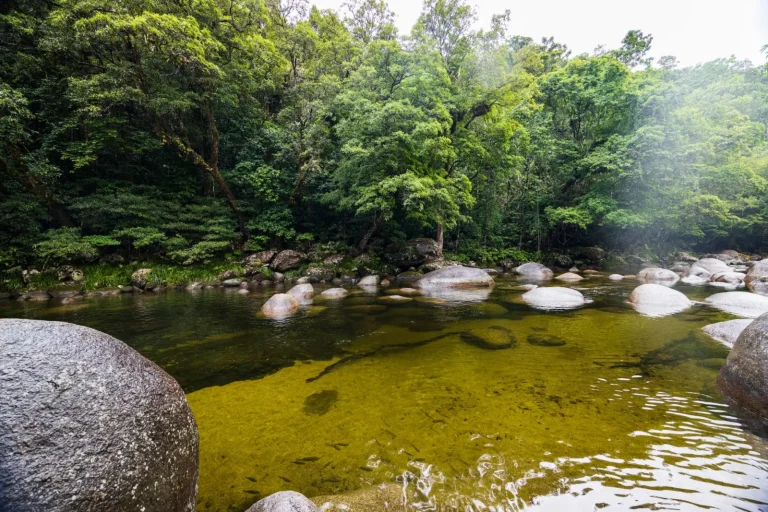

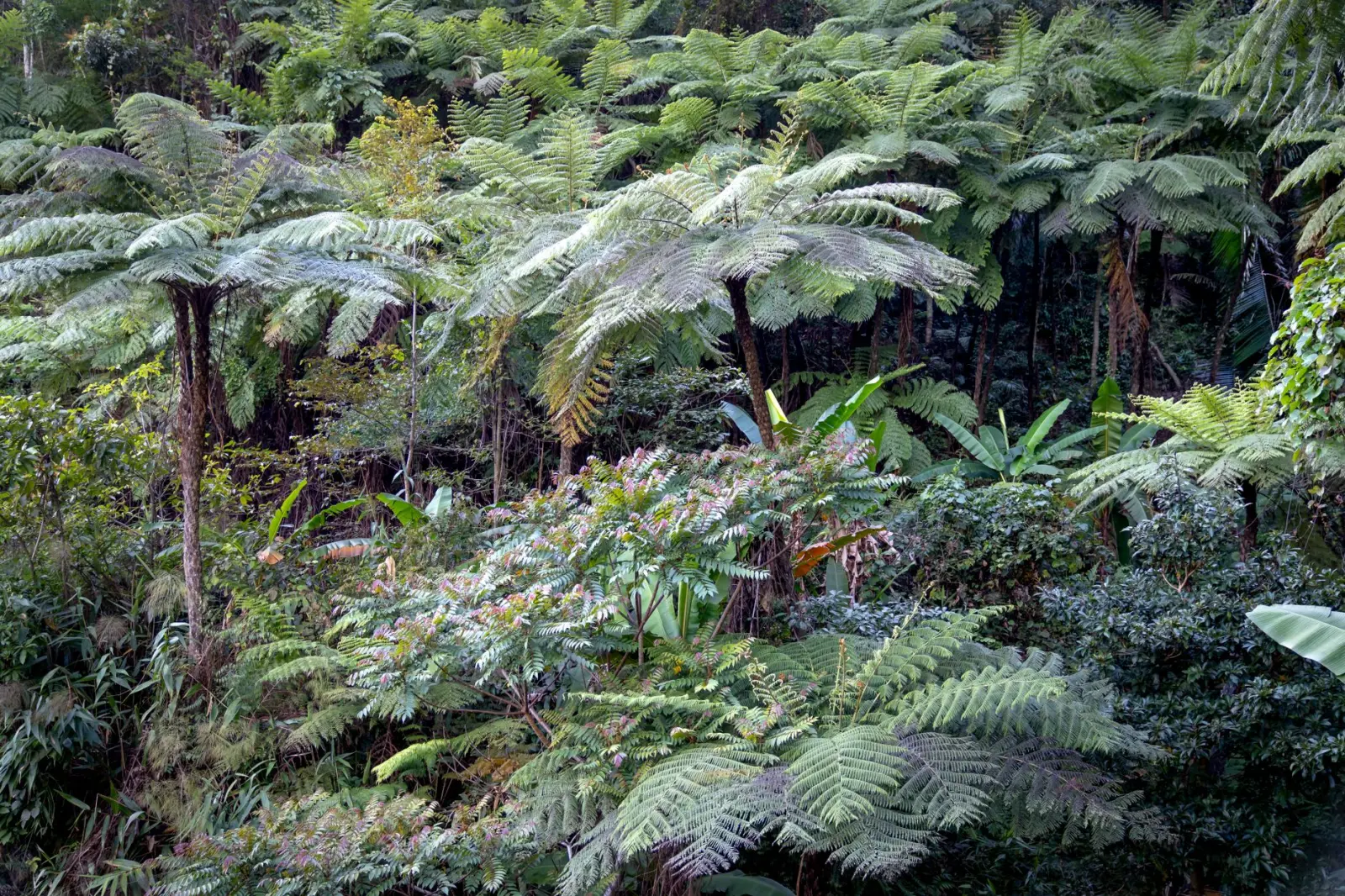
Wooroonooran sits in Far North Queensland’s Atherton Tablelands, and it’s one of those parks where the reality of visiting differs noticeably from what most people anticipate. The rainforest here is dense, the walking tracks are genuinely challenging in places, and the wet season transforms the park in ways that catch many visitors off guard. I’ve spent considerable time moving through this landscape, and what strikes me most is how quickly conditions change and how much the park demands from you physically.
The park covers roughly 8,700 hectares and contains some of the oldest tropical rainforest in Australia. That age shows in the vegetation density, the size of the trees, and the sheer complexity of the ecosystem. Walking through it doesn’t feel like walking through a park in the conventional sense. It feels more like moving through a living system where you’re a temporary visitor navigating someone else’s territory. The canopy is so thick in places that midday feels like early evening. The air holds moisture constantly. And the ground itself – roots, rocks, mud, leaf litter – demands your attention with every step.
The Water and the Weather Reality
Water defines this park. Streams run through most of the main walking areas, and during the wet season (roughly November through March), they become serious obstacles. I’ve watched visitors arrive in dry season expecting to cross creeks on rocks and find themselves facing thigh-deep water instead because of overnight rain upstream. The park receives significant rainfall even outside the official wet season, and the rainforest’s soil doesn’t absorb water the way drier landscapes do. It channels it downhill, fast.
The most popular walk, the Kauri Creek circuit, involves multiple water crossings. In the dry season, these are manageable. You might wade through calf-deep water, navigate slippery rocks, and move on. But I’ve seen conditions where the creek becomes genuinely hazardous. People underestimate how quickly their footing disappears on smooth rocks when water is moving, and how cold the water stays year-round despite the tropical heat. The park doesn’t close during wet season, but the risk profile changes substantially. If you’re visiting between December and February, assume creek crossings will be deeper and faster than you’ve experienced elsewhere.
Humidity is another factor people don’t fully prepare for. Even in the dry season, the rainforest maintains 80 – 90% humidity. Your clothes stay damp. Sweat doesn’t evaporate. After two or three hours of walking, most people feel genuinely fatigued not from exertion alone but from the constant thermal stress of moving through that moisture-heavy air. Bring far more water than you think you’ll need. A two-hour walk in this environment demands the same hydration planning you’d give to a four-hour walk in open terrain.
Track Conditions and Navigation
The main tracks are marked, but “marked” doesn’t mean easy to follow. Tree roots dominate the walking surface on most trails. They’re not obstacles you step over once – they’re a constant, uneven surface that demands focus. Ankle injuries are common here, and I’ve seen them happen to experienced walkers simply because fatigue sets in and attention lapses. The ground is rarely flat. It’s either climbing steeply or descending steeply, with very little middle ground.
The Kauri Creek walk is the most accessible option and still takes longer than the distance suggests. A 6-kilometer loop might take three to four hours depending on fitness and water levels. The Palmerston Section offers more challenging terrain and fewer people. If you’re looking for solitude, the Palmerston tracks deliver it, but they also demand better navigation skills and fitness. I’ve encountered visitors who underestimated the difficulty and found themselves moving much slower than planned, which creates a cascading problem when daylight becomes a factor.
Bring a good headlamp even for daytime walks. The canopy density means that if you’re still walking at 4 p.m., you’ll be moving in near-darkness by 5 p.m. regardless of the season. And the forest floor is uneven enough that walking in poor light significantly increases injury risk.
Practical Movement Through the Park
The park has two main access points: the Kauri Creek car park and the Palmerston section. Neither has facilities beyond basic parking. There are no shops, no water stations, no toilets on the longer walks. The Kauri Creek area has a picnic ground with basic amenities, but once you’re on the track, you’re self-sufficient. Bring everything you’ll need – water, food, first aid supplies, insect repellent.
Insects are present year-round but worse during warmer months. Leeches appear after rain, particularly on the Palmerston tracks. They’re not dangerous, but they’re persistent and unpleasant. Salt or insect repellent works, but many people find the psychological aspect more challenging than the actual bite. Mosquitoes are active in the early morning and late afternoon, and some carry dengue fever. Long sleeves and proper repellent aren’t optional here.
The park is genuinely remote. Mobile phone coverage is unreliable. If something goes wrong – a serious ankle injury, a fall, heat exhaustion – help isn’t immediate. I’ve seen rescue operations that took hours to mobilize. This isn’t meant to discourage you, but to emphasize that you need to be self-reliant and make conservative decisions about when to turn back.
When to Visit and What That Means
The dry season runs roughly April through October. This is when the park is most accessible, but it’s also when it’s busiest. The Kauri Creek walk can feel crowded on weekends, which diminishes the experience considerably. If you can visit midweek during this period, you’ll have a noticeably different experience.
The wet season is less predictable but often less crowded. If you’re experienced with tropical conditions and don’t mind the possibility of being rained on, the park has a different energy during these months. The forest is even more vibrant, the water flows are dramatic, and you’ll encounter far fewer people. But you need to be realistic about your abilities and the actual risk of being stranded or injured in conditions that deteriorate quickly.
Early morning starts are essential regardless of season. Getting on the track by 7 or 7:30 a.m. gives you a buffer for the unexpected delays that inevitably happen in this terrain. I’ve watched visitors start at 10 a.m. and find themselves hiking in darkness despite planning for a short walk.
Wooroonooran rewards preparation and realistic self-assessment. It’s not a difficult park in the technical climbing sense, but it’s physically demanding, conditions change rapidly, and the environment is genuinely wild. The people who enjoy it most are those who show up with appropriate gear, conservative time estimates, and respect for what they’re moving through. The people who struggle are those who treat it like a standard suburban walking trail.