
Spending time in tropical rainforests after cyclones pass through reveals something that initially seems counterintuitive. The trees that survive best are not necessarily the tallest or most rigid. Many of the largest specimens shed their crowns entirely, leaving stark vertical trunks standing among the debris. Smaller trees bend dramatically, their canopies nearly touching the ground, then spring back upright once the wind subsides. This is not random damage or luck. It reflects a set of structural and physiological characteristics that have evolved over thousands of years in regions where extreme wind events are part of the seasonal rhythm.
The wood itself tells much of the story. Rainforest timber is often denser than temperate forest wood, yet it tends to be more flexible rather than brittle. This matters enormously. A tree with rigid, inflexible wood will snap under sustained lateral force. The wood fibers in many rainforest species are oriented in ways that allow bending without fracturing. When you examine a fallen tree after a cyclone, the wood at the break point often shows signs of compression and fiber bending rather than a clean snap. The tree has absorbed enormous stress before finally giving way, if it gives way at all. Some species can bend to angles that seem physically impossible without breaking, then recover to near-vertical positions once the wind passes.
Root Systems and Anchorage
The conventional assumption about tree stability is that deeper roots mean better anchorage. In rainforests, this assumption often fails. Most rainforest soils are thin, sitting atop bedrock or dense clay layers that roots cannot penetrate. Trees have adapted by developing shallow, spreading root systems that radiate outward rather than downward. These buttressed roots, visible as flared bases on many large rainforest trees, act as guy-wires more than anchors. They distribute the tree’s weight across a wider footprint and allow the tree to sway as a unit rather than resisting movement.
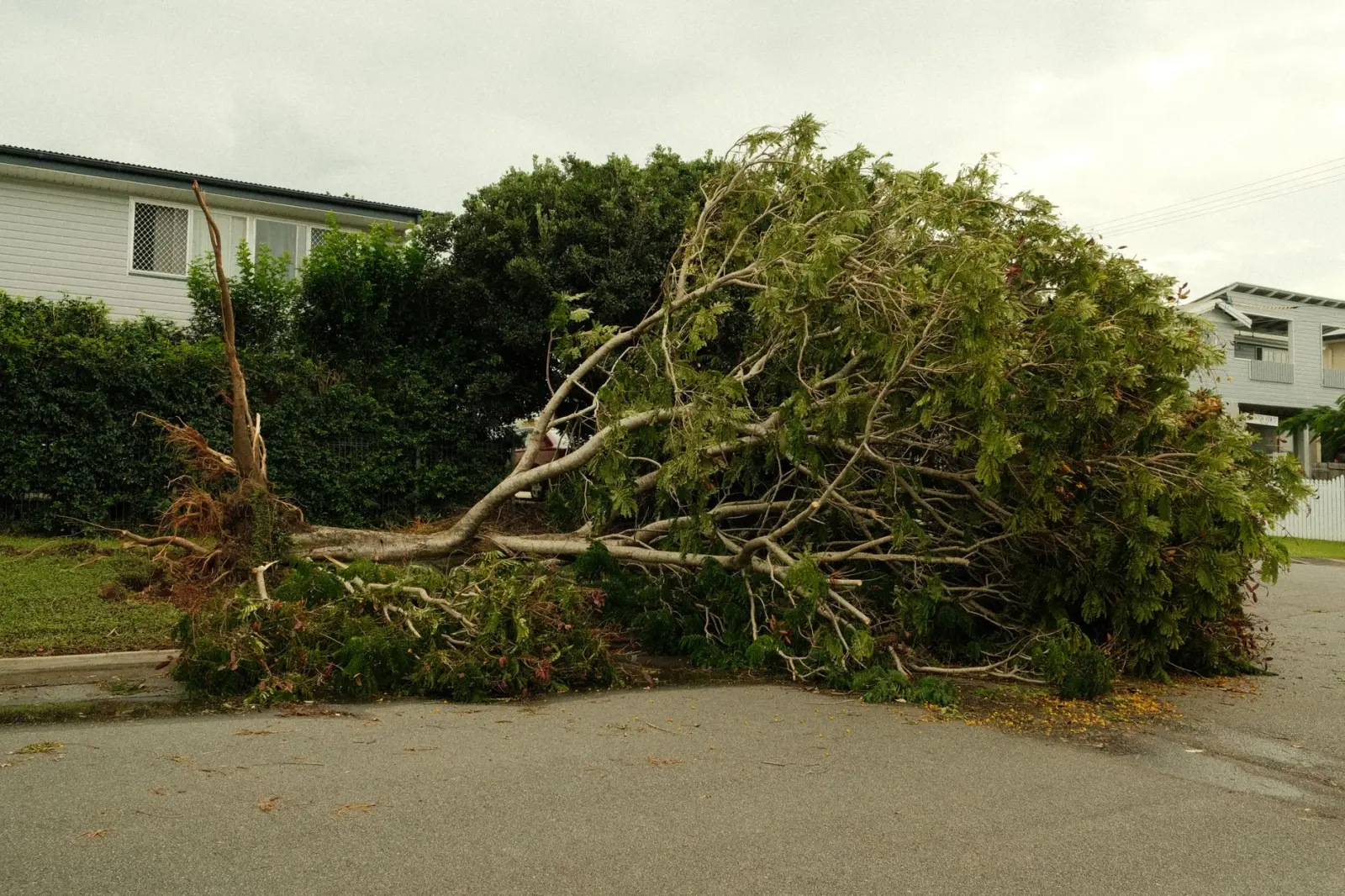
What actually matters for survival is not how deep the roots go, but how well they grip the soil they occupy. Rainforest soil, despite being nutrient-poor, is often rich in organic matter and root density. A mature tree’s root system may involve thousands of fine roots interwoven through the top meter of soil, creating a dense mat that holds firm even when the tree rocks back and forth. After a cyclone, you often see trees uprooted not because their roots were weak, but because the entire soil plate was displaced. The roots held perfectly; the ground itself failed. This happens most often on slopes or in areas with poor drainage where soil saturation reduces friction and cohesion.
Crown Architecture and Shedding
The canopy structure of rainforest trees is not random. Many species have evolved what might be called “expendable” upper crowns. The largest branches are often attached in ways that allow them to break cleanly without damaging the main trunk. This is not a flaw in the tree’s design; it is a survival strategy. When a cyclone hits, a tree can shed 30, 40, or even 50 percent of its crown and still survive. The energy that would have snapped the trunk is instead dissipated through branch failure.
Smaller branches and twigs are even more disposable. They create drag in high winds, and their loss reduces the overall wind load on the tree. A rainforest canopy after a cyclone often looks devastated at first glance, with branches and leaves scattered across the forest floor. But the standing trees remain, stripped but alive. The investment in regrowth is significant, but it is less costly than death. Trees that attempt to preserve their entire crown structure often lose the contest with the wind.
Species-Specific Responses
Not all rainforest trees survive cyclones equally. Some species are far more vulnerable than others, and this variation shapes forest composition over time. Trees with large, heavy crowns and narrow trunks tend to fail first. Those with smaller leaves, more flexible wood, and lower height-to-diameter ratios survive at higher rates. Over decades and centuries, repeated cyclones gradually shift the species composition of a forest toward the more wind-resistant types.
Some species respond to cyclone damage by sprouting vigorously from the remaining trunk. Others grow slowly and rely on longevity rather than rapid recovery. A few species seem almost indifferent to cyclone damage, their survival rates barely affected by wind speed. These differences are not always obvious from casual observation. You need to track individual trees over years and through multiple cyclone seasons to see the pattern emerge. A tree that appears severely damaged might recover fully within two growing seasons, while another that seems less affected might decline slowly over months.
The timing of cyclones relative to the growing season also influences survival. A cyclone that strikes during the wet season, when trees are actively growing and wood is more flexible, often causes less permanent damage than one that hits during a dry period when wood is more brittle. Similarly, trees that have recently flushed new growth are more vulnerable than those with mature, hardened wood. These seasonal factors interact with the tree’s own physiological state in ways that are difficult to predict without long-term observation.
Recovery and Forest Dynamics
What happens after a cyclone is as important as what happens during it. The forest does not simply repair itself. Instead, it enters a period of rapid change. Light reaches the forest floor through gaps created by fallen trees and crown loss. Shade-intolerant species germinate and grow quickly, competing with the recovering canopy. Some trees that survived the wind event may be outcompeted during this recovery phase and eventually die. Others thrive in the new light environment.
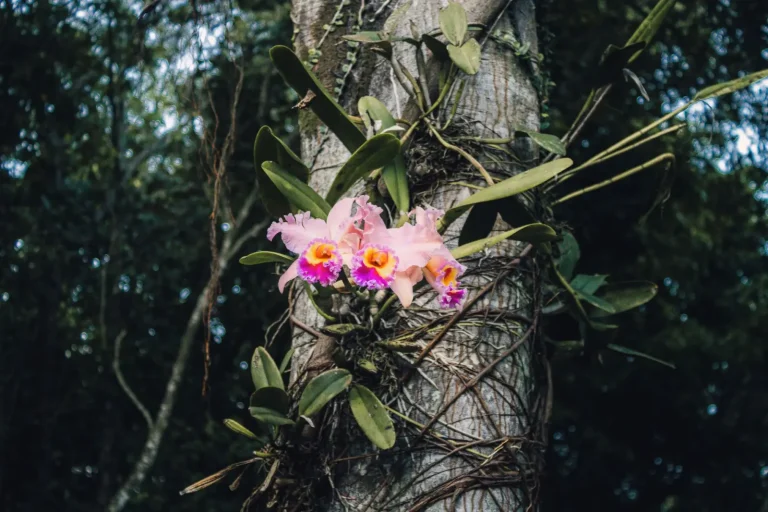
The debris itself becomes a resource. Fallen logs create microsites for germination and provide nutrients as they decompose. Epiphytes and climbing plants colonize damaged trees. The forest that emerges five or ten years after a cyclone is not the same as the forest that existed before, even if the same trees are standing. The composition, structure, and species diversity have shifted, sometimes dramatically.
Living in or working regularly in cyclone-prone rainforests teaches you that these events are not aberrations or disasters in the ecological sense. They are part of the normal cycle. The trees have not evolved despite cyclones; they have evolved because of them. Their flexibility, their ability to shed biomass, their shallow root systems, and their crown architecture all reflect millions of years of selection pressure from wind events. Understanding how rainforest trees survive cyclones is ultimately about understanding how forests persist in places where extreme conditions are routine rather than exceptional.