
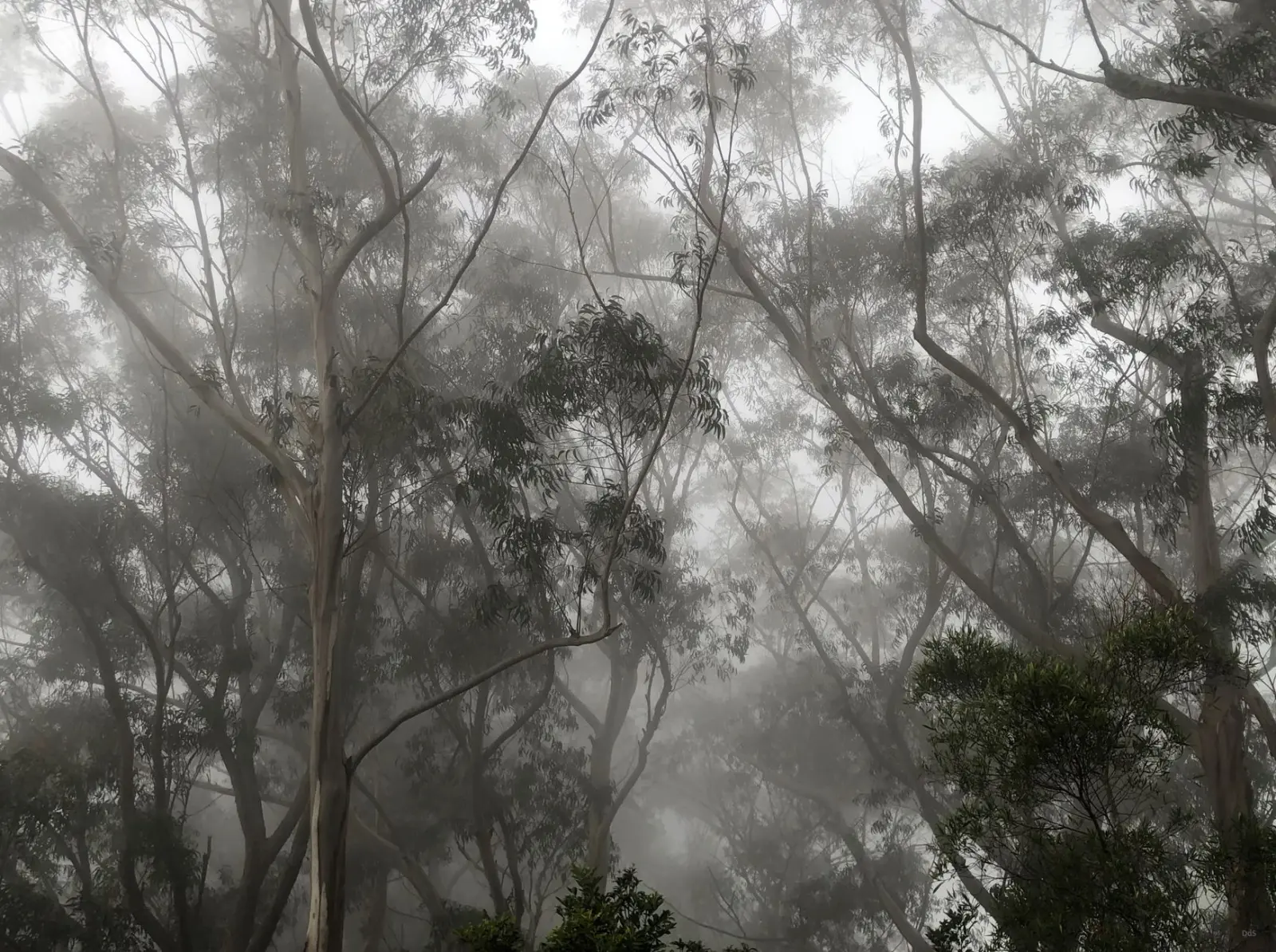
Working in Australian rainforest conservation over the past fifteen years has meant watching certain species become harder to find. Not in the dramatic, sudden way that makes headlines, but through the slow compression of their world. The rainforests of northeastern Australia – particularly those in Queensland and northern New South Wales – hold some of the continent’s most vulnerable animals, and the pressures on them are rarely as simple as people imagine.
The fundamental problem is habitat fragmentation. What were once continuous stretches of rainforest are now broken into isolated patches, separated by cleared land, agricultural areas, and development. This fragmentation affects different species in different ways. Some animals can move between patches if the gaps aren’t too large. Others cannot, and their populations become trapped in shrinking islands of forest. Over time, genetic diversity declines, breeding opportunities narrow, and the population becomes increasingly unstable.
I’ve spent enough time walking these forests to understand that the remaining rainforest isn’t uniform. The wet tropics of far north Queensland have different species composition than the subtropical rainforests further south. The altitude matters. Soil type matters. Rainfall patterns matter. When habitat is lost, it’s often the most specialized species – those that depend on very specific conditions – that disappear first.
The Cassowary and Edge Effects
The southern cassowary is perhaps the most visible symbol of rainforest decline in Australia, but most people don’t understand what’s actually threatening it. The bird itself is resilient in some ways. It can survive in fragmented habitat better than we initially thought. The real problem is more subtle: the cassowary depends on rainforest fruits for food, and when you lose large sections of forest, you lose the fruiting trees that sustain the bird through seasons when other food is scarce.
What I’ve observed repeatedly is that cassowaries in smaller forest patches experience nutritional stress. They move more frequently, spend more energy searching for food, and venture into agricultural land where they’re more likely to be hit by vehicles or attacked by dogs. The forest patches that remain are often at lower altitude and warmer than the original habitat, which affects which fruit trees grow there and when they fruit. A cassowary population can look stable in terms of numbers while actually being under increasing physiological stress.
The edge of the rainforest is also a different environment than the interior. More light penetrates, temperatures fluctuate more, humidity drops. Species that evolved in the stable interior conditions struggle at the edges. For a large bird like the cassowary, this matters less than for smaller animals, but for many smaller species, the expansion of edge habitat relative to interior habitat fundamentally changes the ecosystem they depend on.
Small Mammals in Fragmented Patches
The smaller mammals are where fragmentation becomes truly limiting. Species like the northern bettong, the mahogany glider, and various possum species have small home ranges and specific habitat requirements. When a forest patch becomes isolated, these animals cannot easily recolonize it if their population crashes, and they cannot interbreed with populations in other patches.
The mahogany glider is a good example. This small possum glides between trees using a membrane between its limbs, and it requires specific tree species for both shelter and food. The gliders need hollow-bearing trees for dens – trees that are typically old and large. When rainforest is logged, even selectively, the old trees are often the first to be removed. The remaining young forest doesn’t provide the hollows the gliders need for decades. I’ve seen patches where mahogany gliders disappeared not because the forest was cleared entirely, but because the remaining forest lacked the structural complexity they required.
Northern bettongs face a different constraint. They’re ground-foragers that dig for invertebrates and fungi, and they need relatively undisturbed forest floor. In fragmented patches, predation pressure from feral cats and wild dogs increases because the animals have nowhere to retreat to. The smaller the patch, the higher the proportion of edge habitat, and the more exposed the bettongs become. I’ve documented populations that seemed to be holding on until feral predators moved in, after which they declined rapidly.
Amphibians and Water Dependency
The rainforest amphibians are perhaps the most sensitive indicator of habitat quality. Many species breed in specific microhabitats – seepage areas, small streams, leaf litter pools – that only exist in undisturbed forest. When forest is cleared or degraded, these breeding sites disappear.
The mountain mistfrog and several other stream-dependent species have experienced severe declines that correlate directly with habitat loss and stream modification. These frogs need cool, flowing water with specific chemical properties. When rainforest is cleared upstream, the water warms, sediment increases, and the conditions change. The frogs don’t simply move elsewhere; they cannot breed in altered water.
Chytrid fungus, a disease that affects many amphibians, is often cited as the primary threat to Australian rainforest frogs. But in my observation, the disease is most devastating in populations that are already stressed by habitat loss. Frogs in continuous, healthy forest seem to maintain resistance better than frogs in small, isolated populations. The habitat fragmentation creates the vulnerability that the disease then exploits.
Vegetation Specialists and Narrow Ranges
Some of Australia’s most threatened rainforest species are plants themselves, and the animals that depend on them. The Dorrigo daisy, the Nightcap oak, and various other rare plants occur in extremely small areas. When their habitat is lost, the animals that feed on them – insects, birds, mammals – lose their food source.
The Australian lungfish, found in a handful of rainforest streams in Queensland, is dependent on specific water conditions and vegetation. It’s not technically a rainforest animal in the way that cassowaries or gliders are, but it shares the same habitat vulnerability. The streams it occupies are threatened by water extraction, pollution, and climate-driven changes to water availability.
What I’ve found is that the most threatened species tend to be those with the narrowest habitat requirements. The animals and plants that can tolerate a range of conditions, that can eat different foods, that can breed in various locations – these persist. The specialists, the ones that evolved in stable rainforest conditions over thousands of years, are the ones that struggle when that stability is disrupted.
Climate Stress as a Multiplier
Habitat loss and fragmentation are the primary drivers of decline, but climate change is amplifying the problem. The rainforests of Australia are sensitive to temperature and rainfall patterns. Species that are already confined to small patches have no room to shift their range upslope or to cooler areas as temperatures increase.
I’ve observed this most clearly in the higher altitude rainforests. Species that historically occurred at lower elevations are moving upslope, compressing the habitat available to species that are already restricted to the highest elevations. For a species like the mountain possum, which already has a tiny range, this upslope compression leaves nowhere to go.
Rainfall patterns are also shifting. Some rainforest areas are experiencing longer dry seasons or more intense dry periods. Plants and animals adapted to consistent moisture are stressed during these periods. In fragmented patches, there’s no refuge to move to, no larger landscape to shift across. The stress becomes acute.
The interaction between habitat fragmentation and climate change is what keeps me concerned. Either one alone would be manageable for many species. Together, they create a narrowing window of viable habitat. A species that could tolerate some climate variation if it had a large, continuous range cannot do so when it’s confined to a small patch.
The rainforests of Australia are not disappearing entirely, but they are being fundamentally altered. The remaining patches support fewer species, smaller populations, and less genetic diversity. The animals that persist are often the generalists, the ones that can eat different foods and tolerate different conditions. The specialists – the species that make rainforests distinctive – are the ones that are fading. That’s what the data shows, and that’s what I see when I walk through these forests.