
Walking through certain Australian forests, you encounter plants that feel displaced from another era. Not in the romantic sense, but literally – these are lineages that have survived for hundreds of millions of years, often with minimal structural change. After spending considerable time in these forests, moving through wet gullies and rainforest pockets, the reality becomes clear: Australia harbors some of the world’s most ancient plant families, and understanding what you’re looking at changes how you read the landscape entirely.
The reason these ancient families persist here has everything to do with geography and climate stability. Australia was part of Gondwana, the southern supercontinent, until it broke away roughly 30 million years ago. As the continent drifted north and became progressively drier, the wet forests retreated to pockets – primarily along the eastern coast and in Tasmania. These refugia created a kind of time capsule. While plant families elsewhere faced extinction during ice ages and climate upheaval, Australian rainforests remained relatively stable. That stability allowed lineages to continue with minimal evolutionary pressure to change.
The Araucariaceae and their enduring presence
The Araucaria family represents one of the most visible examples of this ancient persistence. Kauri pines and hoop pines belong to this group, which dates back at least 200 million years. When you stand beneath a mature hoop pine in a Queensland rainforest, you’re looking at a tree whose basic form and reproductive strategy have remained largely unchanged since the Jurassic. The symmetrical branching pattern, the way the needles are arranged, the structure of the cones – these features work, and they have worked for an incomprehensibly long time.
What strikes you when observing these trees is their apparent inefficiency by modern standards. They grow slowly. They don’t produce seeds prolifically. They seem almost passive in their ecological role. Yet this apparent passivity is precisely why they’ve survived. They occupy a niche that doesn’t reward rapid growth or aggressive reproduction. In the stable, moist understory of rainforest, longevity and persistence matter more than speed. A hoop pine can live for centuries, slowly accumulating biomass, reproducing sporadically but reliably.
Cycads and the Mesozoic holdovers
Cycads present another window into deep time. These plants, which resemble palms but are entirely unrelated, dominated landscapes during the age of dinosaurs. Today, Australian rainforests contain several cycad species, most notably in tropical regions. Encountering a cycad in the field is like meeting someone who remembers a conversation from 200 million years ago – they’re that old as a lineage, that unchanged in their fundamental structure.
Cycads reproduce through large, colorful cones and have a reproductive cycle that can take years. They’re slow to mature, often taking a decade or more to reach reproductive age. They accumulate resources gradually. This slowness, again, is not a weakness in their original context. In a stable forest where competition is mediated by light availability and nutrient cycling rather than by rapid turnover, slowness is a viable strategy. The cycads you see today employ the same reproductive and growth strategies as their ancestors from the Mesozoic era.
Ferns and the ancient understory
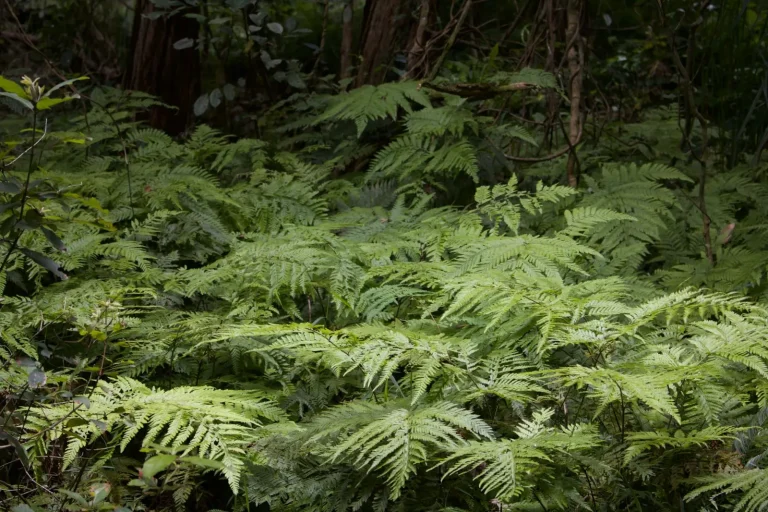
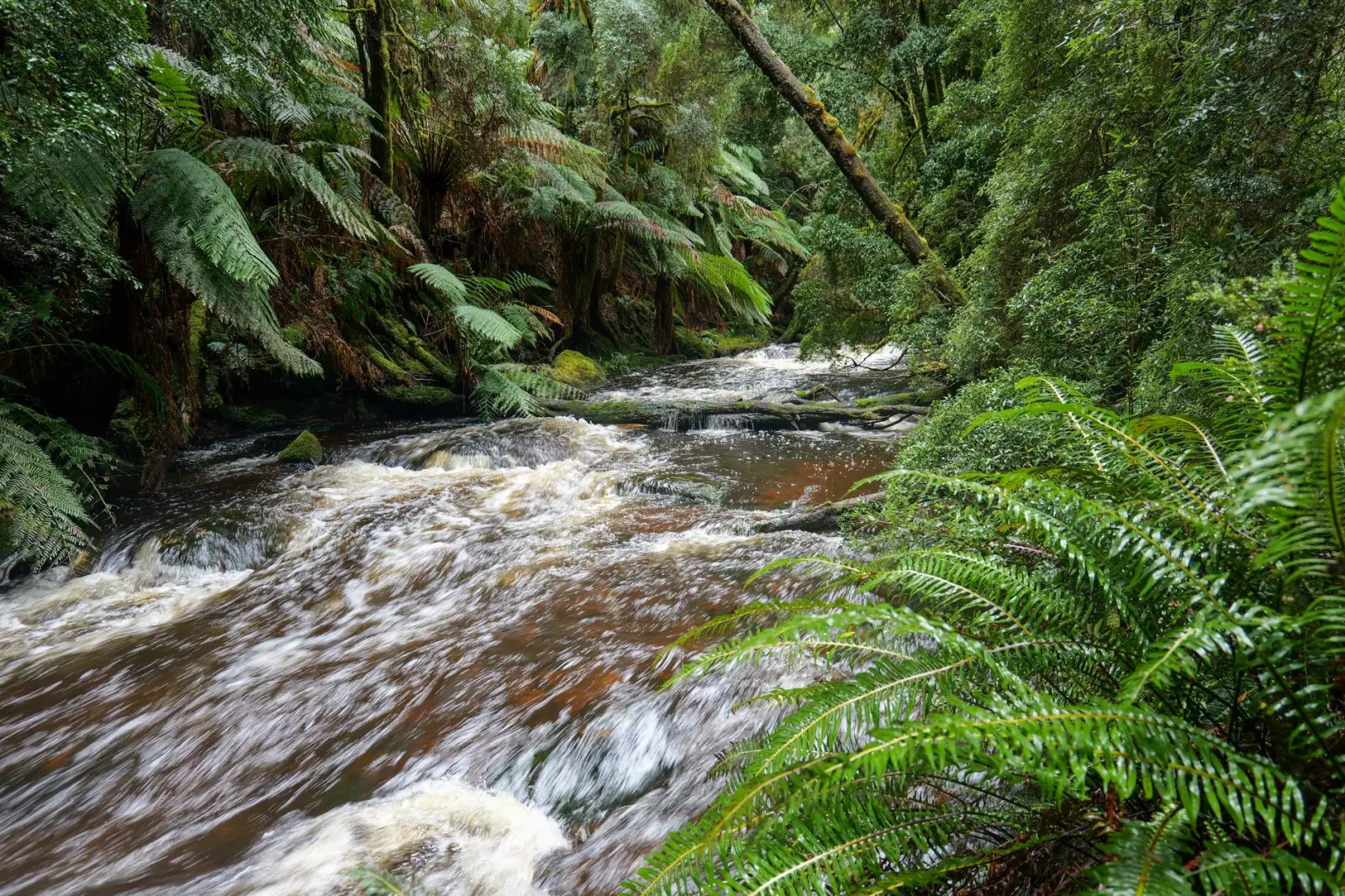
Ferns occupy a different temporal layer in Australian forests. While many fern species are relatively recent, certain families – particularly tree ferns – represent lineages stretching back 300 million years or more. Tree ferns like those in the Dicksoniaceae family create a distinctive layered appearance in wet gullies and cool rainforests. They’re not tall, but they’re persistent, and their presence signals a forest that has maintained consistent moisture and stability for a very long time.
What you notice about tree ferns in the field is their vulnerability to disturbance. They don’t colonize open areas quickly. They don’t produce vast numbers of spores. They depend on the forest remaining largely intact. This dependency is itself a marker of their age – they evolved in conditions of stability and never developed the aggressive dispersal mechanisms that younger plant families possess. Their presence in a forest is almost a guarantee that the forest has not experienced major clearing or drying for centuries, possibly longer.
The Proteaceae and adaptive persistence
The Proteaceae family, which includes banksias, waratahs, and grevilleas, is somewhat younger than the groups mentioned above, but still ancient – dating back at least 80 million years. What’s interesting about Proteaceae is that they’ve diversified considerably while maintaining certain fundamental characteristics. They’re adapted to nutrient-poor soils, they often rely on specific pollinators, and they’ve developed fire-adapted strategies that suggest a long co-evolution with burning landscapes.
In rainforest settings, Proteaceae species tend to occupy marginal positions – along forest edges, in gaps, or in areas with poorer soil. They’re not the dominant canopy trees, but they’re persistent presences. Their presence in a forest indicates not just age but also a particular history of disturbance and recovery. Some Proteaceae species require fire to germinate, a trait that suggests they evolved in landscapes where fire was a regular occurrence, even if the current rainforest hasn’t burned in centuries.
The practical reality of encountering these ancient plant families is that they demand a different kind of attention than younger, more vigorous species. They’re not photogenic in the way that flowering plants or dramatic canopy trees are. They don’t announce themselves loudly. A hoop pine doesn’t have showy flowers. A cycad doesn’t grow in impressive groves. A tree fern doesn’t tower above the understory. Yet their very existence, their persistence in these specific locations, tells a story about stability, time, and the remarkable capacity of certain lineages to remain essentially unchanged across geological epochs.
When you move through Australian rainforests with awareness of these ancient families, the forest becomes less a collection of individual trees and more a living archive. The slowness you observe is not stagnation but a proven survival strategy. The apparent inefficiency is actually perfect adaptation to conditions that have remained relatively constant for millions of years. These plants are not relics in the sense of being outdated or vestigial. They are living proof that certain strategies, once refined, can persist indefinitely if the environment remains stable enough to support them.