
The Daintree canopy walk sits at the edge of what most people think they know about rainforests. You arrive expecting a pleasant stroll through the treetops, and you get that – but only if you understand what you’re actually walking into. After spending considerable time in this forest, both on the ground and suspended above it, I’ve learned that the canopy experience is less about the view and more about the forest’s own logic.
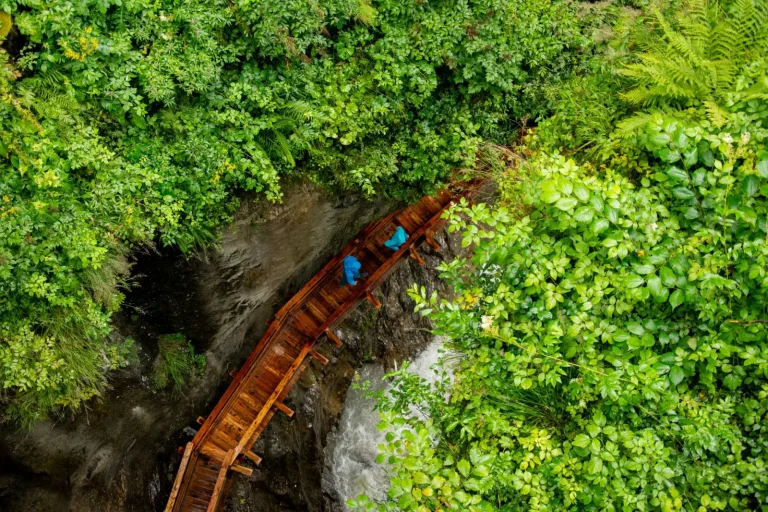
The structure of the Daintree is fundamentally different from younger rainforests. This is one of the oldest tropical rainforests on Earth, and that age shows in the architecture. The canopy doesn’t form a neat, continuous ceiling. Instead, it’s a layered, irregular system where trees of vastly different ages and sizes create gaps, overlaps, and sudden drops in elevation. The walkway itself – a series of elevated platforms and bridges – follows the contours of this reality rather than imposing a human-designed path onto it. That distinction matters when you’re considering whether you’ll actually enjoy being up there.
The Physical Reality of Height and Exposure
Standing on the platform at the start, you’re roughly 40 metres up. That’s not so high that you lose your sense of direction, but it’s high enough that the forest floor becomes abstract. The canopy walk does something counterintuitive: it makes the height feel more present, not less. On the ground, surrounded by trees, you can ignore how tall they are. Suspended between them, you can’t.
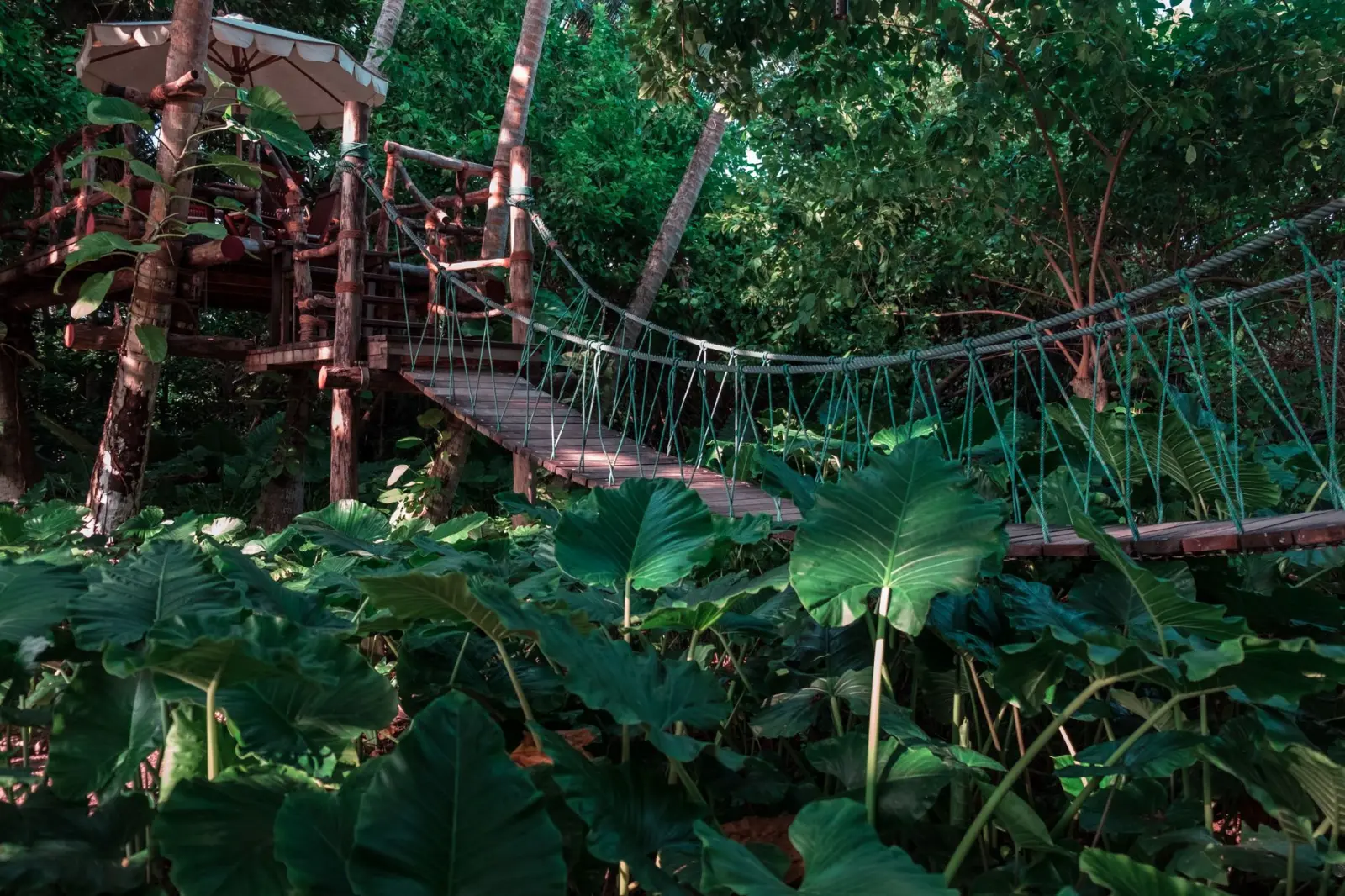
The platforms themselves are solid and well-maintained, which is worth noting because poor construction would make this experience genuinely unpleasant. But solidity doesn’t eliminate the sensation of being in the air. The walkway sways slightly in wind. You notice this immediately. Some people find it meditative; others find it unsettling enough to turn back. There’s no predicting which you’ll be until you’re halfway across the first bridge.
The exposure is real but graduated. The initial sections keep you close enough to the surrounding trees that you feel anchored. As you progress, the platforms extend further into open air, and the psychological demand increases. By the third or fourth platform, you’re genuinely suspended. The forest is below you, around you, and the walkway is the only thing between you and a fall that would be fatal. The engineering is sound, but the reality is unmissable.
What the Forest Looks Like From Above
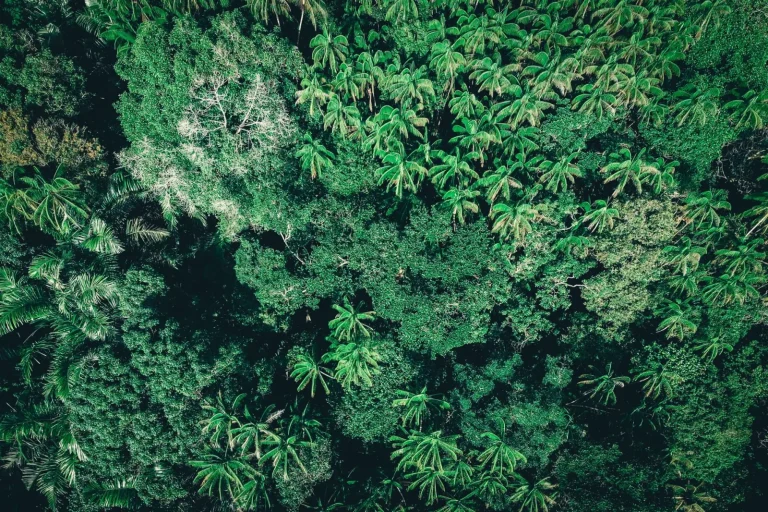
The view itself requires adjustment. You’re not looking at the forest from above in the way a photograph might suggest. You’re embedded in it. The canopy is not transparent. It’s a dense, complex surface of leaves, branches, and epiphytes – plants growing on other plants – that obscures as much as it reveals. On a clear day, you can see through gaps to the valley beyond. On overcast days, which are frequent, the view compresses into layers of green at different distances.
What actually becomes visible from the canopy are details that ground-level visitors never encounter. You see the texture of bark from intimate range. You notice the specific architecture of how branches connect and support weight. You observe birds and insects in their actual habitat, not passing through it. A kookaburra in the canopy is not a distant sound but a presence. Flying foxes, if you time your visit for late afternoon, become visible as they move between trees before heading out to feed.
The insect life is intense. Mosquitoes are present, particularly in humid conditions or after rain. The canopy doesn’t protect you from them; if anything, the stillness of the air in certain sections concentrates them. Bringing insect repellent is not optional, despite what the promotional material might imply. Leeches are less common on the walkway itself but present in the surrounding forest, particularly after rain.
Timing and Physical Demand
The walk takes roughly 45 minutes to an hour if you move at a moderate pace and pause occasionally. That’s not strenuous in terms of distance, but the psychological demand affects how quickly you can move. Some visitors spend two hours on the walkway because they need time to adjust to the height and exposure. Others move through in 30 minutes. Neither pace is wrong; the forest doesn’t care about your speed.
Early morning visits tend to be quieter and offer better light for seeing into the canopy. The air is cooler, which matters because the platforms have no shade and humidity can be oppressive by midday. If you visit in the wet season, which runs from November through March, afternoon thunderstorms are common. The walkway doesn’t close in light rain, but heavy rain creates hazardous conditions on the platforms – they become slippery, and visibility drops significantly.
Fitness matters less than stability and balance. You’re not climbing or descending steep grades. You’re walking on level platforms and crossing bridges with handrails. The challenge is psychological and proprioceptive – your body’s sense of where it is in space – rather than cardiovascular. People with fear of heights should be honest with themselves before starting. The walkway cannot be exited midway; you have to complete it or backtrack, and backtracking while anxious is its own ordeal.
The Ecosystem From Inside
Being in the canopy reveals why the Daintree functions as it does. The forest is not a simple stack of layers. It’s a three-dimensional network where nutrients, water, and energy flow in patterns that ground-level observation can’t fully convey. The epiphytes – orchids, ferns, mosses – aren’t parasites; they’re part of a system where trees support other plants, which in turn create microhabitats for insects and small animals.
The canopy is where most of the forest’s photosynthesis happens. It’s where the energy enters the system. From below, this is invisible. From within it, you’re literally surrounded by the mechanism of the forest’s survival. The density of leaves, the way they’re oriented to catch light, the spacing that allows some light to penetrate while blocking most of it – all of this becomes apparent when you’re embedded in it rather than looking up at it.
Sound changes in the canopy. The forest is quieter up here in some ways – the ground-level ambient noise is muffled – but it’s also more immediate. Bird calls are sharper. Wind through the leaves becomes a distinct presence. The absence of human noise, if you visit when others aren’t present, is striking enough that some people find it disorienting.
The Daintree canopy walk is worth doing if you have realistic expectations about what it offers. It’s not a leisurely nature walk. It’s not a thrill ride. It’s a direct encounter with a forest ecosystem at the level where most of its actual work happens. The experience is quieter, more complex, and more demanding – both physically and mentally – than most promotional material suggests. That’s not a criticism. It’s simply what the forest is.