
The Mossman Gorge circuit sits about ninety minutes north of Cairns, and it carries a deceptive reputation. Most people arrive thinking they’re about to take a pleasant stroll through a World Heritage rainforest. What they encounter is something more demanding – not dangerous, but physically present in ways that become obvious only once you’re committed to the walk.
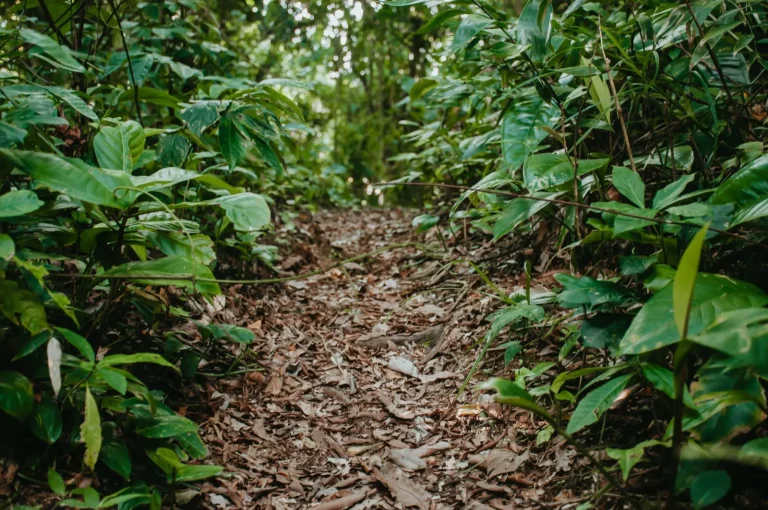
The track itself is roughly 2.4 kilometres as a loop, which on paper sounds manageable. In reality, the distance is almost irrelevant. The terrain determines everything. You’re walking on a combination of compacted earth, exposed tree roots, and rocky creek bed. The roots don’t just sit flat; they twist across the path in unpredictable patterns, and they’re slick even when the ground appears dry. The rocks underfoot shift slightly when you step on them – not dramatically, but enough to require constant micro-adjustments in balance. Your legs, particularly your ankles and calves, spend the entire walk engaged in stabilisation rather than simple forward motion.
The Water and Its Timing
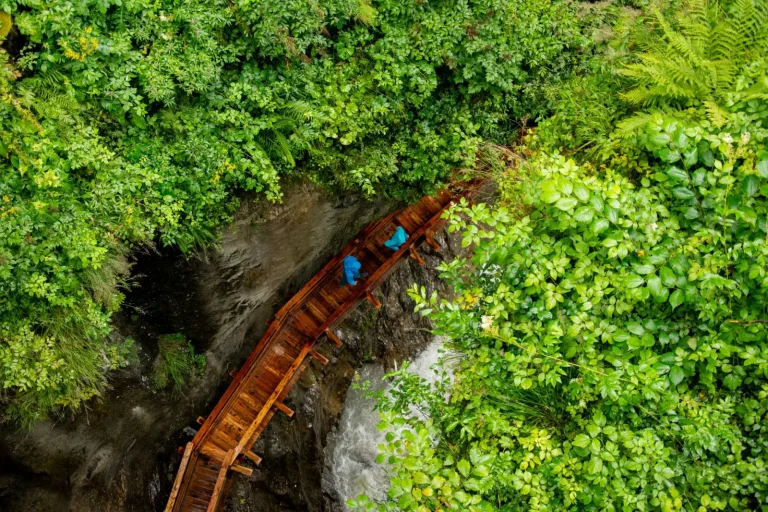
The gorge’s defining feature is the Mossman River, and your experience depends entirely on water levels. During the dry season – roughly May through September – the river is low and clear. The walk becomes a series of creek crossings where you’re stepping across wet rocks, sometimes up to knee height, but the current is manageable and the water temperature is refreshing rather than shocking. You can move deliberately and place your feet with precision.
In the wet season, the creek crossings become something else. The water runs faster, higher, and colder. I’ve seen the river transform from ankle-deep to thigh-deep in the space of a few hours after rain. The current develops genuine force. Rocks that were visible stepping points become submerged. The water takes on a brown tint from sediment upstream. People often underestimate how much effort it takes to maintain footing against moving water, and they underestimate how quickly fatigue sets in when every step requires active resistance.
The park does close the track during extreme wet-season conditions, but the closure threshold is fairly high. The walk can be open and genuinely difficult at the same time. If you’re walking in the wet season, assume the crossings will be harder than you expect, that your legs will tire faster, and that the time estimates you’ve read online are optimistic.
Humidity, Gradient, and Sustained Effort
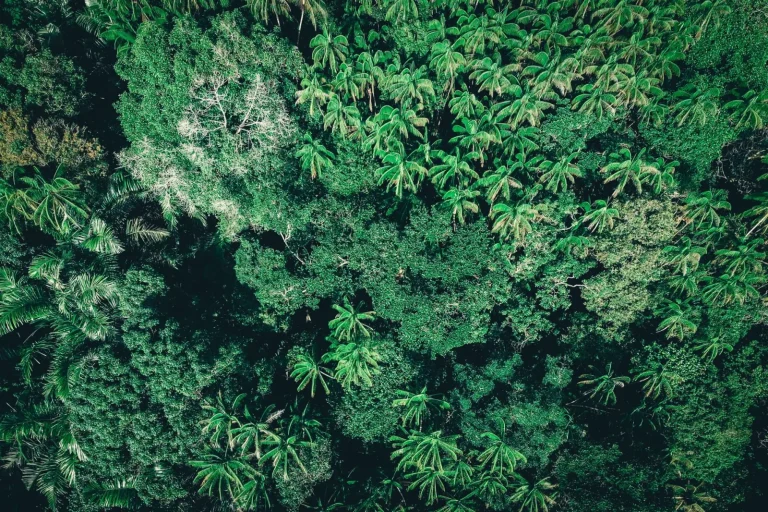
The rainforest canopy is dense enough that direct sun rarely reaches the track. This sounds like an advantage until you realise it also means the air doesn’t move. Humidity sits at 80 to 90 percent year-round. Your body can’t cool efficiently through evaporation. Sweat accumulates rather than dries. The temperature itself might only be 22 to 26 degrees Celsius, but the thermal load feels significantly higher because your cooling mechanism isn’t working properly.
The walk has a persistent uphill component on the return leg. It’s not steep – nothing that would be considered a serious climb elsewhere – but it’s relentless. You’re ascending maybe 80 metres over the second half of the circuit, which doesn’t sound like much until you’re doing it on tired legs, on unstable ground, in humidity that makes breathing feel heavier than usual. People often arrive at the walk fresh and energetic, and by the time they’re heading back, they’re moving more slowly and deliberately.
What Catches Most People Off Guard
Footwear is the first thing. Runners or trail shoes with good grip are essential. The exposed roots will turn your ankle if you’re wearing anything with poor lateral support. Wet rocks are slippery regardless of what you’re wearing, but proper hiking boots or trail shoes with deep tread patterns make a measurable difference. I’ve seen people attempt the walk in thongs or casual sneakers, and they either turn back or move so cautiously that what should be a two-hour walk becomes a three-hour ordeal.
The second is water intake. The walk doesn’t feel like it should be thirst-inducing – you’re in a rainforest, surrounded by water – but the combination of humidity and sustained muscular effort depletes your fluids faster than you’d expect. Most people carry a single water bottle and find it’s empty before they’re halfway back. There’s water available at the car park, but not along the track itself. Bring more than you think you’ll need.
The third is the psychological adjustment to constant instability. Your brain is processing an unusual amount of proprioceptive information. Every step requires attention. You can’t fall into the automatic rhythm that makes walking easy. This cognitive load accumulates. By the end of the walk, people often report feeling more mentally tired than physically tired, even though both are real.
The creek crossings also catch people off guard in terms of what they demand. It’s not the difficulty of any single crossing; it’s the repetition. You cross the creek multiple times throughout the circuit. Each crossing requires you to slow down, assess the current, place your feet carefully, and manage the risk of slipping. It’s not dangerous if you’re paying attention, but it requires sustained focus and deliberate movement. People often underestimate how much energy this demands across the entire walk.
Timing and Crowd Management
The track opens at dawn, and the first two hours see the lightest foot traffic. If you arrive early, you’ll have the forest largely to yourself. The walk is genuinely quieter and more meditative in those hours. By mid-morning, groups start arriving, and the track becomes congested. Narrow sections with creek crossings turn into bottlenecks. People stop to take photographs. The social dynamic shifts from solitude to managed movement through a crowded space.
The walk typically takes between one and a half to two and a half hours, depending on fitness, footwear, water levels, and how long you spend pausing to absorb the environment. Don’t plan to do much else on the day you walk the gorge. The walk itself is absorbing, and you’ll likely want to rest afterward.
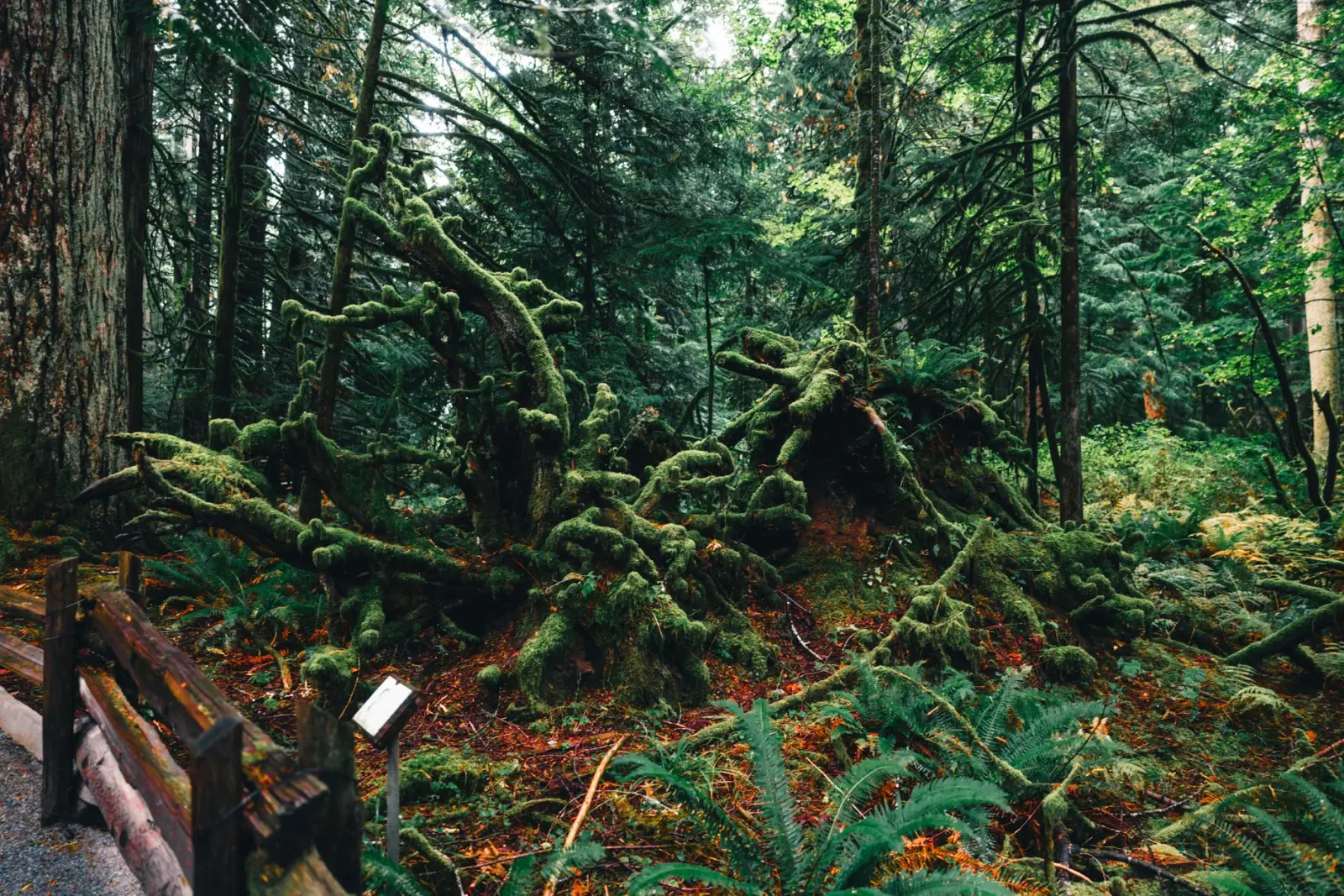
The rainforest itself is genuinely worth the effort. The canopy structure, the diversity of plant life, the sound of water and birds, the smell of decomposing organic matter – these things are present and real. But the walk is not a passive experience. It demands engagement, attention, and physical resilience. If you arrive expecting to drift through a scenic forest, you’ll be surprised. If you arrive prepared for sustained effort on unstable terrain, in humidity, with multiple water crossings, you’ll find it rewarding and manageable.