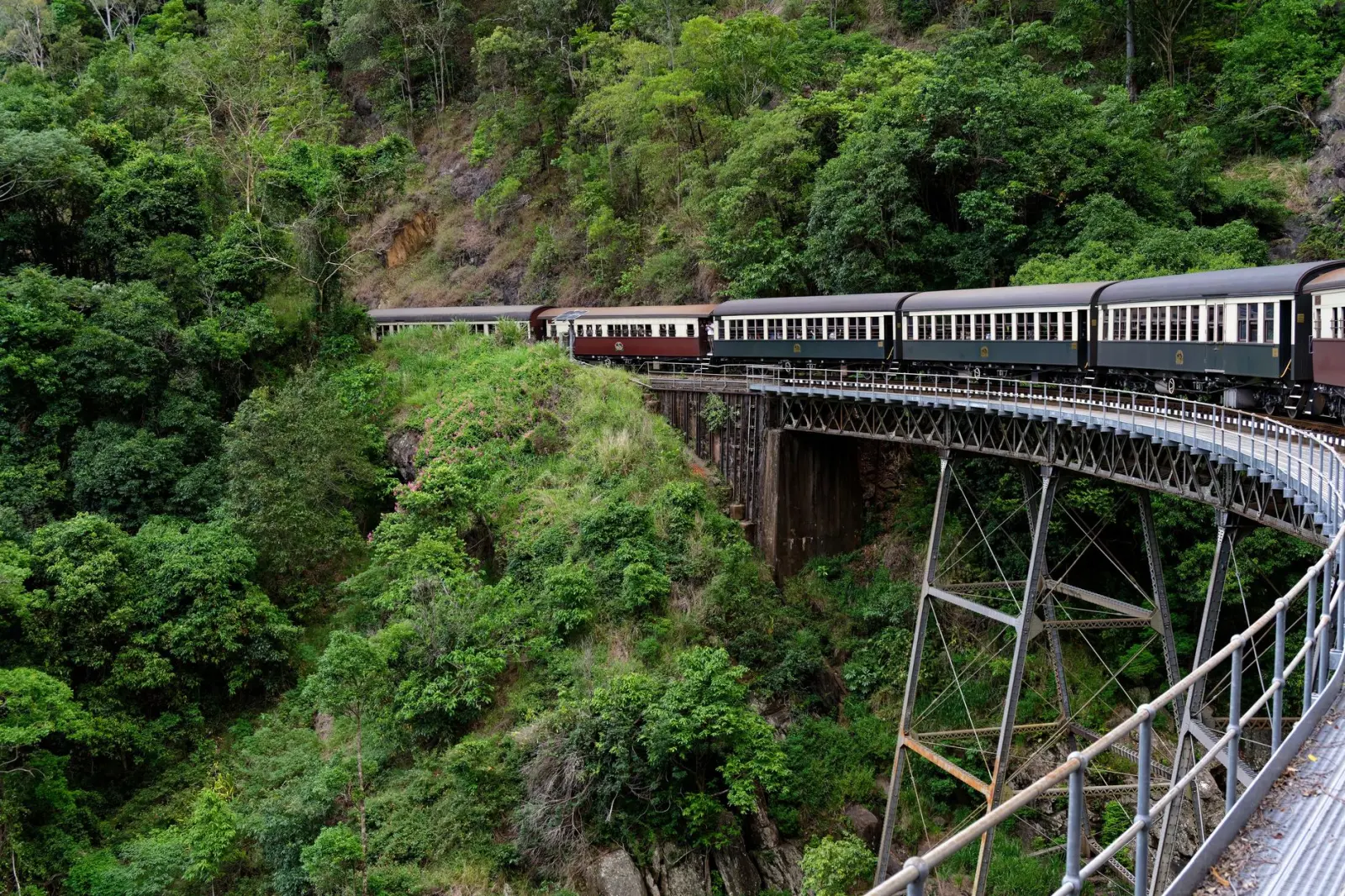
The Wet Tropics of Queensland became a World Heritage Area in 1988, and the designation wasn’t ceremonial. After spending time moving through the rainforest around Cairns and the Atherton Tablelands, you start to understand why UNESCO took this seriously. The place operates on a different ecological logic than most protected areas. It’s not just that the rainforest is old or that rare animals live there. The entire system – the way climate, geology, and life interact – represents something genuinely irreplaceable on a global scale.
The core reason the Wet Tropics qualified comes down to evolutionary time. This rainforest has existed in roughly its current form for around 100 million years, which is staggering. Most rainforests globally have contracted and expanded with ice ages, forcing species to migrate or adapt. The Wet Tropics, sheltered by the Great Dividing Range, remained relatively stable. Species didn’t need to move. They stayed put and diverged. This created what ecologists call a “refugium” – a place where evolution happened in isolation while the rest of the world changed. Walking through the forest, you’re literally walking through a living laboratory of speciation.
Biodiversity That Defies the Numbers
The rainforest covers only about 0.3 percent of Australia’s land area, yet it contains roughly 65 percent of Australia’s mammal species, 60 percent of its butterfly species, and similar proportions for birds and reptiles. These aren’t just high numbers. They represent lineages that exist nowhere else on Earth. The cassowary, the musky rat-kangaroo, the tree-kangaroo – these animals have no close relatives anywhere else. They’re evolutionary dead-ends in the best sense: unique solutions to living in a tropical rainforest that happened to work so well they’ve remained essentially unchanged for millions of years.
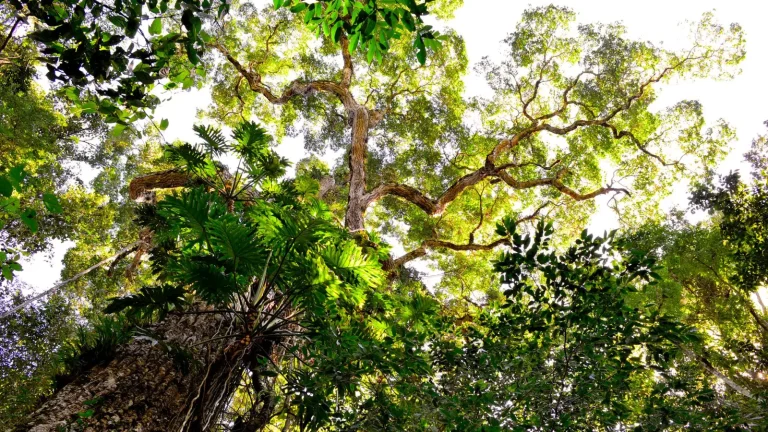
What strikes you when you’re actually in the forest is how vertically organized it is. The canopy, the mid-story, the understorey, the forest floor – each layer has its own community of species. A single hectare might contain more tree species than exist in entire temperate forests. The diversity isn’t just broad; it’s layered and interconnected in ways that are difficult to fully map. This complexity is what makes the Wet Tropics difficult to replicate or restore elsewhere. You can’t just plant trees and expect the same ecosystem to emerge. The relationships between species, the soil organisms, the fungi networks, the insect communities – all of it has evolved together over millions of years.
Geological and Climatic Rarity
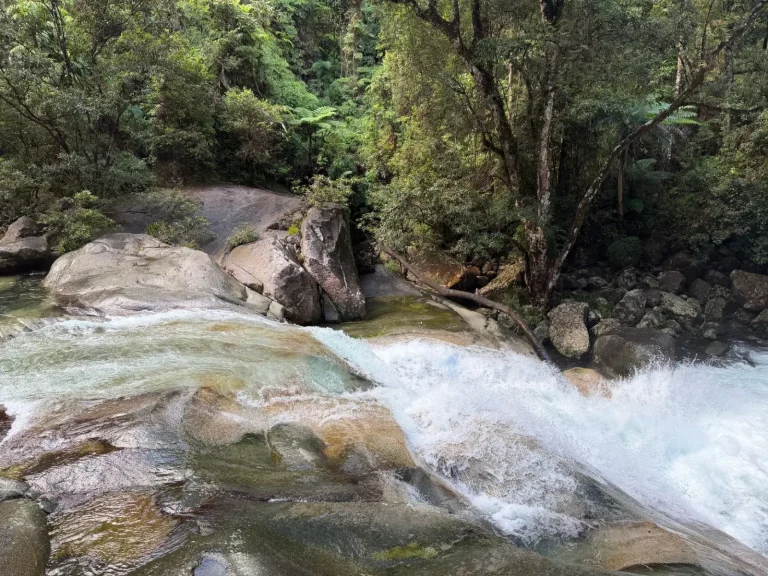
The physical setting matters as much as the biology. The rainforest sits on ancient volcanic plateaus and steep mountain ranges that create their own weather patterns. Moisture-laden air from the Coral Sea hits the mountains and is forced upward, cooling and releasing rain. Some parts of the Wet Tropics receive over 4,000 millimeters of rain annually. This isn’t just wet; it’s a climate zone that exists in very few places globally. The combination of tropical heat, consistent rainfall, and mountainous terrain creates conditions that are genuinely difficult to find elsewhere.
The soil itself is worth noting. Volcanic soils in tropical rainforests are typically nutrient-poor because heavy rainfall leaches minerals away. Yet the forest thrives. This happens because the ecosystem has evolved to be extraordinarily efficient at nutrient cycling. Fungi and decomposer organisms break down leaf litter rapidly, and plants reabsorb nutrients before they can be lost. It’s a closed loop that works because it’s been refined over millions of years. Disrupt that cycle – through logging, clearing, or fragmentation – and it doesn’t easily recover.
What World Heritage Actually Means Here
The World Heritage designation recognized that the Wet Tropics meets several criteria that very few places on Earth satisfy simultaneously. It’s a place where you can observe evolutionary processes that are otherwise invisible. It’s a reservoir of genetic diversity that has no equivalent elsewhere. It’s a system complex enough that we still don’t fully understand how all the pieces fit together.
In practical terms, the designation meant legal protection and international recognition. Australia committed to managing the area for conservation rather than extraction. That sounds straightforward until you’re actually dealing with land tenure, indigenous rights, tourism pressure, and climate change all at once. The rainforest isn’t a museum. It’s a living system under stress, and the World Heritage status is partly a declaration that this particular stress matters globally, not just locally.
The irreplaceability factor is what genuinely separates the Wet Tropics from other protected rainforests. You could theoretically restore a cleared rainforest elsewhere. You could plant trees, protect them, and eventually grow a functioning forest ecosystem. But you couldn’t recreate the specific evolutionary history that makes the Wet Tropics what it is. That history is locked into the genetics of the species that live there, the relationships between them, and the geological and climatic conditions that allowed those relationships to develop. Once that’s gone, it’s gone permanently. That’s what World Heritage designation really acknowledges.